A rubber flat roof often gives warning signs before it fails completely. A damp patch on the ceiling, lifting at an edge, water sitting too long after rain, or a seam starting to open can all point to trouble. When it comes to rubber flat roof repair, acting early usually means a simpler job, less disruption, and a much lower chance of internal damage.
For most homeowners, the hard part is knowing whether the roof needs a small repair or something more substantial. From ground level, one issue can look minor when the real cause sits elsewhere on the roof. That is why a proper inspection matters. A good repair is not just about covering the visible problem. It is about finding out why the roof has started to fail in the first place.
When rubber flat roof repair is the right option
Rubber roofing is known for durability, which is one reason it is such a popular choice for garages, extensions, porches, dormers, and garden rooms. If it has been fitted well and looked after properly, it can last for many years. In plenty of cases, a targeted repair is all that is needed.
That tends to be the case when the damage is localised. A split in one area, a puncture caused by impact, a failed seam, or slight lifting around an edge trim can often be repaired without replacing the whole roof. The same applies where flashing details have started to let water in but the main field of the roof is still in sound condition.
Age matters, though, and so does the standard of the original installation. If the membrane is generally holding up well and the deck beneath is still dry and solid, repair is often a sensible and cost-effective route. If the roof has been patched several times already, or the substrate has become soft and compromised, a repair may only delay a bigger problem.
Signs your rubber roof needs attention
Leaks are the obvious one, but they are not the only clue. In fact, by the time water is coming through indoors, the issue may have been developing for some time. Catching problems earlier gives you more options.
You might notice bubbling, shrinkage, loose perimeter trims, cracking around outlets, or membrane movement where the roof has not remained properly bonded. Ponding water is another sign worth taking seriously. A little standing water after heavy rain is not always unusual on a flat roof, but if it sits there for long periods, it can place extra stress on seams, joints, and weak points.
Inside the property, staining, mould, peeling paint, or a musty smell can all suggest moisture is finding its way through. Sometimes the roof itself is not the only issue. Water can track from flashing details, adjoining walls, or poorly finished edges, which is why the source needs checking carefully rather than guessing.
What commonly causes failure on a rubber flat roof
Not every leak means the material is poor. More often, the problem comes down to wear, movement, or installation details.
One of the most common issues is seam failure. If joints have not been prepared and bonded correctly, they can begin to separate over time. Edge details are another weak point. Wind exposure, temperature changes, and general ageing can affect trims and upstands, especially on roofs that were rushed or fitted with lower-grade components.
Punctures do happen as well. Foot traffic, fallen branches, or work carried out by other trades can damage the membrane. On some roofs, the material itself is still serviceable, but the deck beneath has absorbed moisture because of a long-standing leak. Once that happens, the repair may need to go beyond the surface membrane.
There is also the simple fact that some older flat roofs reach the point where repairs stop making financial sense. If several defects are showing at once, a patch in one area will not solve weakness across the rest of the roof.
How a proper repair should be approached
A dependable repair starts with an honest assessment. That means checking the full roof area, the edges, the upstands, the outlets, and the internal signs of water ingress. It also means assessing the condition of the deck below where needed. There is no value in sealing over a symptom if the structure underneath has already deteriorated.
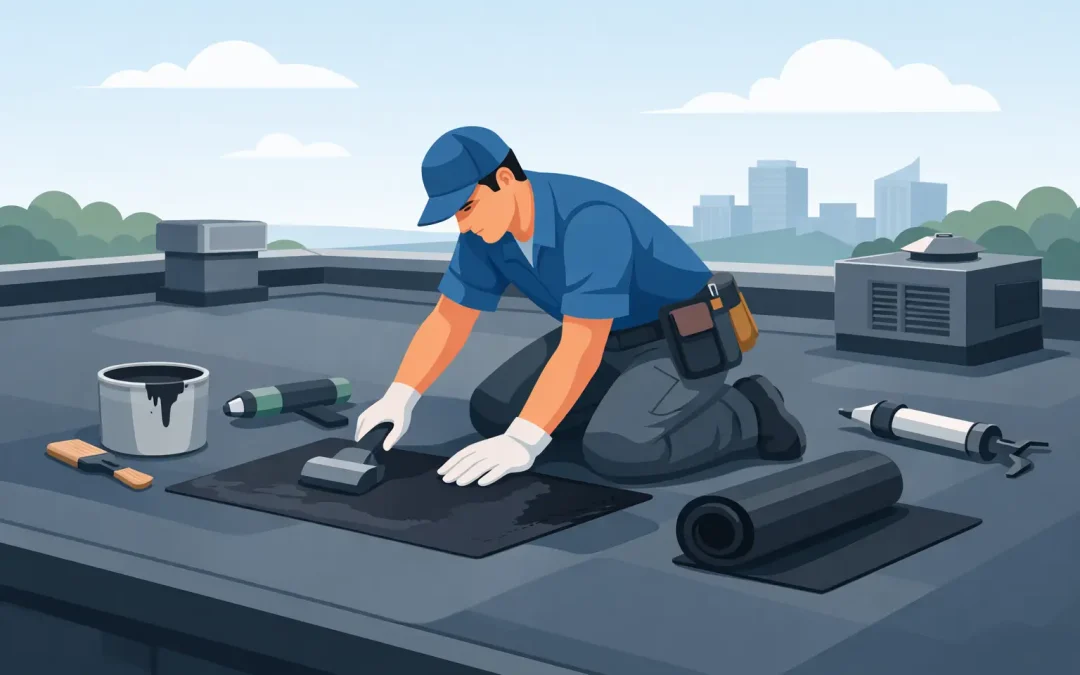
Once the source of the issue is identified, the repair method should match the problem. A localised patch repair may be enough for a puncture or split. A failed seam may need cleaning, preparing, and re-bonding with the correct compatible materials. Loose edging may need to be resecured or replaced entirely if the trim itself has failed.
Preparation is where the standard of the job is often won or lost. Rubber roofing repairs need clean, dry, properly prepared surfaces. Shortcuts tend to show up later as repeat leaks. A tidy finish matters too, not just for appearance but for long-term performance.
Repair or replacement – how to decide
This is where experience counts. Homeowners understandably want the most cost-effective answer, but the cheapest immediate option is not always the best long-term choice.
If the roof is relatively modern and the problem is isolated, repair is usually worth doing. It keeps costs down and can extend the life of the roof significantly. If the membrane is ageing, multiple areas are lifting, or moisture has affected the decking, replacement may be the more sensible investment.
A good contractor should tell you plainly which camp your roof falls into. If a repair is enough, that should be said. If a repair is likely to become a false economy, that should be explained clearly as well. For homeowners, that honest advice is often the difference between solving the issue once and paying for the same problem twice.
Why workmanship matters with flat roof repairs
Rubber roofing has a strong reputation for a reason, but the material can only perform as well as the fitting and repair work behind it. Many of the worst flat roof problems are not caused by the product itself. They come from poor detailing, rushed preparation, or repair attempts using unsuitable materials.
That is why it pays to use a roofing contractor who understands the full roof system, not just the visible leak. The repair needs to tie in properly with the existing roof, deal with the weak point fully, and leave the area weatherproof and secure. On a home, that matters for more than just keeping the rain out. A failed roof can affect insulation, ceilings, plasterwork, electrics, and the general condition of the property.
For homeowners across Nottingham and the wider Midlands, reliability matters just as much as technical skill. People want someone who turns up when they say they will, explains the job properly, and leaves the property clean and tidy afterwards. That is exactly why many customers look for established local firms such as MTF Roofing Ltd rather than taking chances on unknown traders offering quick fixes.
What to expect from a professional inspection
A proper visit should leave you with a clear view of the roof condition and the options available. You should be told what the issue is, what is causing it, and whether repair is likely to last. You should also be made aware of any related faults that may not yet have caused a leak but could do so soon.
There is often a balance to strike. Some roofs are absolutely worth repairing because the rest of the structure remains sound. Others sit in that awkward middle ground where a repair will work, but only as a short-term measure. That is not necessarily a bad option if budgets are tight, provided it is explained honestly from the outset.
The main thing is to avoid guesswork. Flat roofs can be deceptive, and water does not always enter where it appears inside. A measured, experienced assessment gives you the best chance of fixing the right problem first time.
Don’t leave small roof problems to get bigger
With rubber flat roofs, timing makes a real difference. A minor defect caught early may need a straightforward repair. Left through another season of rain, frost, and wind, that same issue can lead to rotten decking, internal damp, and a far more expensive job.
If your roof is showing signs of wear, leaking, or simply does not look right, getting it checked sooner is usually the sensible move. A sound repair should protect the roof, improve peace of mind, and buy you time where the rest of the roof is still in good order. And if the roof has reached the point where replacement is the better route, it is far better to know that clearly than keep spending money on repairs that will not last.
all seems go advice