
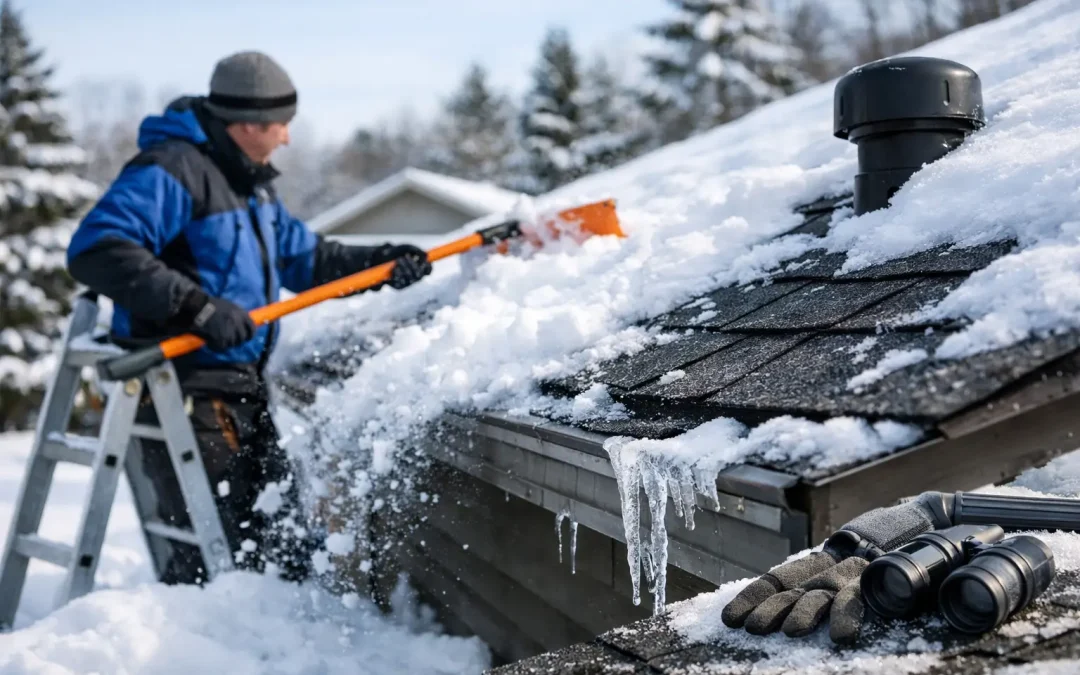
The first hard frost often tells you more about your roof than a dry day in July ever will. Small faults that seemed harmless in milder weather can quickly turn into leaks, blocked guttering and damp patches once winter sets in. That is why winter roof maintenance tips matter for any homeowner who wants to avoid costly repairs and keep their property protected through the colder months.
A roof does not need to be falling apart to cause trouble in winter. One slipped tile, one cracked flashing detail or one section of overflowing guttering can be enough to let water go where it should not. In places like Nottingham and across the Midlands, where winter weather can bring heavy rain, wind, frost and the occasional spell of snow, early checks make a real difference.
Why winter puts more strain on a roof
Winter exposes weak points fast. Rain finds gaps. Wind lifts anything already loose. Frost gets into tiny cracks and can make them worse as temperatures rise and fall. If leaves have built up in gutters during autumn, water may back up against the roofline instead of draining away properly.
This is also the time of year when homeowners notice issues inside the house first. A damp patch on a bedroom ceiling or staining near the chimney breast often begins with a small external problem that has been left too long. The earlier it is spotted, the easier and more affordable it usually is to put right.
Winter roof maintenance tips that make a difference
The most useful winter roof maintenance tips are not about climbing onto the roof and taking risks. They are about spotting warning signs early, keeping drainage clear and knowing when a professional inspection is the sensible next step.
Check for slipped, cracked or missing tiles
Start from ground level and look at the roof from a few angles if you can do so safely. You are looking for anything out of line, gaps in the covering or obvious signs that a tile or slate has moved. After high winds, this is especially worth doing.
A single missing tile does not always cause an immediate leak, but it leaves the underlay and timber beneath more exposed. If poor weather continues, that small issue can become a much larger repair. Pitched roofs tend to show these faults more clearly, while older roofs may have several areas that need attention at once.
Keep gutters and downpipes clear
Blocked guttering is one of the most common causes of winter water problems. Leaves, moss and general debris stop rainwater flowing away properly, which can lead to overflowing gutters, staining on walls and excess moisture around fascias and soffits.
If water spills over the edge during rainfall, the system is not doing its job. Clearing guttering before and during winter helps protect both the roofline and the walls below. It also reduces the chance of standing water freezing in place and adding unnecessary weight or strain.
Look closely at fascias and soffits
Homeowners often focus on the main roof and forget the roofline. In reality, fascias and soffits play an important part in protecting the property from damp and helping the roof ventilate correctly.
Peeling paint, staining, soft spots or visible gaps can all point to trouble. Timber rooflines are more vulnerable if maintenance has been missed over the years, while older uPVC can become loose or brittle. If these areas are failing, water can reach places it should not and cause hidden damage over time.
Watch for signs of a flat roof problem
Flat roofs can be more vulnerable in winter because water tends to sit on the surface rather than running off quickly. If you have an extension, porch, garage or dormer with a flat roof, keep an eye out for ponding water, bubbling, splits or edge details that look lifted.
Rubber flat roofs generally perform well when properly fitted, but age, storm damage and poor previous workmanship can still lead to faults. If a flat roof has been patched several times already, winter may be the point when replacement becomes the more sensible long-term option.
What to check inside the house
Not every roofing issue is obvious from outside. Some of the clearest warnings appear indoors, especially during or just after heavy rain.
Damp patches and discolouration
Brown marks on ceilings, peeling wallpaper near the top of a wall or fresh damp around chimney areas should never be ignored. These signs do not always mean the roof is failing completely, but they do suggest water is getting in somewhere.
The source is not always directly above the mark you can see. Water can travel along timbers and felt before showing itself inside. That is one reason why proper inspection matters. Guesswork often leads to the wrong repair.
Draughts and cold spots in the loft
If your loft feels unusually draughty, it may indicate gaps in the roof covering or around roofline details. On a cold day, it is worth checking for signs of daylight coming through where it should not. Damp insulation, mould growth or a musty smell also suggest that moisture may be getting in.
There is a balance here. Roofs need ventilation, so some airflow is normal. The problem is uncontrolled water ingress or cold air entering through damage rather than through the correct ventilation points.
Safety matters more than a quick look
One of the most important winter roof maintenance tips is knowing what not to do. Icy ladders, wet roof surfaces and unstable edges make winter the wrong time for DIY roof access. A quick check from the ground is sensible. Climbing up to investigate is often not.
This is particularly true if the roof is steep, older, storm-damaged or partly hidden by extensions and conservatories. A professional roofer can inspect the condition safely and identify issues that are easy to miss from below.
When a repair is enough and when it is not
Homeowners often ask whether a small problem needs a repair or whether it points to something larger. The honest answer is that it depends on the age of the roof, the type of defect and whether there have been repeated issues before.
If one or two tiles have slipped after a storm and the rest of the roof is sound, a targeted repair is usually the right approach. If multiple sections are failing, ridge tiles are loose, the underlay is deteriorating and leaks keep returning, a larger programme of work may save money over time.
The same applies to roofline products. A minor joint issue in guttering can often be repaired, but widespread sagging, regular overflow and tired fascias may point to the need for replacement rather than another temporary fix.
Seasonal timing makes a difference
The best time to act is before winter weather gets severe, but that does not mean it is too late once the cold arrives. A prompt inspection in early winter is still far better than waiting until a small leak turns into internal damage.
After periods of strong wind or prolonged rain, it is worth checking the property again from the ground. Roofing problems often follow weather events rather than a calendar date. Staying alert through winter helps you catch faults before they become more disruptive.
Choosing the right contractor for winter roof work
If you do need help, reliability matters just as much as the repair itself. Homeowners want clear advice, a proper survey, fair pricing and work completed to a high standard without mess being left behind. That is especially important in winter, when delays and poor workmanship can leave the property exposed.
A trustworthy contractor should explain the issue in plain terms, set out what work is needed and be realistic about whether a repair will solve the problem properly. Be cautious of anyone who pushes for major work without showing clear evidence, but be equally cautious of cheap quick fixes that do not address the cause.
For homeowners across Nottingham and the wider Midlands, companies like MTF Roofing focus on exactly that practical, workmanship-led approach – identifying faults clearly, carrying out the right repair and helping protect the home for the long term.
A sensible approach to winter roof maintenance tips
Good roof care is rarely about dramatic action. It is usually about paying attention to the small signs, keeping water flowing away properly and dealing with defects before bad weather exposes them further. A roof that looks mostly fine can still have a weak point, and winter has a habit of finding it.
If something does not look right, trust that instinct and get it checked. A timely repair is always easier to deal with than the aftermath of a leak spreading through ceilings, insulation and walls.