If your flat roof is starting to crack, blister or let water in, the question usually comes up straight away: are rubber flat roofs better than felt? For most homeowners, the honest answer is yes – but not in every situation, and not without a proper look at the roof itself, your budget, and how long you want the solution to last.
A flat roof is one of those parts of a home that gets ignored until it causes a problem. Once a leak appears over a kitchen extension, garage or dormer, you need a roofing system that will keep water out, cope with British weather and give you confidence that the job has been done properly. That is where the difference between rubber and felt really matters.
Are rubber flat roofs better than felt for most homes?
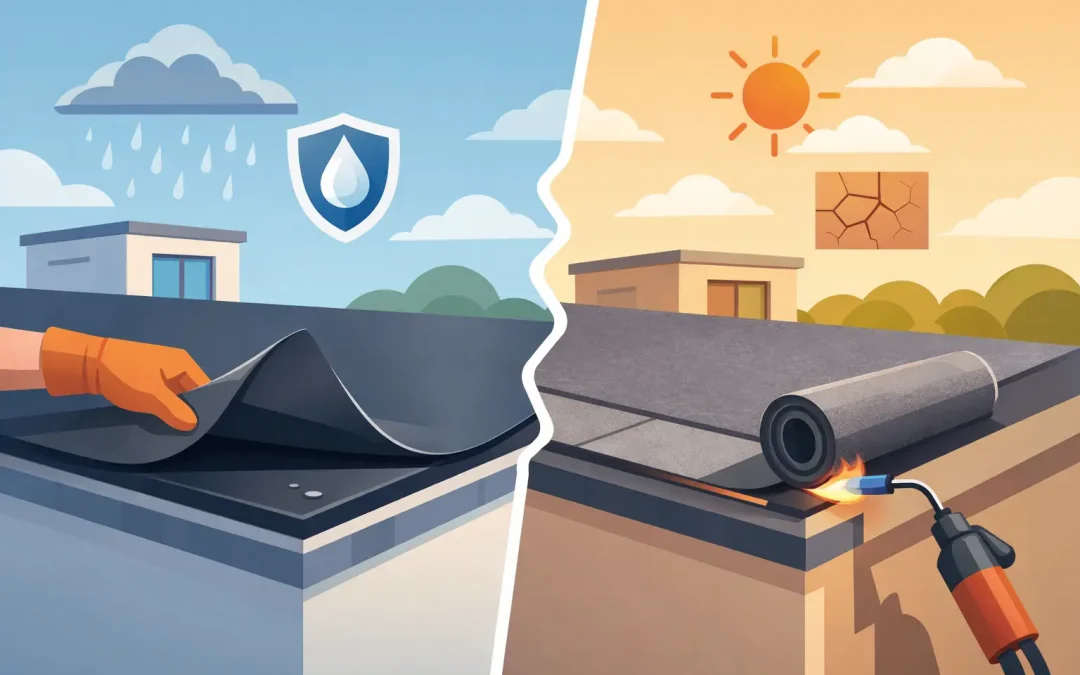
In many domestic cases, rubber roofing comes out ahead of felt because it tends to last longer, has fewer weak points, and copes well with temperature changes. A properly fitted rubber flat roof, often installed as a single sheet, has fewer joints than a traditional felt roof. Fewer joints generally means fewer places for water to work its way in over time.
Felt still has its place. Modern high-performance felt is far better than the older systems many people remember from years ago. It can be a solid option when fitted well and maintained properly. But if a homeowner is comparing the two on durability, lifespan and low-maintenance performance, rubber will often be the stronger long-term choice.
That said, the material alone does not decide the result. Poor installation can let down even a good roof. A well-fitted felt roof will outperform a badly fitted rubber one every time.
Lifespan and long-term value
One of the main reasons people choose rubber is longevity. Rubber flat roofing, commonly EPDM, is known for lasting for decades when installed correctly. It resists UV exposure well, does not become brittle as quickly as some older felt systems, and generally needs less ongoing attention.
Felt roofs can still give good service, especially modern torch-on systems, but they usually have a shorter expected life than rubber. Over time, felt can be more vulnerable to wear around joints, edges and detailing. It can also suffer from splitting as it ages or as the roof moves with seasonal temperature changes.
For a homeowner thinking beyond the cheapest quote, this matters. A felt roof may cost less at the outset, but if it needs patch repairs or replacement sooner, the cheaper option can become the more expensive one over the years.
Weather resistance in the Midlands
Homes across Nottingham and the wider Midlands see their fair share of rain, frost, wind and summer heat. A flat roof has to deal with all of it. Rubber performs well here because it stays flexible in changing conditions. That flexibility helps it cope with expansion and contraction without stressing the surface as much.
Felt can also handle British weather, but it is generally more reliant on the quality of seams and layers. Once weak spots start to appear, water ingress becomes more likely. Ponding water can also be harder on some felt roofs, particularly if the roof structure is already tired or the falls are poor.
This is why the existing condition of the roof matters so much. If the decking beneath has gone soft, if the edges are failing, or if water is sitting on the roof for long periods, the best material in the world will not fix a poor base. The whole roof build-up needs to be looked at properly.
Appearance and finish
Most homeowners are not just thinking about leaks. They also want the finished roof to look neat and suit the property. Rubber gives a clean, simple finish that works well on extensions, garages and other flat roof areas. Because it can often be laid in large single pieces, it tends to look less patchy or heavily jointed.
Felt has a more traditional appearance and can still look smart when installed by experienced roofers. Some people are comfortable with felt because it is familiar and has been used on domestic properties for years. If the roof is not especially visible, appearance may not be the deciding factor.
Where the roof can be seen from upstairs windows or from the garden, many homeowners prefer the tidier look of rubber. It often gives the impression of a newer, cleaner finish.
Repairs and maintenance
A good flat roof should not become a regular headache. Rubber roofs are usually low maintenance, and because there are fewer seams, there are fewer areas to keep an eye on. If damage does occur, localised repairs are often possible, depending on the age and condition of the roof.
Felt roofs can also be repaired, but repeated patching is often a sign that the roof is reaching the end of its useful life. Many homeowners spend money on one repair after another when replacement would have made more sense earlier.
This is a common issue with older garage and extension roofs. A leak gets sealed, then another weak point appears a few months later. At that stage, it is worth asking not just what will stop the current leak, but what will give the best value over the next ten to twenty years.
Cost – where felt can still appeal
If you are asking purely about upfront cost, felt often looks attractive. In some cases, it can be the cheaper system to install, which is why it still appeals to homeowners working to a tighter budget.
That does not make it the wrong choice. If the roof is small, access is straightforward, and the homeowner wants a practical solution at a lower initial cost, felt may be perfectly reasonable. The key is being realistic about what you are paying for and how long you expect it to last.
Rubber usually costs more initially, but many people see that extra cost as worthwhile because of the longer service life and lower likelihood of ongoing problems. It is often the better value option rather than the cheapest option.
Installation quality matters more than sales talk
This is where many comparisons go wrong. Homeowners are sometimes told that one material is always better than the other, full stop. In practice, the standard of workmanship is just as important as the product.
A flat roof needs proper preparation, sound decking, correct edge trims, good drainage details and careful fitting around outlets, walls and upstands. If any of that is rushed, problems can follow no matter what covering is used.
That is why it is worth dealing with a contractor who will assess the roof properly, explain the options clearly and recommend what actually suits the property. At MTF Roofing Ltd, that practical approach matters because one roof may be best suited to rubber, while another may still be a good candidate for a modern felt system.
When felt may still be the right choice
Although rubber often comes out ahead, there are situations where felt still makes sense. If matching an existing system is important, if the structure or detailing suits a layered felt build-up, or if budget is the main deciding factor, felt can still be the right answer.
There are also cases where the difference in performance is less dramatic because the roof is small, sheltered and not under much stress. In that sort of setting, a well-installed felt roof may provide perfectly satisfactory service.
The key point is not to choose based on habit or price alone. A flat roof should be judged on the structure underneath, how exposed it is, how long you plan to stay in the property, and whether you want the lowest upfront cost or the strongest long-term return.
So, are rubber flat roofs better than felt?
For many homes, yes. Rubber flat roofs are often better than felt when you look at lifespan, flexibility, weather resistance and overall long-term value. They are especially popular for extensions, garages and replacement flat roofs where homeowners want a durable, low-maintenance finish.
But felt is not obsolete, and it should not be written off as a poor option across the board. Modern felt systems can still perform well when installed to a high standard and used in the right setting. The best choice depends on the roof, not just the brochure.
If your flat roof is showing signs of age, the most useful next step is not guessing between materials. It is having the roof checked properly, with clear advice on whether repair or replacement is the better route, and which system will protect your home for the long term.
A good flat roof should let you forget it is there – and that usually starts with choosing the right installer as much as the right material.