A rubber flat roof can look tired long before it has actually failed. Moss, leaf staining and general surface dirt build up gradually, and many homeowners only notice it when they can see grime from an upstairs window or when blocked outlets start holding water. If you are wondering how to clean rubber flat roof surfaces properly, the key is to keep it gentle, safe and methodical.
Rubber roofing is hard-wearing, but it is not something to attack with a pressure washer and strong chemicals. Done the right way, cleaning helps you keep the roof looking better and gives you a chance to spot early signs of wear. Done the wrong way, it can damage seams, trims or the membrane itself.
How to clean rubber flat roof without causing damage
The first job is safety. Flat roofs may look easy to walk on, but that does not mean they are risk-free. The surface can be slippery, especially if there is algae, standing water or a light frost. If the roof is high, awkward to access or you are not fully confident on ladders, it is better to leave it to a professional.
If access is straightforward and the roof is in sound condition, start by choosing a dry day with mild weather. You want enough daylight to see what you are doing, but not blazing heat that dries cleaning solution too quickly.
Before any washing starts, clear loose debris by hand or with a soft brush. Leaves, twigs and dirt often gather around edges, corners and drainage outlets. This part matters more than many people realise. A lot of flat roof trouble starts not with the membrane, but with blocked drainage that leaves water sitting for too long.
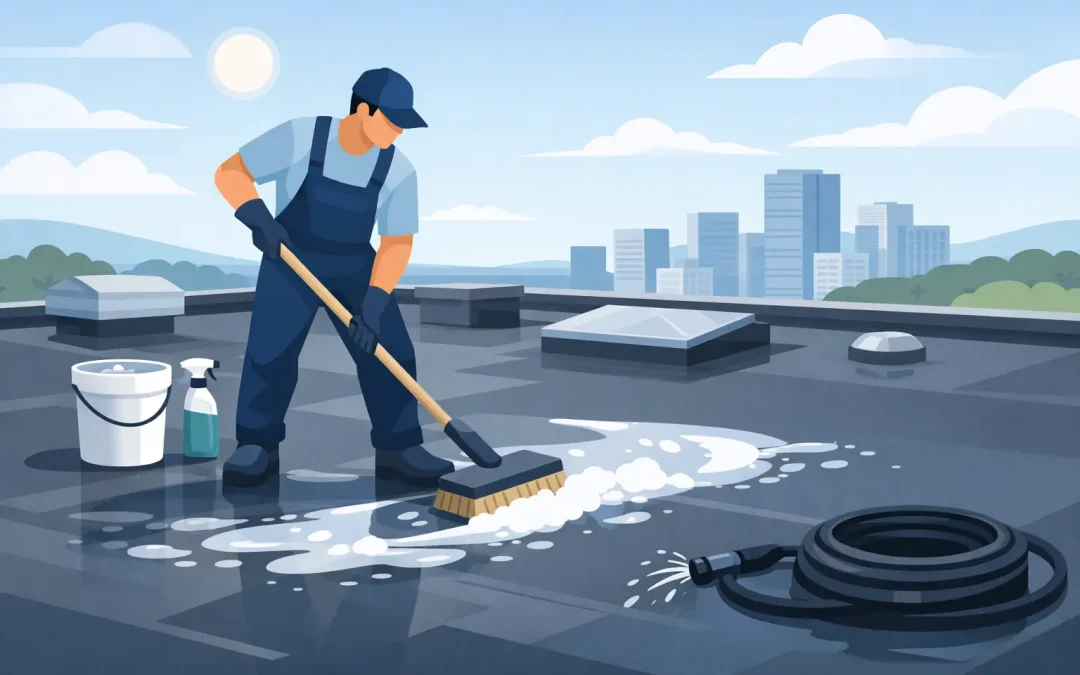
Once the surface is clear, use clean water and a mild cleaner suited to rubber roofing. Warm water with a small amount of gentle washing-up liquid is often enough for general dirt. Apply it with a soft broom, sponge mop or non-abrasive cloth. Work in sections and avoid scrubbing too aggressively. You are cleaning the surface, not trying to strip it back.
Rinse each area with clean water before moving on. If there is stubborn staining, go over it again with the same mild mix rather than jumping straight to anything harsher. Patience is usually the safer option.
What to avoid when cleaning a rubber flat roof
Most problems happen when homeowners use the wrong tools. A pressure washer is the big one. It might seem like the quickest way to shift grime, but the force of the water can lift seams, disturb edge details and drive water where it should not go. That is especially risky on older roofs or any roof with vulnerable joints.
Wire brushes, abrasive pads and harsh solvent-based cleaners should also be avoided. They can mark or weaken the membrane and may do more harm than the dirt ever would. Bleach-heavy products can be another issue. Even if they improve the appearance in the short term, they may affect the roof surface or nearby materials.
Be careful with foot traffic as well. Rubber flat roofs are durable, but repeated walking in the wrong places, particularly around edges and flashings, can create unnecessary wear. If the roof already feels soft underfoot, has bubbles, lifted seams or obvious cracking, stop cleaning and get it checked.
The best method for everyday dirt, moss and algae
Not every roof needs the same approach. A lightly soiled rubber roof usually only needs debris removed, a gentle wash and a rinse. If moss or algae is starting to take hold, the process needs a little more care.
Start by removing the worst growth by hand or with a soft brush. Do not gouge at it. Once the loose material is off, wash the area with a mild cleaner and give it time to loosen what remains. In some cases, you may need a rubber-roof-safe treatment for biological growth, but the product needs to be suitable for the membrane. If there is any doubt, it is better to ask than to guess.
The main thing is not to confuse staining with active growth. Some dark marks are simply cosmetic and will not fully disappear. That does not always mean the roof is dirty or failing. Trying too hard to make an older roof look brand new can lead to unnecessary damage.
How often should you clean a rubber flat roof?
For most homes, once or twice a year is enough. Spring and autumn are usually the most practical times. Spring lets you clear winter debris and check for weather-related issues. Autumn helps remove falling leaves before they block outlets and sit wet on the roof.
Some roofs need more attention. If your property is surrounded by trees, shaded for much of the day or prone to moss, more regular light maintenance may make sense. The aim is not constant cleaning. It is keeping the roof clear enough that small problems do not turn into expensive ones.
A quick visual check after heavy wind or prolonged rain is also worthwhile. You do not always need to clean the whole roof, but you do want to know whether debris has built up or drainage has slowed.
Signs cleaning is not enough
Learning how to clean rubber flat roof surfaces is useful, but cleaning is not a cure for roofing defects. If the roof is holding water for days, if seams are lifting, or if internal damp is showing below, the issue is not surface dirt.
Likewise, if you notice split trims, cracked sealant around details, damage near outlets or movement in the deck below, a proper inspection is the sensible next step. Cleaning may improve the look of the roof, but it will not solve faults in the system.
This is where experience matters. A trained roofer can tell the difference between harmless weathering and signs that repairs are due. That can save homeowners from both unnecessary work and costly delays.
A simple roof cleaning routine that works
The most reliable approach is a basic one. Remove loose debris carefully, check the outlets are flowing freely, wash with a mild solution using soft tools, and rinse thoroughly. While you are there, keep an eye on edges, joints and any roof penetrations such as pipes or skylight details.
Take your time and do not chase a perfect cosmetic finish. On a residential rubber roof, function comes first. A clean roof is useful because it lets you inspect the surface more clearly and helps prevent blocked drainage. That matters more than making it look untouched.
If you are unsure about the roof’s condition, it is often better to book an inspection instead of experimenting. At MTF Roofing Ltd, we see plenty of roofs where well-meant DIY cleaning has disturbed details that were otherwise serviceable. A cautious approach is always the better one.
When to call a professional
There is no shame in deciding a roof is not a DIY job. If access is awkward, the roof is above a conservatory or extension, the surface is slippery, or the membrane looks aged, professional help is usually the safer choice.
It also makes sense to call a roofer if the roof has not been checked in years. Cleaning and inspection go hand in hand. A professional can clear the roof properly, assess drainage, and let you know whether you are looking at routine maintenance or the early signs of repair work.
For homeowners across Nottingham and the wider Midlands, that peace of mind often matters as much as the cleaning itself. You want to know your roof is still doing its job, protecting the property and staying watertight through another season.
A rubber flat roof does not need complicated maintenance, but it does need the right treatment. Gentle cleaning, sensible timing and a careful eye for warning signs will usually do far more good than any quick-fix method. If something does not look right, trust that instinct and get it looked at before a small issue has the chance to spread.