
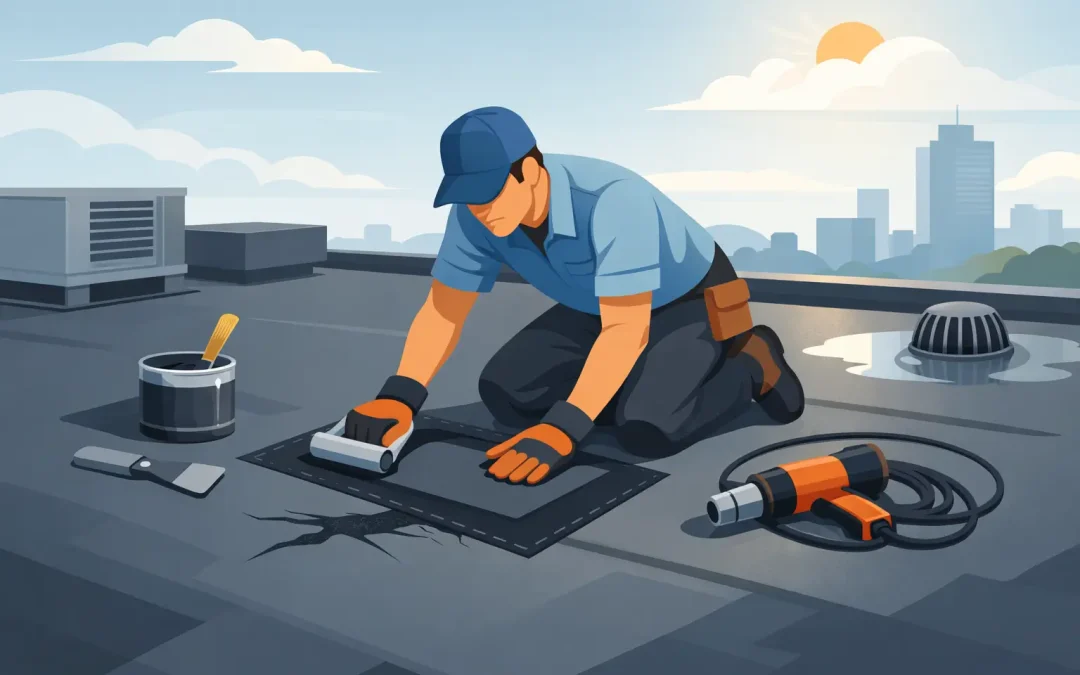
A small split in a rubber flat roof rarely stays small for long. What starts as a slight tear near a seam or edge can let water track underneath the surface, soak the deck below, and turn a simple repair into a more expensive job.
If you are looking up how to patch flat rubber roof damage, the first thing to know is that some repairs are straightforward, but only if the roof is dry, the damage is limited, and the patch is fitted properly. A rushed repair with the wrong product often fails sooner than homeowners expect.
When a patch repair is the right option
Rubber flat roofs, often made from EPDM, are known for being durable and low maintenance. Even so, they can suffer damage from ageing, foot traffic, fallen branches, poorly fitted trims, or previous repair work that was never done properly.
A patch is usually suitable when the damage is localised. That might mean a small puncture, a clean split, minor surface wear, or a lifted section around a seam. If the surrounding membrane is still in good condition and there is no sign of widespread water ingress underneath, a patch can be a sensible short-term or long-term repair depending on the age of the roof.
Where homeowners get caught out is assuming every leak can be patched. If the membrane is shrinking, lifting around several edges, bubbling badly, or letting in water in more than one area, the issue may be bigger than it first appears. In that case, patching one visible fault may not solve the actual problem.
How to patch flat rubber roof areas properly
Before any repair starts, the roof needs to be checked carefully. Not just the obvious tear, but the surrounding section as well. Water can travel, so the point where the leak shows inside the house is not always directly below the damage.
If the area is suitable for patching, the repair normally follows a clear process. The roof surface must be completely dry and clean. Any dirt, moss, loose material, or old failing sealant needs to be removed so the patch can bond properly. On rubber roofing, preparation matters just as much as the patch itself.
Once the area is clean, the damaged section is measured and a patch is cut large enough to extend beyond the damage on all sides. That extra coverage is important. A patch that is too small leaves weak points around the edge and is more likely to lift over time.
Depending on the repair system being used, a primer or cleaner may be applied first. After that, the patch is fixed in place using the correct adhesive or self-adhesive flashing designed for EPDM roofing. It then needs to be pressed down firmly to remove trapped air and create full contact across the surface, especially at the edges.
The final stage is checking that the perimeter is sealed flat and secure. Any crease, gap, or contamination under the patch can shorten its lifespan.
What you will need for a basic rubber roof patch
For a small, straightforward repair, the usual materials include an EPDM patch or flashing piece, the right primer or cleaner, adhesive if required, and a small hand roller. A clean cloth and a suitable tool for trimming the patch neatly also help.
The key point is using materials made for rubber roofing. General roof sealants from a DIY shop may seem like a quick answer, but many are not designed to bond properly to EPDM for long. They can crack, peel, or trap moisture, especially through cold and wet Midlands weather.
Common mistakes when patching a rubber flat roof
The biggest mistake is trying to repair a wet roof. Even if the top looks dry, trapped moisture under dirt or around the tear can stop the patch from adhering correctly. The result is usually a repair that looks fine at first and then starts lifting.
Another common issue is using too much sealant and not enough proper patch material. Sealant has its place, but it should not be treated as a substitute for a correctly bonded patch. Smearing mastic over a split might slow a leak for a short while, but it is rarely a reliable fix on its own.
Patch size is another problem. Homeowners often cut the repair too close to the damaged area. A decent margin around the fault gives the patch a proper hold and helps it cope with movement in the membrane.
It is also easy to miss the real source of the problem. What looks like a puncture in the middle of the roof might actually be water entering from an edge trim, an upstand, or a failed joint nearby.
When DIY is reasonable and when it is not
There are times when a careful homeowner can deal with a minor patch repair successfully. If the roof is low, easy to access safely, and the damage is small and obvious, a proper EPDM patch kit may do the job.
That said, not every flat roof repair is worth attempting yourself. If the roof is older, if the leak has been ongoing for a while, or if the membrane has lifted in several places, professional inspection is the safer option. The same applies if the roof decking underneath may already be soft or water damaged.
Height and access matter too. Even a single-storey extension roof can be risky if access is awkward or the surface is slippery. Saving money on a repair is not worth a fall from a ladder.
Signs a patch may not be enough
If your flat roof has repeated leaks, visible sagging, rotten trims, soft spots underfoot, or multiple previous repairs, patching may only delay bigger work. A good roofer will usually tell you plainly whether a repair is sensible or whether the roof is nearing the end of its serviceable life.
This is where experience matters. A proper assessment should look at the membrane condition, the joints, the edge details, the outlet areas, and whether water has already got beneath the surface. Sometimes the visible damage is just the symptom.
For example, if ponding water keeps forming in the same area, the patch itself might hold, but the roof will still be under stress. Likewise, if poor installation caused the issue in the first place, another small repair may not offer lasting value.
How long should a rubber roof patch last?
A well-fitted patch on a sound rubber roof can last for years. There is no single answer because lifespan depends on the age of the roof, the quality of the original installation, the material used for the repair, and how exposed the roof is to weather and foot traffic.
A patch on a relatively modern EPDM roof in otherwise good condition can perform very well. On an older roof with several weak points, it may be more of a holding measure while you plan wider repair or replacement work.
That is why honest advice matters. There is little point paying for repeated call-outs and patch repairs if the roof membrane is already deteriorating across a larger area.
How to patch flat rubber roof leaks near seams and edges
Repairs near seams, corners, trims, and upstands need extra care. These are movement points, and they are often where poor workmanship shows first. If the membrane has lifted at an edge or around a detail, the repair needs to deal with the joint itself, not just the visible crack.
In these areas, cleaning and preparation are especially important. The patch must sit flat without bridging over gaps, and the surrounding detail has to be checked for loose fixings or failed trims. If not, water can continue to get in behind the repair.
This is one reason many homeowners prefer to have these faults looked at professionally. A seam or edge failure is often less about one damaged spot and more about how that part of the roof was fitted in the first place.
Choosing the sensible next step
If you have spotted minor damage early, patching a rubber flat roof may be enough to prevent a larger leak and protect the structure below. Done properly, it can be a solid repair. Done badly, it often becomes a temporary cover-up that fails at the first spell of poor weather.
For homeowners in Nottingham and across the Midlands, the practical approach is simple. If the damage is clearly small and safe to reach, a proper EPDM patch repair may be worth considering. If there is any doubt about the condition of the roof, the cause of the leak, or the extent of water damage underneath, getting it checked by an experienced roofing contractor is usually the better decision.
A good repair should give you confidence, not leave you waiting for the next heavy downpour to see if it worked.