
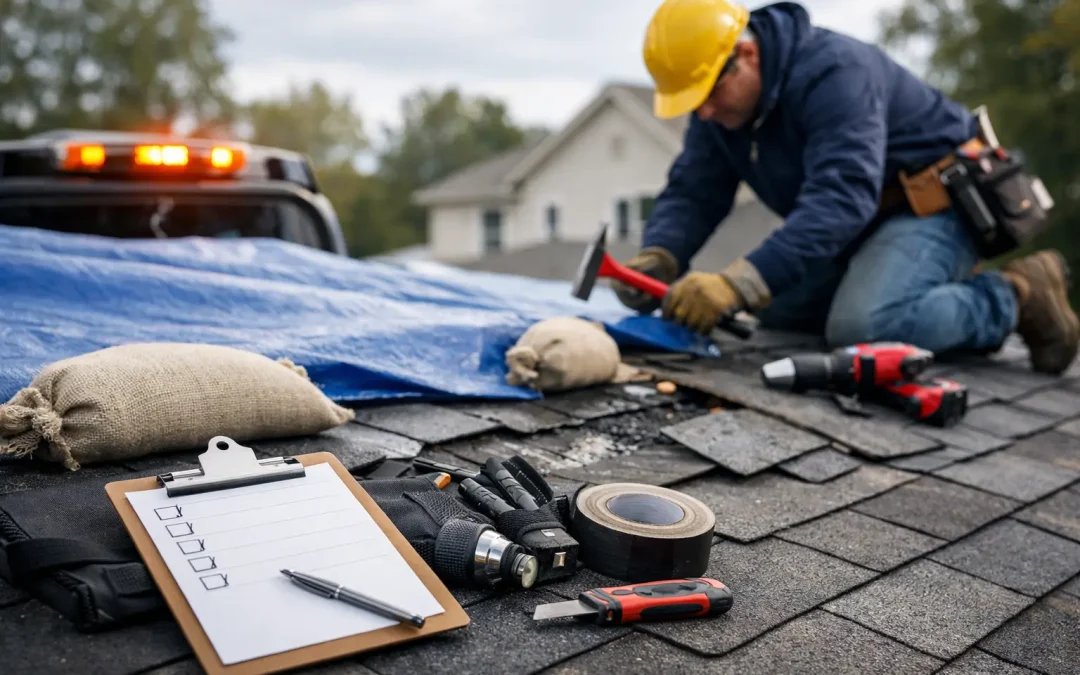
A roof problem rarely happens at a convenient time. It is usually during heavy rain, strong wind, or late in the day when you notice water coming in, tiles on the ground, or a gutter pulling away from the house. In that moment, an emergency roof repair checklist helps you stay calm, protect your home, and avoid making the situation worse.
When a roof is suddenly damaged, the first job is not to fix everything at once. It is to make the property safe, reduce further damage, and get the right repair arranged properly. Some issues can wait a short while for a planned repair. Others need urgent attention straight away, especially if water is entering the loft, electrics are affected, or storm damage has left part of the roof exposed.
Emergency roof repair checklist: what to do first
Start with safety. If water is coming through the ceiling, keep people and pets away from the affected area. Move furniture, rugs, and electrical items if you can do so safely. Put down towels, buckets, or storage boxes to catch dripping water and reduce damage to floors.
Do not climb onto the roof yourself. Even a small leak can be caused by a larger problem higher up the slope, and wet roofs are dangerous underfoot. In strong wind or rain, the risk is even greater. A slipped tile, damaged flashing, torn flat roof membrane, or loose ridge can all look simple from the ground but be unsafe to inspect closely without the right equipment.
If the leak is near lights, sockets, or wiring, turn off the electricity to that area if it is safe to access your consumer unit. If you are unsure, leave it alone and speak to a qualified electrician as well as a roofer. Water and electrics are not something to guess with.
Next, try to identify the signs of damage from ground level. Look for missing tiles or slates, debris in the garden, bent or detached guttering, damaged fascias or soffits, and visible sagging. If you have a flat roof extension or garage, check for standing water, splits, lifted edges, or obvious punctures.
Take clear photos if possible. This helps when explaining the problem and can also support any insurance claim if the damage is storm-related. Focus on what can be seen safely from outside and any internal signs such as damp patches, ceiling staining, or active leaks.
What counts as a roofing emergency
Not every roof issue is a full emergency, but some are time-sensitive enough that delaying can turn a manageable repair into a much larger job.
A major active leak is an obvious one, especially if water is travelling through ceilings, down walls, or into loft insulation. Storm damage is another, particularly where tiles have come off, ridge tiles are loose, or flashing has lifted and left gaps for rain to enter. Flat roof failures can also be urgent if the covering has split and water is pooling or finding its way indoors.
Problems with guttering and roofline products can be urgent too. If a section of gutter has come away and is hanging loose, or if fascias and soffits are damaged enough to expose the roof edge, there may be a risk to people below as well as to the property.
On the other hand, a small stain that has been unchanged for months may not need same-day attention. That said, roofs rarely improve by themselves. If you are in doubt, it is better to get proper advice quickly than assume it can wait.
Temporary steps that can help
There are only so many temporary measures a homeowner should take, but a few practical steps can limit the damage indoors while you wait for a roofer.
If water is dripping through a ceiling, keep collecting it and empty containers before they overflow. If a ceiling begins to bulge with trapped water, do not start poking at it unless you know exactly what you are doing. A collapse can cause more mess and more risk than the original leak.
In the loft, if it is safe and well lit, you may be able to place a container beneath a steady drip or move stored belongings away from the affected area. Be careful around insulation, boarding, and electrical cables. Do not force your way into a tight roof space in poor conditions.
What you should not do is apply DIY fixes from a ladder in bad weather, use expanding foam as a roofing repair, or cover damage with materials not intended for external use. These short-term attempts often fail quickly and can make professional repair more difficult later.
What to tell a roofer when you call
A clear phone call saves time. Explain what has happened, when you first noticed it, and whether the problem followed heavy rain or strong wind. Mention the type of roof if you know it, such as pitched tiled roof, slate roof, or rubber flat roof.
It also helps to say where the leak is appearing inside the property. Water does not always come in directly below the damage, so details matter. If you have seen missing tiles, cracked mortar on the ridge, damaged guttering, or loose soffits, include that too.
Say whether access is straightforward and whether there are any urgent risks, such as water near electrics or debris that could fall. A reliable contractor will want enough detail to prioritise the call properly and arrive prepared.
After the immediate danger has passed
Once the leak is contained and the roof has been made safe, the next step is making sure the repair is done properly rather than patched in a way that only buys a little time.
This is where experience matters. Emergency work sometimes reveals wider issues – old felt underlay that has failed, battens affected by long-term moisture, worn leadwork, perished flat roof coverings, or roofline components that have reached the end of their life. A quick repair may be all that is needed, but sometimes the honest answer is that a more permanent fix will save money and disruption over time.
That does not mean every emergency leads to a full replacement. Far from it. Many roofs can be repaired successfully if the cause is identified properly and the work is carried out to a good standard. The important part is having a clear assessment rather than guesswork.
How to avoid repeat emergencies
The best emergency roof repair checklist includes one point many people overlook: prevention after the event. Once one urgent issue has happened, it is worth checking whether the rest of the roof is showing signs of wear.
Look at the condition of ridge tiles, flashing, valleys, gutters, fascias, soffits, and any flat roof areas. Small defects often show up before winter or after a spell of bad weather. Dealing with them early is usually more straightforward and less disruptive than waiting for the next storm to expose them.
Regular visual checks from the ground help, especially after high winds. If you notice slipped tiles, overflowing gutters, staining on external walls, or vegetation collecting in roof valleys, those are worth acting on before water starts getting inside.
For homeowners across Nottingham and the wider Midlands, weather can test a roof quickly. A property that looks fine in dry conditions may reveal weak points under prolonged rain and wind. That is why prompt inspections and proper repairs matter.
Choosing the right help
When you are dealing with roof damage, speed matters, but so does who you trust to carry out the work. A rushed repair done badly can leave you with hidden leaks, poor matching materials, or bigger problems a few months later.
Look for a contractor who explains the issue clearly, turns up when agreed, and treats the property with care. Good emergency roofing work is not only about stopping the leak on the day. It is about making the roof sound again and leaving the home protected.
At MTF Roofing Ltd, that means approaching urgent repairs with the same standards as any larger job – clear communication, proper workmanship, and a focus on putting the problem right rather than covering it up.
If your roof has suddenly started leaking or suffered storm damage, the main thing is not to panic or take unnecessary risks. Keep the area safe, limit internal damage where you can, and get the roof checked by someone who will deal with it properly the first time.