A flat roof should quietly do its job in every season: keeping rain out, coping with summer heat and leaving the property looking cared for. When an older felt roof begins to crack, blister or leak, rubber roofing is often one of the most dependable replacement options for garages, extensions, porches, dormers and bay windows.
For homeowners, the attraction is straightforward. A properly fitted rubber roof creates a clean, modern finish with fewer seams than many traditional systems. It can provide long-term protection without the repeated patching that often comes with a tired flat roof. The result, however, depends just as much on the preparation and fitting as it does on the material itself.
What is rubber roofing?
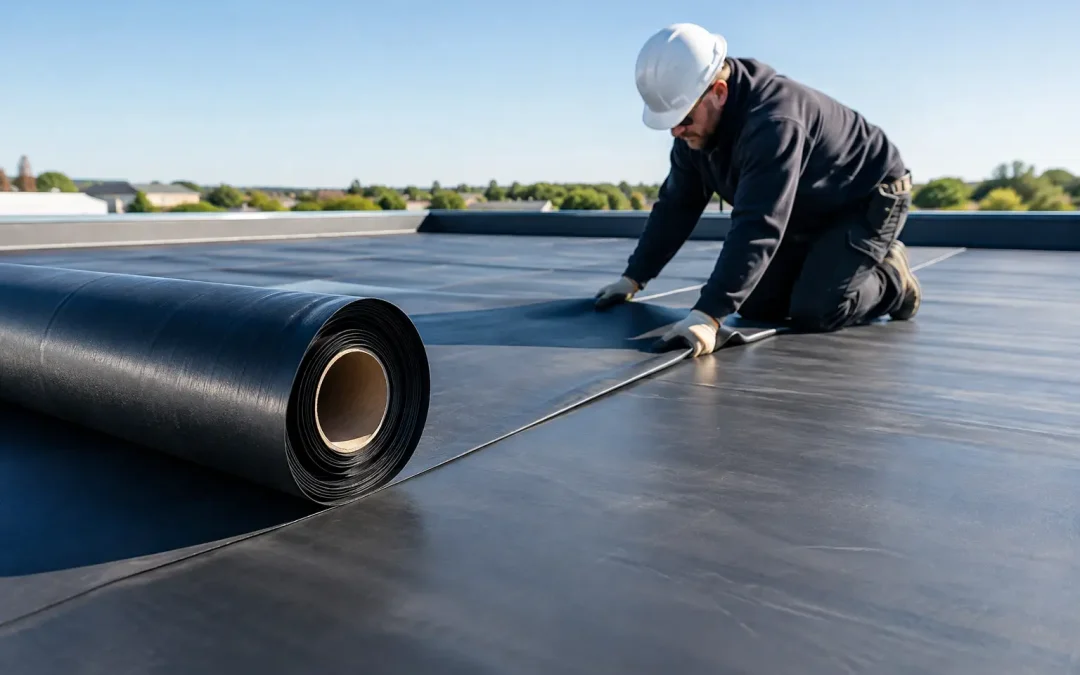
The term rubber roofing is commonly used for EPDM, a durable synthetic rubber membrane made for flat and low-pitched roofs. It is supplied in rolls or made-to-measure sheets, allowing a large area to be covered with minimal joins.
The membrane is normally fixed to a prepared roof deck using an approved adhesive. Edges, corners, outlets and upstands are then finished carefully to create a watertight seal. Although it is called a flat roof, the structure should still have enough fall to guide water towards the guttering or drainage outlet.
EPDM is not the same as old-fashioned roofing felt. Felt systems are layered and typically finished with mineral-coated surfaces, while rubber membranes form a flexible single-ply covering. Both have a place, but they perform differently and should not be treated as like-for-like replacements.
Why homeowners choose rubber roofing
A rubber roof is a sensible choice where a property needs reliable weather protection without adding unnecessary weight to the structure. The material is flexible, which helps it deal with normal seasonal movement as temperatures rise and fall. It does not become brittle in the way that ageing felt often can.
It also gives a neat appearance. A single black membrane with properly finished perimeter trims can make a garage, extension or porch look far smarter than a roof that has been patched several times. For homeowners preparing to sell, or simply improving a well-used part of the home, that visible difference matters.
Another benefit is low maintenance. There is no roof covering that can be ignored completely, particularly where nearby trees shed leaves and moss into gutters. But a sound rubber roof generally needs only occasional visual checks, clear outlets and clean guttering. There are no loose tiles to replace and fewer exposed joints than on many other flat roofing systems.
Long service life is a major reason to invest in quality materials and professional fitting. A correctly installed EPDM roof can last for decades. That does not mean every rubber roof will perform the same way. Poorly prepared decking, inadequate drainage or badly sealed edges can shorten the life of even a good membrane.
Where rubber roofs work best
Rubber roofing is particularly well suited to small and medium-sized residential flat roofs. It is regularly used on rear extensions, garages, car ports, porches, garden rooms, dormer roofs and bay windows. It can also be a practical option when replacing a worn felt roof, provided the supporting structure is in good condition.
The shape and condition of the roof matter. Straightforward rectangular roofs are often ideal because the membrane can be laid in a large continuous section. Roofs with several changes in level, awkward penetrations or complicated detailing may still be suitable, but they need more careful planning around pipes, skylights, walls and drainage points.
If the roof is used as a terrace or balcony, the specification needs closer consideration. Foot traffic, balustrades and surface finishes all affect the system required. In these cases, it is worth discussing the intended use at survey stage rather than assuming a standard membrane installation will be enough.
The detail that makes a roof last
The visible membrane is only one part of the job. Before fitting begins, a competent roofer should assess the existing roof deck, joists, falls, flashings, guttering and surrounding roofline. A new covering laid over damp, rotten or unstable boards will only hide a problem for a short time.
Where the timber deck has deteriorated, it should be replaced so the membrane has a solid, even surface to bond to. Any trapped moisture should be dealt with before the roof is closed up. This is especially relevant after a long-term leak, where the water damage beneath the old surface may be worse than it first appears.
Drainage deserves equal attention. Small amounts of water can remain on a flat roof after heavy rain, but deep or persistent ponding suggests that the fall, outlet or guttering needs attention. Water should have a clear route off the roof. If the gutter is blocked, damaged or poorly positioned, the new roof may be put under unnecessary strain.
Edges and abutments are another common weak point. The membrane must be securely bonded and finished where it meets brickwork, fascias, walls or upstands. These areas are not a place to cut corners. A tidy finish should also protect the edges from wind uplift and leave the roof looking right from ground level.
Repair or replacement: how to decide
A small, isolated split or puncture may be repairable, especially on a relatively new rubber roof. A professional inspection can establish whether the membrane is otherwise sound and whether the deck beneath has stayed dry.
Replacement is usually the better long-term option when there are repeated leaks, widespread cracking, bubbling, lifting edges or signs of rot beneath the covering. The same applies where several patch repairs have already been carried out. Constant repairs can feel cheaper in the moment, but they soon add up if the underlying roof has reached the end of its working life.
It is also worth looking beyond the roof covering itself. If tired fascias, soffits or guttering are contributing to overflow and water damage, dealing with them at the same time can protect the new roof and improve the appearance of the whole elevation.
What affects the cost of a rubber roof?
The size of the roof is only one part of the price. Access, the condition of the existing deck, the need for insulation, removal of old materials, drainage changes and the amount of edge detail all affect the work involved. A simple garage roof with clear access will be very different from an extension roof surrounded by walls, skylights and awkward guttering.
Insulation is a particularly worthwhile point to raise before work starts. If the flat roof sits above a heated room, improving thermal performance may make the room more comfortable and help reduce heat loss. The correct build-up depends on the construction of the roof, available height and current requirements, so it should be planned rather than added as an afterthought.
The cheapest quotation is not always the best value. Ask what preparation is included, whether damaged decking will be addressed, how edges and outlets will be finished, and how waste will be removed. A clear quotation gives you a better basis for comparison than a single figure with little detail behind it.
Choosing the right roofer for rubber roofing
A rubber roof is a specialist installation, not simply a sheet rolled out over an old surface. Look for a contractor that surveys the roof properly, explains the condition of the existing structure in plain language and provides a clear written quotation.
You should also expect reliable communication, appropriate insurance and a tidy site once the work is complete. A contractor should be willing to explain whether repair is realistic or whether replacement would be the more sensible route. Honest advice is particularly valuable when a leak has caused worry or disruption inside the home.
For homeowners across Nottingham and the wider Midlands, MTF Roofing Ltd takes a workmanship-led approach to flat roof replacements and repairs, from the initial survey through to the final clean-up. The aim is simple: fit a roof that looks right, drains properly and gives the property dependable protection.
A good time to arrange an assessment is before a minor issue becomes internal damage. If your flat roof is showing its age, water is gathering after rainfall or you are planning an extension upgrade, a clear professional opinion can help you choose the right work with confidence.