
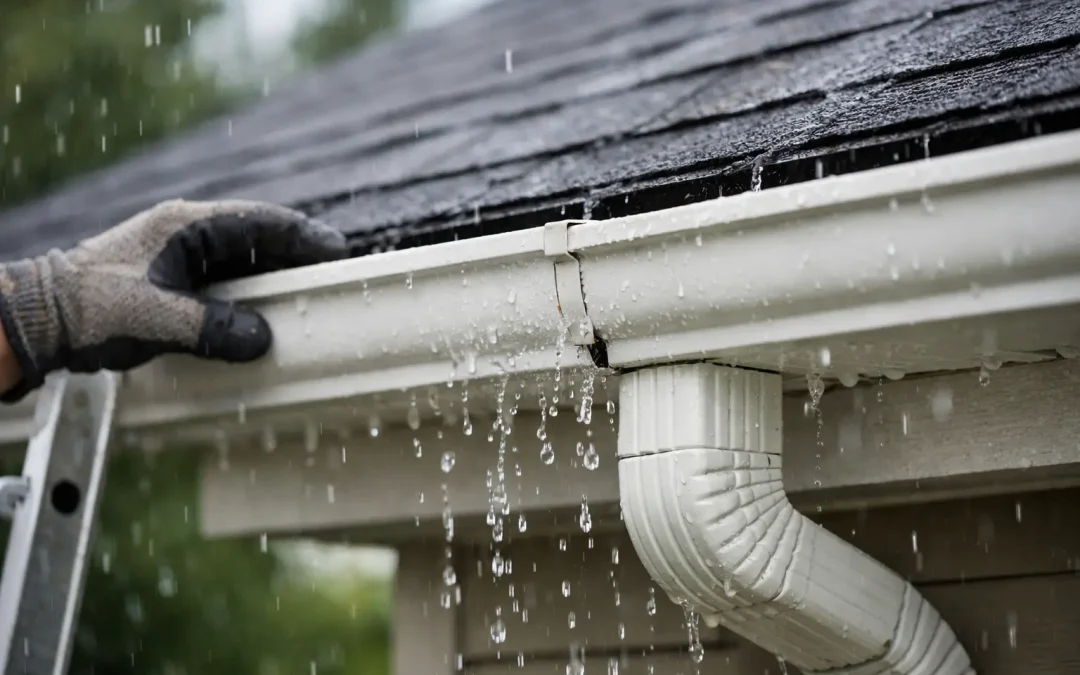
Water running down an outside wall during heavy rain is more than an untidy nuisance. If you are wondering how to stop gutter leaks, the first job is finding out whether the water is escaping from a joint, flowing over the top, or coming from a damaged section of guttering. The right repair can protect your brickwork, fascias, soffits and foundations. The wrong temporary fix can leave the same problem waiting for the next downpour.
A gutter system should collect rainwater from the roof and direct it safely into the downpipe. When it cannot do that, moisture can reach parts of the property that were never designed to stay wet. Over time, this can lead to stained walls, rotten timber, damp patches and damage around windows and doors.
Find the source before you repair the leak
It is tempting to apply sealant wherever water is visible, but dripping water does not always show where the fault began. Water can travel along the underside of a gutter or fascia before it falls, so inspect the system carefully on a dry day.
Look for water marks, green staining, overflowing sections and gaps at the joins. If it is safe to do so, use a hose to run a controlled amount of water through the guttering while somebody watches from ground level. Start near the downpipe and work backwards. This makes it easier to see whether water is backing up, escaping through a joint or spilling over an edge.
Do not lean ladders against plastic guttering or climb onto the roof to investigate. Guttering can crack under pressure, and wet roofs are hazardous. For high, awkward or unstable areas, a professional inspection is the safer option.
The most common reasons gutters leak
Blocked gutters and downpipes
Leaves, moss from the roof, twigs and silt often collect in gutters, particularly near outlets and at corners. Once water cannot reach the downpipe quickly enough, it overflows. This may look like a leaking joint, but clearing the blockage may solve the issue.
Downpipes can block below ground level too. If the gutter fills up around the outlet despite being clear along its length, the downpipe or drain connection may be obstructed. A simple visual check is useful, but avoid forcing debris further down the pipe.
Worn seals at gutter joints
Most modern uPVC gutter systems use rubber seals inside unions, stop ends and outlets. These seals can become hard, distorted or dirty with age. They may also move out of position after frost, heat or previous repairs.
A joint that leaks only during prolonged rain often needs cleaning and resealing rather than a new gutter run. The gutter needs to be removed from the union carefully, the channels cleaned, and the seal inspected. If the rubber has split, flattened or perished, replacing the fitting is usually more reliable than relying on sealant alone.
Incorrect fall or loose brackets
Gutters need a slight fall towards the downpipe. If brackets have worked loose, been fitted at uneven heights or pulled away from tired fascia boards, water can sit in the gutter instead of draining away. Standing water adds weight, encourages leaks at joints and can cause the gutter to bow.
This is one reason a leak may return after a joint has been sealed. The seal was not necessarily the original problem. Correcting the alignment and securing the brackets properly gives the water a clear route to the outlet.
Cracked, warped or damaged guttering
Plastic guttering expands and contracts throughout the year. Older sections can become brittle, while impact from a ladder, falling branch or accumulated ice can create cracks. Cast iron and metal gutters may corrode, especially where paint has failed or water has been standing for long periods.
Small cracks can sometimes be repaired, but the repair must suit the gutter material and be made on a clean, dry surface. A patch is sensible only when the rest of the section remains sound. If there are several cracks, obvious sagging or repeated repairs, replacement is often better value over the longer term.
Water missing the gutter altogether
Not every apparent gutter leak is a gutter fault. Roof tiles may be overhanging too far or not far enough, allowing rainwater to run behind or beyond the gutter. On low-pitched roofs, extensions and porches, the roof edge detail can also affect where water lands.
If water is running down the fascia board behind the gutter, the roofline may need attention. This is particularly common where old felt has deteriorated at the eaves. Simply fitting a larger gutter will not resolve water entering behind it.
How to stop gutter leaks safely
Start with the straightforward maintenance work. Clear loose debris from the guttering and remove any build-up around outlets. Flush the system with clean water to check that it flows freely through the downpipe. Cleaning should be carried out at least twice a year, usually in spring and late autumn, with extra checks if your home is close to mature trees.
For a leaking union, remove the gutter section only if you can safely reach it and understand how the fittings connect. Clean away dirt, old sealant and debris from the union, then inspect the rubber seal. Refit the gutter fully into the correct expansion marks. Forcing it too tightly into the fitting can cause problems as temperatures change.
Use gutter sealant sparingly and only where it is suitable for the material and type of repair. Sealant can help with a minor crack or a sound joint that needs additional weatherproofing, but it should not be used to disguise a failed bracket, rotten fascia or badly aligned system. It also needs dry conditions and enough curing time before rain.
If a bracket is loose, do not simply tighten it into soft or damaged timber. The fixing needs to hold securely in sound material. Where fascia boards are rotten, swollen or pulling away, the gutter should be removed and the underlying roofline repaired before it is refitted.
When repair is no longer the sensible choice
A single leaking joint is commonly repairable. A system that leaks at several joints, sags between brackets, overflows regularly and has cracked sections may be nearing the end of its useful life. In that situation, repeated call-outs and patch repairs can cost more than replacing the guttering properly.
Replacement also gives the opportunity to check the fascias and soffits behind the gutter. These boards are often hidden until the guttering is removed, and any soft or decayed timber needs dealing with before new brackets are installed. Good-quality replacement guttering fitted with the right fall, spacing and outlet position should manage rainwater effectively for years.
The size and profile of the gutter matters too. Standard half-round guttering works well for many homes, but larger roof areas, steep roof pitches and exposed locations may need a higher-capacity profile. The best choice depends on how much water the roof sheds, not just on matching the existing guttering.
Signs you should call a roofing and roofline specialist
Arrange a professional assessment if water is getting into the property, if gutters are pulling away from the roofline, or if the fault is difficult to reach safely. You should also seek advice where the fascia boards appear rotten, the roof edge is directing water behind the gutter, or several repairs have failed.
A proper survey looks beyond the visible drip. It checks the condition of the gutter runs, brackets, downpipes, outlets, fascias, soffits and roof edge. This avoids spending money on a quick fix that does not address the cause.
For homeowners across Nottingham and the wider Midlands, MTF Roofing Ltd can assess leaking guttering and roofline issues clearly, explain the available repair or replacement options, and complete the work to a high standard. A tidy, correctly fitted system should improve the appearance of the home as well as keeping rainwater where it belongs.
A gutter leak rarely improves by itself. Deal with the first signs of overflow, staining or dripping before persistent rain turns a small repair into damaged roofline timber or damp masonry.