
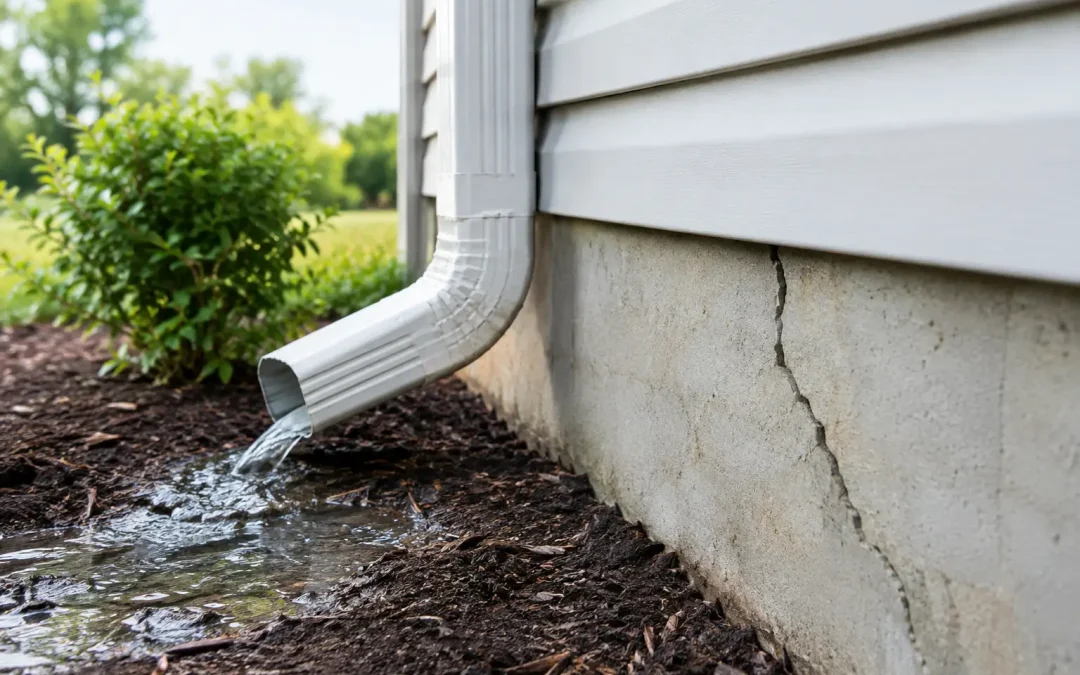
A gutter that overflows during a Midlands downpour can seem like a minor nuisance, especially if the roof itself is not leaking. But can gutters damage foundations? Yes, they can. When rainwater is repeatedly allowed to collect beside a property rather than being carried safely away, it can affect the ground around the house and, over time, place unnecessary pressure on the foundations.
The good news is that gutter-related foundation problems are often preventable. Regular checks, prompt repairs and correctly positioned downpipes all make a real difference. The key is not to ignore water where it should not be.
Can gutters damage foundations? Yes, through poor drainage
Guttering is there to collect rainwater from the roof and direct it away from the building. If it is blocked, leaking, poorly fitted or draining too close to the walls, large volumes of water can soak into the ground around the base of your home.
One heavy shower is unlikely to cause major damage. The concern is repeated saturation over months or years. Soil that stays wet can shift, soften or expand, depending on its type. Clay soil, which is common in many parts of Nottinghamshire and the wider Midlands, is particularly prone to swelling when wet and shrinking as it dries. That movement can affect the ground supporting a property.
Water can also find its way through small cracks in brickwork, render or below-ground areas. This may lead to damp patches, damaged internal finishes or problems in cellars and lower ground floors. Guttering is not always the sole cause, but it is one of the first areas worth inspecting when water is consistently gathering near a house.
How faulty guttering creates the problem
A sound gutter system should have a clear fall towards the outlet, secure brackets, sealed joints and downpipes that discharge water well away from the foundations. Problems begin when one of these elements fails.
Blocked gutters are a common example. Moss, leaves, twigs and roof debris stop water from reaching the downpipe. Once the channel fills, it spills over the front or back edge, often in the same place every time it rains. That concentrated flow lands directly beside the wall instead of draining away as intended.
Leaks at joints, corners and stop ends can have a similar effect. Even a small but constant drip can saturate a narrow strip of ground over time. Sagging guttering is another warning sign. It may hold standing water because the brackets have loosened, the gutter has been fitted without the correct fall, or the system is carrying more weight than it should.
Downpipes deserve just as much attention. A downpipe that is cracked, blocked or disconnected can release water next to the property. Equally, a working downpipe that ends at the base of the wall without suitable drainage may still be sending too much water into the wrong area.
Signs that water may be affecting your foundations
Foundation movement has several possible causes, so it is sensible not to assume that guttering is responsible for every crack. However, visible drainage issues alongside changes to the property should be taken seriously.
Look for water pooling beside external walls after rain, overflowing gutters, persistent staining on brickwork, or soil that appears washed away beneath a downpipe. Green growth on walls and paths can also suggest that an area remains damp for longer than it should.
Inside the property, new or widening cracks around doors, windows and plasterwork may need further investigation, particularly if doors begin sticking or floors feel uneven. Small hairline cracks are common in homes and are not automatically a structural concern. Cracks that are getting larger, diagonal, or accompanied by other changes should be assessed by a suitable professional.
You may also notice damp at low level on internal walls, peeling paint, crumbling plaster or a musty smell near the outside wall where the gutter is overflowing. These signs do not prove foundation damage, but they show that water management needs attention.
Why the problem is not always obvious
Gutter faults are easy to miss because they often show themselves only during heavy rain. On a dry day, a split joint may look harmless. A blocked outlet may not be visible from ground level, and a poorly positioned downpipe can continue sending water into the same spot without drawing much attention.
That is why it helps to check the system during or shortly after rainfall, while staying safely on the ground. Watch where water flows, look for drips at joints and check whether it is pooling near the walls. Never lean ladders against guttering or attempt high-level work without the right equipment and experience.
Properties with extensions, conservatories, garages and flat roofs need particular care. These areas can have their own gutter runs and outlets, and a smaller roof section can still send a surprising amount of water towards a wall if its drainage is not working properly.
What to do if your gutters are overflowing or leaking
Start by dealing with the cause rather than simply clearing up the water below. If debris is visible and can be safely removed from ground level, clear it. Otherwise, arrange for the gutters to be cleaned and inspected. A professional can check for blockages, loose brackets, damaged sections, failed seals and incorrect falls that are not obvious from below.
If water is discharging close to the house, the drainage arrangement may need improving. The right solution depends on the property and the available drainage. It may involve repairing or extending a downpipe, reconnecting it to a suitable drain, or altering the route so water is carried away from the foundations. The aim is controlled drainage, not simply moving the problem to a neighbour’s property or a path that becomes slippery in winter.
Where there are signs of significant cracking, ongoing damp or suspected ground movement, it is sensible to seek advice from an appropriately qualified building or structural professional as well. Repairing the guttering remains necessary, but any potential structural issue should be properly assessed.
Prevention is usually simpler than repair
Keeping gutters clear is one of the most straightforward ways to protect the outside of a home. Most properties benefit from an inspection at least once or twice a year, usually after autumn leaf fall and again following winter weather. Homes close to trees, or roofs that shed a lot of moss, may need more frequent attention.
During an inspection, check that the gutters are securely fixed, joints are not dripping, outlets are flowing freely and downpipes remain firmly connected. Also look at the fascia boards behind the guttering. Rotting timber or damaged roofline boards can allow brackets to loosen, causing the gutter to pull away from the house and overflow.
Replacement is sometimes more cost-effective than repeated patch repairs. Older plastic guttering can become brittle, warped or poorly aligned, while worn fascias may no longer provide a secure fixing point. A properly fitted new roofline and gutter system should be sized and positioned to manage the water coming from the roof, not just made to look tidy from the pavement.
When to call a roofing and roofline specialist
Professional help is worthwhile when gutters are inaccessible, repeatedly blocking, visibly sagging, leaking from several points or pulling away from the roofline. It is also sensible if you are unsure whether the issue lies with the gutters, fascias, soffits, roof covering or drainage below ground.
At MTF Roofing Ltd, we assess the condition of the full roofline rather than treating an overflowing gutter as an isolated issue. That means identifying why water is escaping, explaining the practical repair options and carrying out work with care for the property below.
A gutter system does not need to be complicated to do its job well. It simply needs to be clean, securely fitted and able to send rainwater away from the house. Acting when you first notice an overflow can save a much larger repair later and helps keep your home dry, protected and looking cared for.