Water rarely announces a guttering problem until it has already caused one. Overflowing gutters can soak brickwork, stain render, rot timber fascias and leave water pooling around the base of a property. A guide to choosing guttering materials should therefore start with more than appearance: the right system needs to cope with your roof, the local weather and the character of your home.
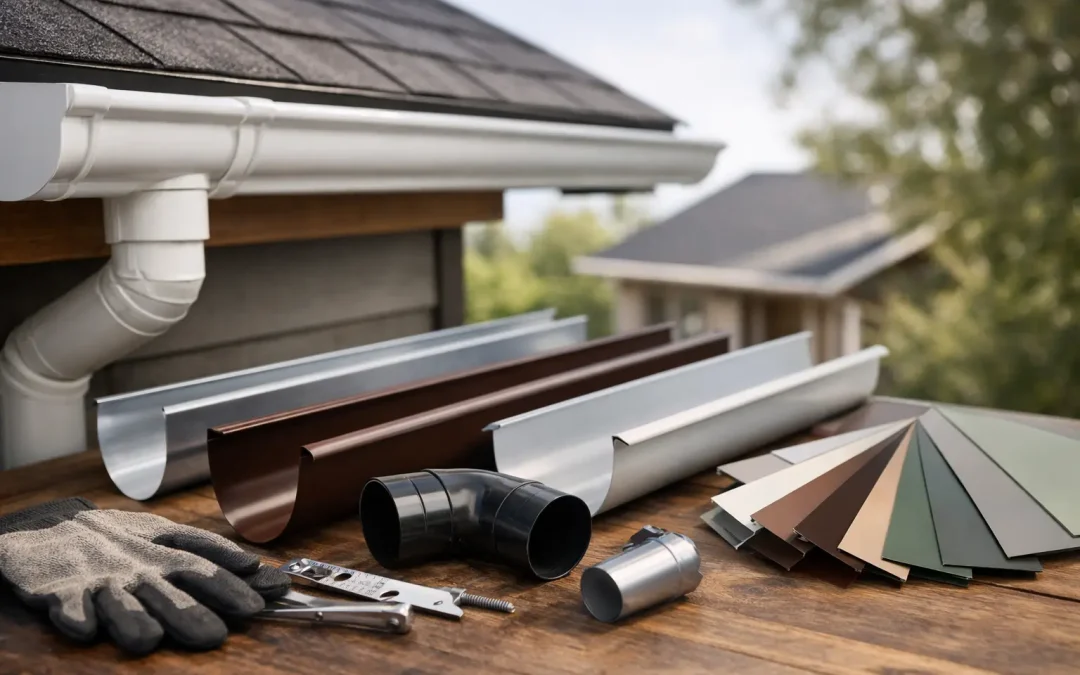
For many properties across Nottingham and the Midlands, uPVC guttering is the sensible choice. It is not the only option, however. Aluminium, steel and cast iron all have their place, particularly where durability, a specific finish or a period look is required. The best material is the one that is correctly sized, properly fitted and suited to the property – not simply the most expensive option.
Start with what your guttering needs to handle
A gutter’s job is straightforward: collect rainwater from the roof and move it safely into the downpipes and drainage system. In practice, the amount of water involved can be considerable during a heavy downpour. A large roof, a steep pitch, roof valleys and areas where water runs from one roof onto another can all concentrate water into a short length of guttering.
This is why the profile and capacity of the guttering matter alongside the material. A standard half-round gutter may be adequate for a small terraced house or garage, while a deeper square-line or high-capacity profile can be a better fit for larger detached homes, extensions and roofs with valleys. Installing a premium material in an undersized gutter will not prevent overflowing.
The condition of the fascias and soffits should also be considered. Guttering brackets need a sound, level fixing point. If timber fascias are rotten or distorted, replacing the guttering alone can lead to poor falls, loose brackets and repeat problems. A proper survey identifies whether the roofline needs attention at the same time.
Guide to choosing guttering materials for your home
uPVC: practical, affordable and widely used
uPVC guttering is the most common choice on modern homes for good reason. It is lightweight, does not rust, comes in several profiles and colours, and offers good value for a replacement project. Black, white, brown, grey and anthracite finishes make it easier to match windows, fascias, soffits and the overall look of a property.
For most homeowners, a quality uPVC system fitted with the correct bracket spacing and fall will provide reliable service for many years. It is also straightforward to maintain: clearing leaves and moss, checking joints and keeping downpipes free-flowing will deal with most issues.
There are trade-offs. uPVC expands and contracts with changing temperatures, so joints must be fitted correctly and allowed to move as intended. Lower-grade plastic can become brittle with age or fade after prolonged sun exposure. The answer is not to avoid uPVC altogether, but to choose a reputable system and ensure the fitting is not rushed.
Aluminium: lightweight with a smart, long-lasting finish
Aluminium guttering is a strong option where homeowners want a more refined appearance and a material that will not rust. It is lightweight but durable, and it can be supplied in a range of colours or finishes. Some aluminium systems are formed with fewer joints, reducing potential points for leaks.
It tends to cost more than uPVC, both in materials and installation. Repairs or alterations can also be less straightforward, depending on the system used. That said, aluminium can be an excellent investment for homes where appearance is a priority or where a long service life is preferred.
It is particularly worth considering on contemporary properties, carefully renovated homes and projects where the guttering needs to complement high-quality cladding, render or roofline products. As with any material, it still depends on correct sizing, suitable outlets and secure fixings.
Galvanised steel: tough but needs the right protection
Steel guttering is valued for strength and a crisp, traditional appearance. Galvanised steel has a protective zinc coating designed to resist corrosion, while coated steel systems can offer a neat finish in a choice of colours. It can be well suited to properties where plastic guttering would look out of place or where extra impact resistance is useful.
The main consideration is protection against corrosion. Scratches, damaged coatings and neglected joints can allow rust to develop over time. Steel is also heavier than uPVC, so the supporting fascias and brackets must be in good order. It is a material that benefits from a professional installation and regular checks rather than a fit-and-forget approach.
Cast iron: the right choice for period character
Cast iron guttering has a solid, traditional look that suits many Victorian, Edwardian and heritage-style homes. On the right property, it can make a real difference to the finished appearance, particularly when paired with timber fascias, original brickwork or other period details.
It is extremely durable when properly prepared, painted and maintained. However, it is heavy, more costly to install and requires ongoing care to prevent corrosion. If paint fails or a joint leaks, water can sit against the metal and cause deterioration. Cast iron is not automatically necessary for every older home, but it can be the best choice where preserving character is important or where planning requirements call for a more traditional material.
Do not choose on material alone
A guttering system is only as good as its design and installation. Even the best material can fail if it has too few downpipes, inadequate outlets, poorly positioned brackets or incorrect falls. Gutters need a gentle fall towards the outlet so water drains away without looking visibly sloped from the ground.
Joints and stop ends need particular care. These are common leak points, especially in older systems where seals have hardened or movement has pulled sections apart. On uPVC, expansion gaps must be respected. On metal systems, joints and fixings must be treated appropriately for the material. Mixing different materials can also create avoidable problems unless the components are designed to work together.
Downpipes deserve equal attention. A wide, high-capacity gutter can still overflow if a narrow downpipe cannot carry the water away quickly enough, or if the underground drain is blocked. During a survey, it is sensible to look at the whole route from roof edge to drain rather than replacing the visible guttering in isolation.
Match the finish to the property and maintenance you can manage
Colour is not merely decorative. A well-chosen guttering colour can make roofline work look tidy and considered, while a poor match can draw attention to the guttering for the wrong reasons. Black remains a popular option for traditional brick homes. White can suit lighter render and standard uPVC windows. Grey and anthracite are often chosen for modern extensions and newer properties.
Think realistically about maintenance too. All gutters need clearing, especially where there are nearby trees. Leaves, moss from roof tiles and debris from birds can block outlets quickly. Cast iron and steel require closer inspection for coating damage and early signs of corrosion. uPVC and aluminium generally demand less surface maintenance, but their joints, brackets and seals should still be checked.
If access is difficult because of conservatories, extensions or a steep site, choosing a lower-maintenance material may be worth the extra initial cost. Equally, a character property may justify the upkeep of cast iron because the visual result matters.
When replacement makes more sense than repair
A slipped bracket, loose joint or local crack can often be repaired. If several sections are sagging, joints are repeatedly leaking, the guttering is brittle, or water is regularly overflowing in the same places, replacement is usually the more dependable option. Replacing the system also gives an opportunity to correct poor design choices made in the past, such as insufficient downpipes or gutters that are too small for the roof.
At MTF Roofing Ltd, we assess the guttering, fascias, soffits and roof drainage together, then explain the practical options clearly. Homeowners should be able to understand what is being recommended, why it is needed and what the finished work will involve before any installation begins.
The right guttering should quietly protect your home through the heaviest rainfall, without distracting from its appearance or creating a maintenance burden you did not expect. A careful survey and a properly fitted system are the best starting point for getting that result.