
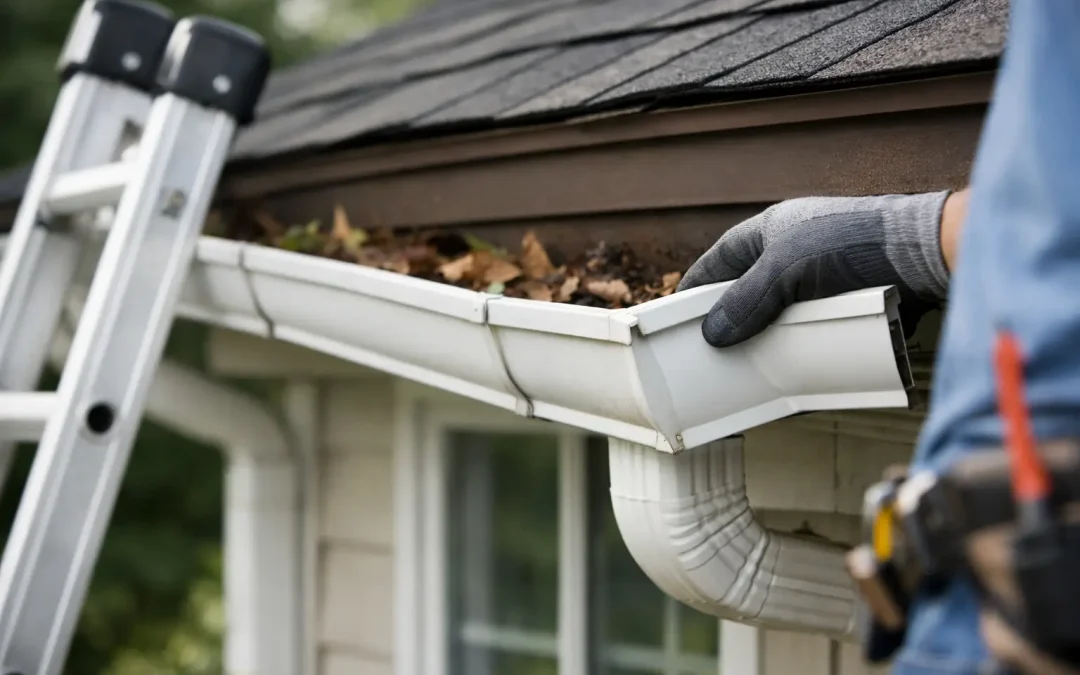
A gutter that dips in the middle may look like a small maintenance issue, but it can quickly lead to water running down brickwork, overflowing near doors, and damp around the roofline. Knowing how to prevent gutter sagging helps protect the parts of your home that are costly to put right later, including fascias, soffits and masonry.
Gutters are designed to carry rainwater steadily towards the downpipe. When they pull away from the fascia board or bow under their own weight, that flow is interrupted. Water then sits where it should not, adding more strain to the gutter and its fixings every time it rains.
Why gutters start to sag
Most sagging gutters are caused by a combination of age, weight and poor support. Leaves, moss, mud and roof grit can collect inside the channel, particularly after autumn or a period of bad weather. A blocked downpipe makes the problem worse because water cannot escape, leaving a long section of gutter carrying far more weight than it was intended to hold.
The brackets themselves are often part of the issue. Plastic clips can become brittle with age, while loose screws and worn fixings allow the gutter to move. If brackets are spaced too far apart, even a good-quality gutter can begin to bow when it is full of rainwater.
The condition of the fascia board matters just as much. Gutters are fixed to the fascia, so rotten timber, split boards or poorly fitted replacement roofline products can leave the brackets without a secure base. Tightening a screw into damaged timber may make the gutter appear straight for a short time, but it will not provide a lasting repair.
Heavy snow, a fallen branch or someone leaning a ladder against the gutter can also knock it out of line. In some cases, the original installation simply did not allow the correct fall towards the downpipe. This means water pools in the gutter even when there is no obvious blockage.
How to prevent gutter sagging with regular checks
The most effective approach is to deal with small changes before the gutter has the chance to pull away or hold standing water. A visual check from ground level after heavy rain can reveal a great deal. Look for water spilling over the front edge, a visible dip between brackets, dripping joins, or damp marks on the wall below.
Check the guttering at least twice a year, usually in spring and late autumn. Homes surrounded by trees may need more frequent attention. You do not need to climb a ladder to identify every issue. Binoculars, a view from an upstairs window, or simply watching how water behaves during rainfall can show whether a section is draining properly.
If you do use a ladder, make safety the first priority. Never rest it against the gutter itself, as the weight can crack the fittings or pull the gutter loose. Use a stable, level base and ask someone to hold the ladder where possible. For high rooflines, awkward access or a gutter already coming away from the property, arranging a professional inspection is the safer choice.
Keep debris and standing water out
Cleaning is not just about making gutters look tidy. It removes the weight that causes sections to bend and helps water reach the downpipe without delay. Clear leaves, moss and sediment from the gutter channel, then test the downpipe by running water through it. If water backs up, the blockage may be lower down the pipe rather than in the gutter itself.
Gutter guards can reduce the amount of larger debris entering the system, especially near mature trees. They are not maintenance-free, though. Fine material can still settle on top of the guard or pass through it, so occasional checks remain necessary. The best option depends on the amount and type of debris around the property, as well as the design of the existing guttering.
Make sure brackets are properly spaced and secure
Brackets should support the gutter evenly along its full length, with extra attention around joints, stop ends and downpipe outlets. The correct spacing depends on the gutter profile, material and exposure of the property, but visible wide gaps between supports are a warning sign.
A loose bracket should be dealt with promptly. In sound timber, it may be possible to refit the fixing securely. Where the fascia board is soft, cracked or rotten, replacing the bracket alone is unlikely to solve the problem. The underlying roofline needs repairing or replacing so the new gutter system has a firm fixing point.
Avoid the temptation to add a screw or sealant as a quick fix without checking why the bracket failed. A gutter can remain attached while the fascia continues to deteriorate behind it. A proper repair addresses the board, bracket and gutter alignment together.
Get the fall towards the downpipe right
A gutter should have a slight fall towards the downpipe, allowing rainwater to drain rather than collect in the middle. The fall is subtle, so a gutter that appears level to the eye may still be fitted correctly. What matters is whether water moves through the system as it should.
If water consistently remains in one area after rain, the gutter may have dropped, the brackets may have moved, or the original line may not have been set accurately. Persistent standing water adds weight, encourages dirt to build up and can cause plastic components to sag over time.
Correcting the fall generally involves removing and repositioning brackets rather than forcing the gutter upwards. It is careful work because changing one section can affect the alignment of joints and outlets elsewhere. On long runs, older systems or properties with uneven rooflines, it is often better to assess the whole arrangement than repair one dip in isolation.
Do not overlook fascias and soffits
Your gutters, fascias and soffits work as one roofline system. When gutters overflow or sag, water can repeatedly soak the fascia board. Timber fascias are particularly vulnerable if paint has failed or water has been running behind the gutter. Over time, the board can rot and lose its ability to hold the gutter brackets securely.
Warning signs include peeling paint, dark staining, soft spots in timber, gaps around the gutter fixings and gutters that sit noticeably away from the roofline. Damp patches inside an upstairs room can also point to water finding its way behind defective guttering or damaged roof edges.
Replacing tired fascias and soffits with quality uPVC roofline products can provide a durable, low-maintenance fixing base for new guttering. However, the roof edge should be checked first. Covering over damaged timber without dealing with the cause of the decay is poor practice and can store up problems for later.
Choose repairs or replacement based on the real condition
Not every sagging gutter needs a complete replacement. If the gutter is otherwise sound and the issue is limited to a few loose brackets or a local blockage, a targeted repair can be the sensible and cost-effective option.
Replacement becomes more worthwhile when the gutter is cracked, faded and brittle, has repeated leaks at several joints, or has sagged in more than one area. It is also worth considering when old gutters are attached to failing timber fascias. Replacing the roofline and guttering together gives the new system a sound foundation and avoids paying for separate access and labour at different times.
Material choice can make a difference too. Modern uPVC guttering is a popular residential option because it is durable, practical and available in styles that suit many homes. The quality of the fitting is every bit as important as the material. Well-spaced brackets, correctly sealed joints, a suitable fall and secure fixings are what keep the system performing through Midlands rain, frost and wind.
When to call a professional
A gutter that is visibly pulling away from the fascia, overflowing regularly, or causing water marks on external walls should not be left until the next season. The longer water reaches the roofline and masonry, the greater the risk of decay, staining and damp-related repairs.
Professional help is particularly useful where access is difficult, gutters sit above a conservatory or extension, or there is any concern about the fascia board behind the system. An experienced contractor can identify whether the problem is a blocked outlet, failing brackets, poor alignment or a roofline issue that needs more substantial work.
At MTF Roofing Ltd, we take a straightforward approach: assess the condition of the guttering and roofline, explain what is needed, and carry out work to a proper standard. A timely inspection can keep a small gutter problem from becoming damage to the home beneath it.