
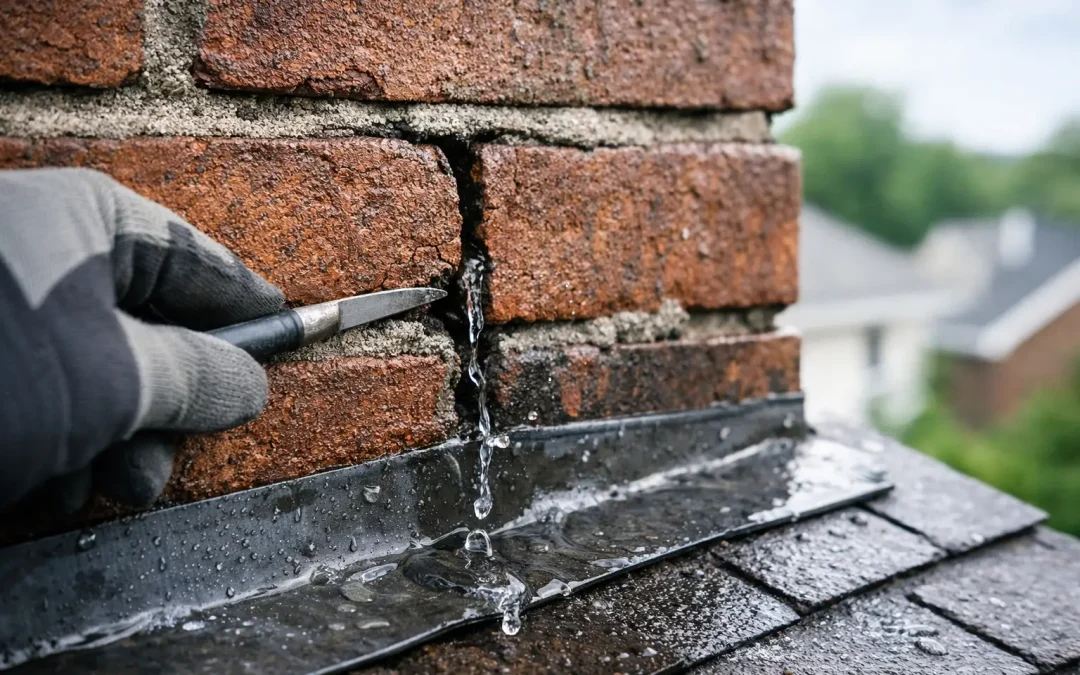
A damp patch beside a chimney breast or a brown mark appearing on an upstairs ceiling can be worrying, particularly after heavy Midlands rain. So, can cracked mortar cause leaks? Yes, it can. Failed mortar around a chimney, ridge or roof verge can create a route for rainwater to reach the roof structure and, eventually, the inside of your home. The visible crack is not always the whole problem, but it should not be ignored.
How cracked mortar can cause roof leaks
Mortar has a simple but vital job: it seals the gaps between bricks or secures certain roof components, helping the structure shed rain rather than absorb it. Over years of frost, driving rain, wind and general weathering, mortar can become porous, loose or cracked. Once water gets into those openings, it may soak into surrounding brickwork or travel behind the roof covering.
Chimneys are a common source of this type of leak. They stand above the roofline, take the full force of the weather and have several areas where water can enter. Cracked pointing between chimney bricks allows moisture into the stack. Damaged mortar around chimney pots or loose flaunching can also let rain penetrate from above.
The water does not always appear directly below the damaged mortar. It can track through brickwork, roof timbers or insulation before showing itself as staining on a ceiling or wall. This is why a leak near a chimney needs a proper external inspection rather than a guess based on where the damp patch has appeared indoors.
It may be the flashing, not the pointing
Chimney flashing is the lead or alternative weatherproof material fitted where the chimney meets the roof. It is designed to direct water safely onto the tiles or slates. If flashing has lifted, split, cracked or become loose, rain can enter at this junction even when the chimney mortar looks reasonable.
There can also be a problem with the mortar that holds flashing in place, known as the flashing chase. Loose or deteriorated mortar here may allow the flashing to move and leave a gap. In many cases, both the pointing and flashing need attention to create a lasting repair.
Can cracked mortar cause leaks at ridges and verges?
It can. Mortar is often used on older roofs to bed ridge tiles along the top of the roof and secure verge tiles along the gable edge. When this bedding cracks or falls away, tiles can loosen and wind-driven rain can reach the underlay and roof timbers.
A few fine surface cracks do not automatically mean the roof is leaking. However, missing sections of mortar, visible gaps beneath tiles, loose ridge tiles or debris on the ground are stronger signs that repair work is needed. A ridge tile that moves in the wind is a safety issue as well as a potential source of water ingress.
Modern dry ridge and dry verge systems avoid relying on exposed mortar in these areas, but the correct option depends on the roof’s condition, style and existing construction. On a sound roof, targeted repointing or rebedding may be the sensible repair. Where several tiles and fixings are failing, a more complete upgrade can offer better long-term protection.
Warning signs to look for inside and outside
Leaks caused by failing mortar are often gradual at first. You may only notice them after prolonged rain or during a period of strong wind. Keeping an eye on early warning signs can prevent a smaller repair becoming damage to plaster, timber or insulation.
Inside the property, look for damp staining around a chimney breast, peeling paint or wallpaper, a musty smell in the loft, or moisture on timbers close to the chimney. Water marks that grow after rain are especially worth investigating. Do not assume condensation is the cause without checking the roof and chimney first.
From ground level, you may be able to spot cracked or recessed pointing, open joints between bricks, crumbling mortar beneath ridge tiles, a leaning chimney pot, or vegetation growing from the chimney stack. Moss alone is not proof of a leak, but heavy growth can hold moisture against already weathered surfaces.
Avoid climbing onto the roof or using a ladder to inspect high-level masonry yourself. Wet tiles, unstable mortar and steep roof pitches all present real risks. A trained roofer can assess the condition safely and identify whether the issue is mortar, flashing, damaged tiles, guttering or another fault entirely.
Not every mortar crack needs urgent repair
Mortar naturally weathers, and very small hairline cracks can be superficial. The urgency depends on where the crack is, how deep it is and whether it has affected the weatherproofing of the roof. A crack in sheltered brickwork at low level is very different from open pointing on an exposed chimney above the roofline.
The age and type of mortar also matter. Older properties may have softer lime mortar, which should not simply be patched with an unsuitable hard cement mix. Using the wrong material can trap moisture in the brickwork or lead to further cracking around the repair. Good workmanship means matching the repair approach to the property, not applying a quick fix that looks acceptable for a few months.
It is also possible for a roof leak to be blamed on chimney pointing when the real cause is a slipped tile, split felt, blocked gutter or defective flashing. A thorough survey saves money because it addresses the actual route water is taking into the property.
What to do if you think mortar is letting in water
If you notice a fresh damp patch, take clear photographs and make a note of when it appeared. This can help establish whether it follows rainfall and whether the problem is getting worse. If water is actively dripping, move belongings away from the area and place a container beneath it where safe to do so.
Do not fill external cracks with sealant from a ladder or apply waterproof coatings as a substitute for repair. These products can mask the problem, trap moisture and make future work more difficult. They also will not secure loose masonry, ridge tiles or flashing.
A professional inspection should consider the full area around the suspected leak. That includes the chimney stack, pointing, pots and flaunching, leadwork, nearby roof tiles, valleys, gutters and the loft space where accessible. The aim is to find the source of ingress, explain the required work clearly and provide a repair that stands up to the weather.
For homeowners in Nottingham and the wider Midlands, MTF Roofing Ltd can assess roof, chimney and roofline concerns and advise on a practical repair. A clear quotation should set out what is being repaired and why, so there is no confusion over the work being carried out.
What a proper mortar repair should involve
A lasting repair is more than smearing fresh mortar over a crack. Loose and failed material should be carefully removed back to a sound edge, without damaging the surrounding bricks or tiles. The joints are then prepared and repointed with a suitable mortar, properly compacted and finished to help shed water.
Where ridge or verge tiles have loosened, they may need lifting and rebedding rather than simply pointing around the edges. If chimney flashing is defective, it should be secured or replaced as part of the repair. Any damaged tiles or compromised underlay found during the inspection should be discussed before work begins.
Weather conditions affect this work. Mortar should not be applied in heavy rain, freezing conditions or when surfaces are excessively wet. A reputable contractor will plan the repair around suitable conditions and leave the work area tidy once the job is complete.
Act before a small gap becomes a larger repair
Cracked mortar can be a minor maintenance issue, but it can also be the first visible sign of a roof leak. The longer water is allowed to enter, the greater the chance of hidden damage to timbers, insulation and internal finishes. If you have seen failing pointing, loose bedding or damp around a chimney, arranging an inspection now is usually the most straightforward way to protect your home before the next spell of bad weather.