
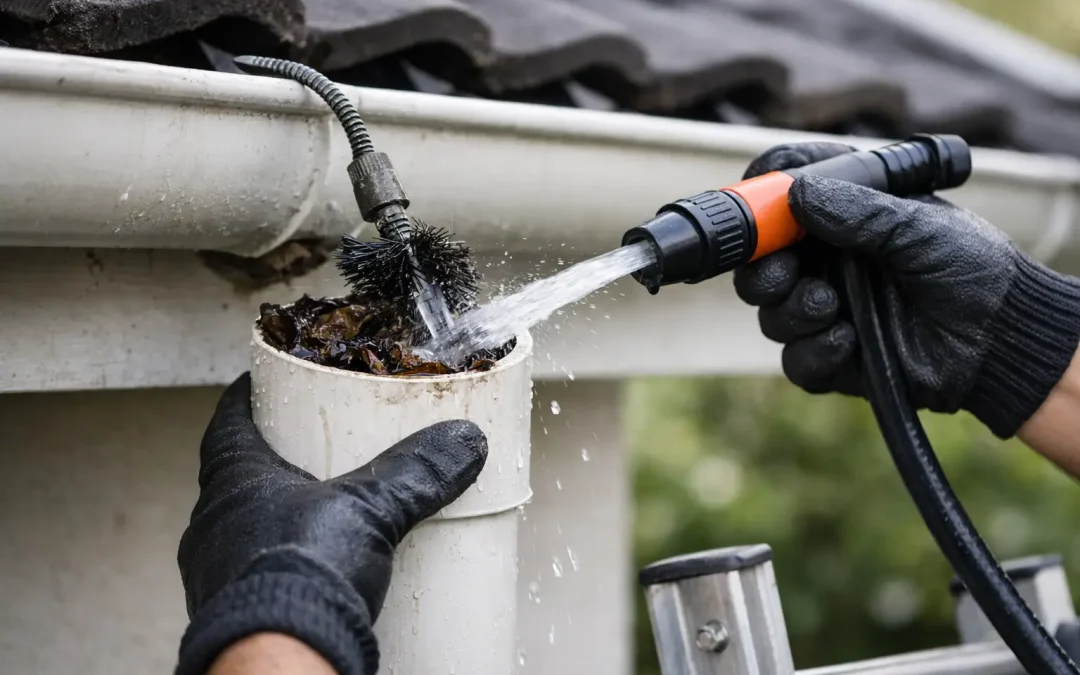
A downpipe that overflows in heavy rain is more than an annoyance. Water can run down brickwork, soak fascias and soffits, flood paths, and eventually find its way into places it should not be. Knowing how to clean blocked downpipes can help prevent a small maintenance job becoming a costly repair, provided it is done safely and the real cause of the blockage is dealt with.
Leaves are usually the main culprit, particularly around autumn, but moss, roof debris, nesting material and loose guttering can all stop rainwater from reaching the drain. The aim is not simply to push the blockage further down the pipe. It is to clear the route from gutter to ground and check that the whole system is working as it should.
First, work out where the blockage is
Before getting a ladder out, have a look while it is raining or pour a small amount of water into the gutter from a safe position. This often shows where the problem lies.
If water is spilling over the front or back of the gutter, the blockage may be in the gutter itself. If the gutter fills before water reaches the outlet, leaves and moss may be packed around the running outlet. If water enters the downpipe but then backs up, the blockage is likely further down. A puddle around the base of the pipe can also point to a blocked shoe, gully or underground drain.
Check for other signs of trouble at the same time. Sagging gutters, leaking joints, cracked downpipes and loose brackets can all make a drainage problem worse. Cleaning alone will not resolve a pipe that has slipped out of its joint or a gutter that has been fitted without the correct fall towards the outlet.
How to clean blocked downpipes safely
Safety comes first. Do not lean a ladder against a plastic gutter or downpipe, and do not attempt the job during wind, rain or icy conditions. If access is awkward, the ground is uneven, or the property is more than a straightforward single-storey height, calling in a professional is the sensible option.
Start by clearing visible debris from the gutter. Wearing gloves, remove leaves, moss and twigs by hand or with a small gutter scoop, placing waste into a bucket rather than dropping it onto paths and flowerbeds. Pay particular attention to the outlet where the gutter meets the downpipe. This is where compacted debris commonly builds up.
Once the gutter is clear, use a hose to run water towards the outlet. Keep the pressure moderate at first. A strong jet directed into an already blocked downpipe can force water back over the gutter and onto the wall. If water flows freely from the bottom, the blockage has been cleared.
If the water backs up, move to the base of the downpipe. Remove the lower section or access the drain shoe if it can be done easily and without forcing old fittings. Many blockages sit in this area because wet leaves settle there and form a dense mass. Clear it by hand, then flush the pipe with a hose from the top or, where safer, from the bottom upwards.
A drain rod can help with a blockage lower in the pipe, but use it carefully. Plastic downpipes can crack if excessive force is used, and old joints may separate. Avoid sharp metal tools, which can puncture or damage the pipe. If you meet firm resistance, stop rather than forcing the rod through. The obstruction may be solid debris, a damaged section of pipe, or a blockage in the underground drain.
Do not rely on pressure alone
Pressure washers can seem like a quick answer, but they are not always suitable for domestic downpipes. High pressure can blow apart weak joints, damage old plastic, force debris into a buried drain, or send dirty water back towards the roofline. A garden hose, manual clearing and a careful inspection are normally enough for a routine blockage.
Chemical drain cleaners are also best avoided. They are rarely effective against leaf matter and moss, and they can create an unnecessary hazard when you later dismantle a section of pipe. Mechanical clearing is safer and gives you a better view of what is actually causing the issue.
Check the gully and underground drain
A clean downpipe will still overflow if the gully beneath it is blocked. Lift the gully grid if it is safe to do so and remove leaves, silt and other surface debris. Water should drain away steadily once the pipe is flushed.
If the gully fills quickly or water remains standing in it, the issue may be in the underground drainage rather than the downpipe. This is not a problem to ignore. Repeated overflow at ground level can leave damp staining, wash away soil around paving, and put extra moisture against the building.
For a suspected drain blockage, a drainage specialist may be needed. It is worth separating this from a roofline fault: a contractor can repair defective gutters and downpipes, but a blocked private drain may require specialist equipment and investigation.
When cleaning is not enough
Some drainage problems return because the cause is not loose leaves. Moss can be a recurring issue on older roofs, especially where overhanging trees keep the roof damp and shaded. Birds may carry nesting material into open outlets. In other cases, the downpipe has been poorly positioned, the gutter has lost its fall, or the capacity of the system is not sufficient for the roof area.
Look out for water marks on external walls, peeling paint on timber fascias, green staining around joints, or damp patches inside near the top of an external wall. These signs can mean rainwater has been escaping for some time. Left alone, regular overflow can contribute to rotten roofline timber, damaged render and damp-related repairs that cost considerably more than a proper gutter repair.
A replacement may be the better option where pipes are brittle, split or repeatedly coming apart. Modern guttering and downpipe systems are designed to direct water efficiently when they are correctly sized, supported and aligned. Replacing one damaged section can be enough, although widespread leaks or sagging often suggest the system needs a fuller assessment.
Prevent blocked downpipes from coming back
The best time to clean gutters and downpipes is before they show signs of overflowing. For many homes, an inspection in late autumn after the main leaf fall, followed by another check in spring, is a sensible routine. Properties close to large trees may need more frequent attention.
Gutter guards can reduce the amount of larger debris entering the system, but they are not maintenance-free. Fine moss and leaf fragments can collect on top of the guard, so the gutter still needs periodic checking. The right solution depends on the roof, nearby trees and the condition of the existing guttering.
Keep an eye on the areas where gutters join, turn corners or run into outlets. These are the points most likely to collect debris and show early signs of movement. After a spell of heavy rain, a quick walk around the property can reveal a problem before water has time to cause damage.
When to call a roofline professional
There is no need to take risks with ladders or attempt to dismantle ageing roofline fittings if you are unsure of their condition. Professional help is particularly worthwhile where access is difficult, water is getting into the property, guttering is loose, or the same blockage keeps returning despite cleaning.
At MTF Roofing Ltd, we inspect roofline drainage as part of a practical assessment of the property. If a downpipe needs clearing, repairing, realigning or replacing, the work should address the reason water is overflowing, not just hide the symptom for another season.
A clear downpipe protects more than the gutter. It helps keep rainwater moving safely away from the roof, walls and foundations, giving your home the care it needs through every Midlands downpour.