
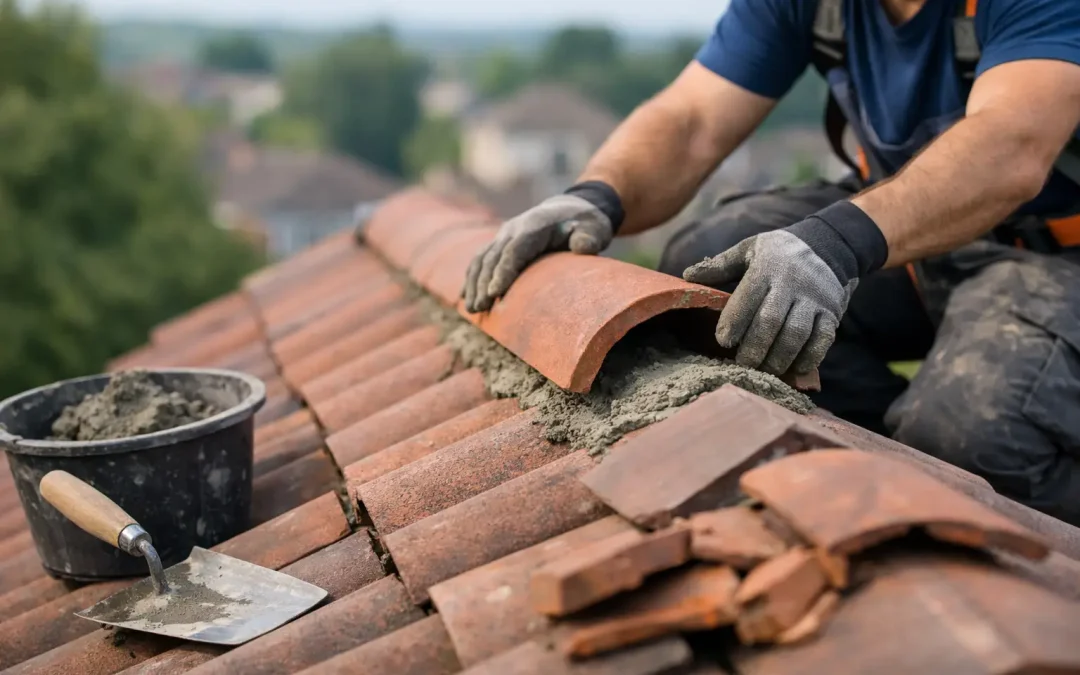
A guide to ridge tile repairs starts with one simple point: tiles along the top line of your roof do more than finish its appearance. Ridge tiles help protect the joint where two roof slopes meet. When they become loose, cracked or poorly bedded, wind and rain can find a way into the roof structure below.
For homeowners, the warning signs are often visible from the ground. A ridge tile may look out of line, mortar may have dropped into the guttering or onto the ground, or there may be damp marks in the loft after heavy rain. Acting early can prevent a small repair becoming a larger roofing job.
What ridge tiles do for your roof
Ridge tiles run along the highest point of a pitched roof. Traditionally, they are held in place with mortar, which also seals the gaps around them. Many newer roofs use a dry ridge system, where tiles are mechanically fixed and ventilated with purpose-made components.
Both methods can perform well when fitted properly. The right repair depends on the age of the roof, the condition of the existing tiles and bedding, and whether the problem is isolated or part of wider roof wear. It is not always necessary to replace every ridge tile because one section has failed, but patching over widespread deterioration rarely offers good value.
A sound ridge line matters particularly in exposed locations. Strong Midlands winds can work against weakened mortar and loose tiles, while repeated freezing and thawing can open small cracks over time.
Signs you may need ridge tile repairs
A visual check from ground level after a storm is sensible, but do not climb onto the roof or lean ladders against guttering to inspect it. Look for clear changes in the roofline and arrange a professional survey if anything appears wrong.
Common signs include:
- Ridge tiles that have moved, lifted or sit unevenly
- Missing, cracked or broken ridge tiles
- Crumbling, split or washed-out mortar beneath the tiles
- Pieces of mortar on paths, patios or in gutters
- Water staining, damp insulation or daylight visible in the loft
- A rattling sound from the roof during high winds
A loose ridge tile should be dealt with promptly. Aside from allowing water into the roof, it can become a safety risk if it falls during bad weather. Keep people clear of the area below if a tile looks unstable and seek advice as soon as possible.
Mortar failure is not always obvious
Mortar can look acceptable from the garden while its bond with the tile has already weakened. This is why a proper inspection considers more than the visible face of the ridge. A roofer will check whether the tiles are secure, whether the bedding is sound beneath them, and whether adjacent roof tiles or leadwork have been affected.
The age of the roof is relevant too. Older mortar naturally weathers, but premature failure can point to poor previous workmanship, an unsuitable mortar mix, inadequate bedding, or movement in the roof covering.
Repointing, rebedding or replacing the ridge system?
The best repair is based on the cause of the problem, not simply the quickest visible fix.
Repointing sound ridge tiles
Repointing means renewing failed mortar joints where the ridge tiles remain firmly bedded and properly aligned. It can be suitable when the mortar has weathered on the surface but the underlying bedding is still secure. The loose material must be removed and the joints prepared properly before fresh mortar is applied.
Repointing is not a cure for tiles that move when tested. Covering loose or hollow bedding with new mortar may improve the appearance for a short time, but it does not provide a reliable repair.
Rebedding loose or unstable tiles
Where ridge tiles are loose, they generally need to be carefully lifted, the old defective bedding removed, and the tiles reset on new mortar. Damaged tiles should be replaced with suitable matching alternatives where possible.
This approach addresses the actual fixing rather than just the visible finish. It also gives the roofer an opportunity to inspect the ridge area beneath the tiles for cracked roof tiles, poor alignment or signs of water ingress.
Installing a dry ridge system
If a mortar-bedded ridge has failed across a larger area, a dry ridge system may be worth considering. The ridge tiles are secured using mechanical fixings and purpose-made ridge components rather than relying solely on mortar. This can improve ventilation at the ridge and avoids the usual long-term weathering associated with exposed mortar joints.
There are trade-offs. A dry ridge system needs to suit the roof type and existing tiles, and it must be installed accurately to work as intended. It is not an automatic upgrade for every roof, particularly where only one small section needs attention. A survey should establish whether a local repair, full rebedding or dry ridge replacement is the most sensible option.
Why ridge repairs should not be treated as a DIY job
Replacing a ridge tile may sound straightforward, but the work is carried out at the highest and often steepest part of the roof. Safe access, secure working methods and experience of handling roof coverings are essential. A misplaced foot can crack tiles, damage flashings or create a more expensive repair.
There is also the question of identifying the source of the problem. Water entering near the ridge may be caused by failed bedding, but it can also come from damaged tiles below, worn underfelt, defective valleys or adjoining leadwork. A repair that only treats the obvious symptom can leave the underlying issue unresolved.
Professional roofing work should include safe access, removal of failed materials, appropriate replacement tiles or fixings, careful finishing and a tidy clean-up afterwards. Homeowners should be given a clear explanation of what has been found and why the recommended work is needed.
What happens during a professional roof survey
A good survey begins with a close inspection of the ridge line and surrounding roof areas. The roofer will assess the condition of the tiles, mortar or dry-fix components, and look for signs of movement, cracking and water penetration.
The loft space may also be checked where access allows. Damp timber, wet insulation or staining can help show how long water has been entering the roof and whether further remedial work is required.
You should expect a straightforward quotation that distinguishes between essential repairs and optional improvement work. If a contractor recommends replacing the full ridge, ask why. In some cases it is the right long-term decision; in others, a carefully completed local repair is all that is required.
Looking after your roof after the repair
Ridge repairs are not a reason to forget about the roof altogether. Check the roofline from the ground after severe weather, especially if your property is exposed to open winds. Keep gutters clear so that fallen mortar, leaves and debris do not cause separate drainage problems.
Avoid pressure washing roof tiles or scraping around the ridge from a ladder. These methods can disturb older mortar and damage the protective surface of tiles. If you spot a change, take a photograph from a safe position and arrange an inspection rather than trying to test the tiles yourself.
For homeowners across Nottingham and the wider Midlands, MTF Roofing Ltd can assess ridge issues clearly and carry out repair work with the same care given to the rest of the roof. The aim should always be a secure, weatherproof ridge that looks right on the property, not a rushed patch designed to last one winter.
If your ridge tiles have shifted, mortar is falling, or you have noticed damp in the loft, dealing with it before the next spell of bad weather is usually the most practical and cost-effective step.