A roof can look tired long before it has reached the end of its useful life. Equally, a roof can look presentable from the ground while water is already finding its way through damaged felt, cracked tiles, worn flashings or failing flat-roof coverings. That is why the choice between roof coating versus replacement should never be based on appearance alone. The right answer comes from an honest inspection of the roof beneath the surface.
For homeowners across Nottingham and the Midlands, a coating may be a sensible maintenance measure in the right circumstances. But it is not a cure for an ageing or leaking roof. A replacement costs more upfront, yet it can be the more reliable and cost-effective route when the existing covering has failed.
What a roof coating is designed to do
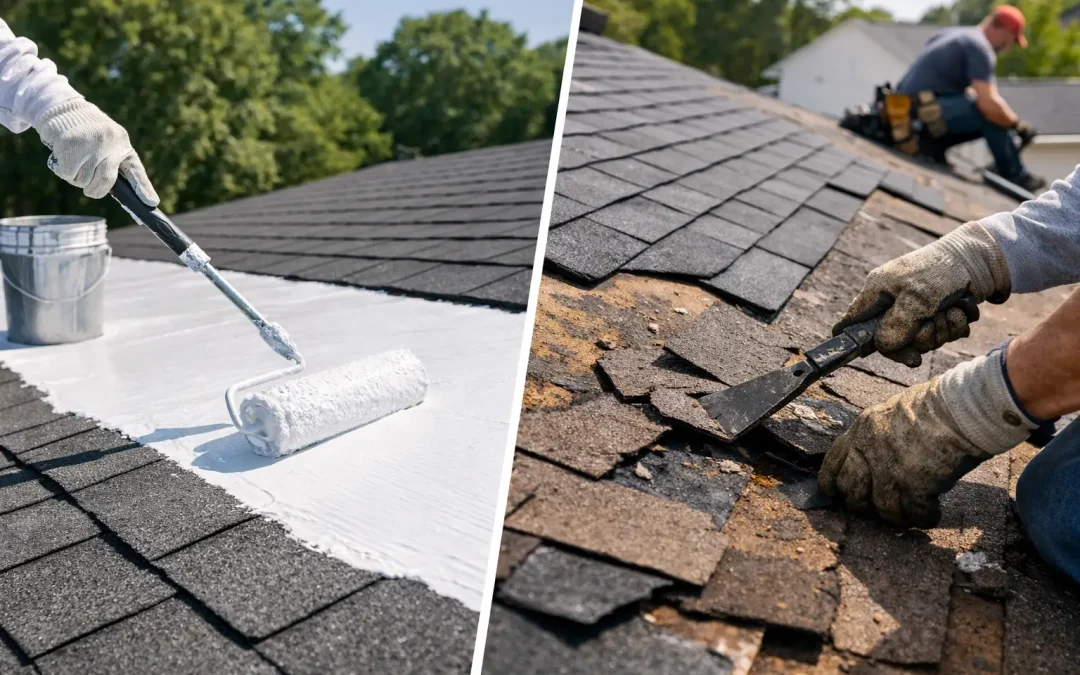
A roof coating is a liquid-applied protective finish used on suitable roof surfaces, most commonly some types of flat roof. Once applied correctly, it forms a weather-resistant layer that can help protect the existing roof from rain, sunlight and everyday wear.
On a sound flat roof, a compatible coating system may help extend serviceable life by sealing minor surface deterioration and refreshing the weatherproof layer. It can also improve the appearance of a roof that has become faded or patchy. The key word is sound. The roof deck, insulation, existing covering, edges and drainage all need to be in reasonable condition before coating is considered.
A coating is not the same as putting paint on a roof. Proper preparation matters. The surface needs to be cleaned, dried and checked for splits, blisters, standing water, loose details and failed joints. Any defects must be repaired first, and the coating needs to suit the material already on the roof. Skipping these steps can leave a homeowner with a neater-looking roof that still leaks.
Roof coating versus replacement: the real difference
The main difference is simple. Coating works with the roof you already have. Replacement removes failed materials and creates a new weatherproof roof system.
That makes coating a potential life-extension option, while replacement is a long-term solution for a roof that is worn out, structurally compromised or repeatedly letting in water. Neither is automatically the cheaper choice once the condition of the roof is taken into account.
For example, applying a coating to a flat roof with trapped moisture or rotten decking may delay the visible signs of failure, but it will not stop the underlying problem. Water can remain beneath the new surface and continue to damage the structure. The eventual repair may then be larger than it would have been if the issue had been dealt with properly at the start.
A full replacement, such as a new rubber flat roof, allows the contractor to inspect the deck, renew damaged boards where needed, form correct drainage falls and fit a complete new covering with properly finished edges and details. It is more involved work, but it addresses the parts that a surface coating cannot reach.
When a coating can be a sensible option
A coating may be worth considering when a roof has only light surface weathering and there is no evidence of active water ingress, major cracking or structural movement. It can be particularly useful where a compatible existing flat-roof covering is still firmly bonded and the roof drains well after rainfall.
It may also suit a homeowner looking to maintain a relatively young roof before small signs of wear turn into more costly defects. In these cases, the preparation and specification are just as important as the product itself. A survey should establish what material is already in place and whether it is dry, stable and suitable for treatment.
Coatings are less commonly the answer for traditional pitched roofs covered in tiles or slates. Moss, staining and a weathered appearance can tempt people towards a quick cosmetic treatment, but a coating cannot repair broken tiles, degraded underfelt, loose ridge work or failing leadwork. Harsh cleaning and unsuitable products can also cause damage, particularly on older roofs.
Signs replacement is likely to be the better investment
Replacement should be discussed where leaks keep returning, repairs are becoming frequent or the roof covering is clearly reaching the end of its life. On flat roofs, warning signs can include widespread cracking, open seams, bubbling, soft areas underfoot, lifted edges, persistent ponding and visible deterioration around outlets or upstands.
For pitched roofs, slipped or broken tiles, sagging roof lines, failing mortar, rotten battens and water marks in the loft all need proper attention. A roof can sometimes be repaired in isolated areas, but repeated faults across a large section often point to a wider failure rather than one small defect.
There is also the question of what sits below the outer covering. If water has reached the timber deck of a flat roof, replacement provides the opportunity to uncover and deal with any hidden deterioration. Covering over a problem may feel less disruptive in the short term, but it rarely offers the reassurance homeowners want when protecting their property.
Cost: look beyond the first quotation
It is understandable to compare the initial cost of coating with the price of replacement. A coating is usually less expensive because there is less removal work and fewer new materials. However, value is not only about the lowest figure on the day.
The useful question is: what condition will the roof be in after the work is complete? If a coating gives a sound roof several more years of protection, it can represent good value. If it is applied to a roof that already needs replacing, the money spent may simply bring the larger job closer without removing the risk of leaks.
A clear quotation should explain what is included, what repairs are necessary before any coating can be applied, and whether the contractor has found signs that replacement is the safer route. Be cautious of anyone who recommends a solution without inspecting the roof closely. No responsible roofer can judge the condition of a roof from a quick look at ground level.
Why drainage and details matter so much
Water rarely enters through the broad middle of a well-fitted roof covering. More often, problems start at joints, edges, pipe penetrations, chimneys, valleys, roof windows and drainage outlets. These details need careful fitting whether a roof is being coated, repaired or replaced.
On a flat roof, standing water deserves particular attention. Some water may remain briefly after heavy rain, but regular ponding can accelerate deterioration and reveal that the roof does not have adequate falls towards its outlet. A coating will follow the shape of the roof. It will not correct poor drainage or rebuild a weak deck.
The same principle applies to roofline work. Gutters that overflow, blocked downpipes and damaged fascias can direct water back towards the roof edge and brickwork. Keeping guttering clear and making sure water runs away from the property is a straightforward part of protecting any roof investment.
Getting an honest recommendation
The best starting point is a proper survey from an experienced, fully insured roofing contractor. The assessment should look at the roof covering, the condition of joints and flashings, drainage, signs of moisture and, where access allows, the structure beneath. You should be told plainly whether repair, coating or replacement is recommended and why.
At MTF Roofing, the focus is on fitting work properly rather than selling a temporary fix where one will not last. Homeowners should feel able to ask questions about the materials, preparation, expected lifespan and how the site will be left once the work is complete. Clear answers are part of a professional job.
If your roof is showing its age, do not assume that a coating is either a shortcut or a waste of money. Arrange an inspection, understand the condition of the roof you have, and choose the work that gives your home the protection it genuinely needs.