Flat Roof Repair in Nottingham: How to Spot a Leaking Flat Roof Before It Causes Damage
Flat roofs are a practical, hard-working part of thousands of Nottinghamshire homes – garages, extensions, bay windows, dormers and porches. The trouble is that they rarely fail dramatically. They fail quietly, over months, with small warnings that are easy to ignore until the damp patch appears on the ceiling. By then, water has usually been sitting in the structure for far longer than it looks.
This guide walks you through the warning signs worth checking for, what each one usually means, and the flat roof repair options available if you find them.
Why Flat Roofs Give Early Warnings
A flat roof does not drain the way a pitched roof does. Rainwater moves slowly towards an outlet, so any weakness in the surface, the seams or the drainage has more time to work on the structure underneath.
That slowness is actually good news. Unlike a slipped tile that lets water in immediately, a flat roof generally shows visible distress before it leaks into the building. If you know what to look for, you can act on a problem while it is still a repair rather than a replacement.
1. Standing Water and Ponding
Standing water that is still there 48 hours after rain is the single most common warning sign on a flat roof. It points to one of three things:
- The fall (the slight gradient that moves water towards the drain) has been lost as the deck has settled or sagged
- The outlet, gully or hopper is blocked with moss, grit or leaves
- The surface itself has dipped into a low spot, holding water like a shallow bowl
Ponding water is not instantly fatal, but it stresses the membrane and the seams continuously, and it is the fast track to a leak. If your flat roof is a magnet for puddles, that alone is worth a professional look.
2. Bubbles, Blisters and Ripples in the Surface
Run your eye across the roof from a safe vantage point – an upstairs window is ideal. A healthy membrane should sit flat and tight. Any bubble, blister or soft ripple usually means water vapour or trapped moisture has got underneath and is pushing the surface up.
Once a blister forms, the surface above it wears faster, the edges lift, and the weak point grows. This is exactly the scenario a modern EPDM rubber system is designed to prevent, because the membrane allows vapour to escape rather than trapping it underneath.
3. Cracked, Lifted or Open Seams
Seams and joints are where most flat roof leaks begin. Look for:
- Visible cracking along the joins
- Edges that have lifted or curled away from the surface
- Patches of repair tape or bitumen that have dried, cracked or started peeling
- Gaps around flashings, upstands, outlets or where the roof meets the wall
Older felt roofs are particularly prone to this. Felt becomes brittle with sun and frost, so seams open and water gets in at the exact points that were meant to be watertight.
4. Damp Patches, Stains and a Musty Smell Inside
Sometimes the first sign is indoors. Watch for:
- Brown or yellow staining on ceilings, usually spreading outward
- Paint or plaster that feels soft, bubbly or damp to the touch
- A musty, earthy smell in an extension, garage or upstairs room
- Mould or mildew appearing in a corner where a flat roof meets a wall
If you can see a damp patch, water has already reached the structure. That is the point at which a small repair can still save you from a much larger bill – and from the risk of rotten timbers and soaked insulation.
5. Moss, Debris and Blocked Outlets
Green growth along the edges and around the drain is more than cosmetic. Moss holds moisture against the surface, grit and leaves block the outlet, and together they create the standing water that starts the whole cycle. A roof that is never cleared is a roof that is slowly being worked on by the weather.
6. Sagging, Soft Spots and Loose Trims
From ground level, look at the roofline. A flat roof should look straight and level. A visible dip, a wavy edge, or fascia and trim that has pulled away suggests something underneath is deteriorating. Soft spots underfoot – never test this yourself by walking on the roof – point to a deck that has taken on water.
What Flat Roof Repair Usually Involves
Once a problem is identified, the fix depends on how far the damage has gone:
- Minor defects – a resealed seam, a renewed flashing, a cleared and repaired outlet – can often be put right on the spot.
- Localised damage – where a section of surface has failed but the deck is sound – can be repaired and made good.
- Widespread failure – cracking across an ageing felt roof, repeated leaks or a soft deck – usually means it is time to replace the covering rather than patch it again.
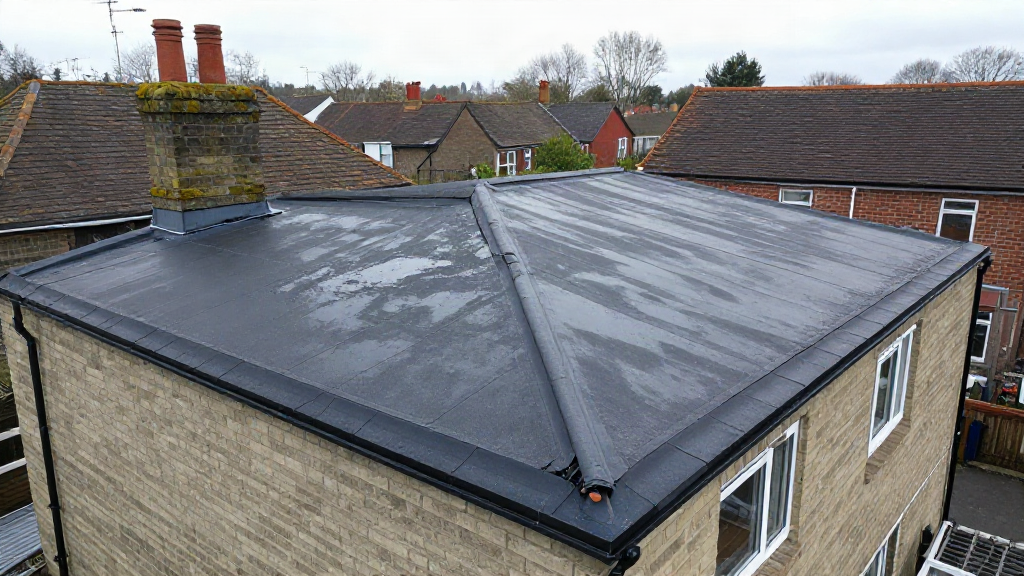
That is where the choice of system matters. The Firestone RubberCover™ EPDM flat roofing system is a seamless rubber membrane supplied in one piece, so there are far fewer seams to fail in the first place. It is flame-free to install, stays flexible even at low temperatures so it moves with the building, repels moisture while allowing vapour to escape, and comes with a 20-year guarantee with a life expectancy of over 50 years. For garages, extensions, balconies and outbuildings across Nottinghamshire, it is a genuinely long-term answer rather than another temporary fix.
Protecting Your Roof Before the Damage Spreads
The cheapest flat roof repair is always the one you catch early. A short check after heavy rain – looking for puddles, blisters, lifted seams and any sign of staining inside – takes minutes and can save thousands.
If you have spotted any of the warning signs above on a flat roof in Nottingham, Mansfield, Sheffield, Chesterfield, Derby, Worksop, Newark or anywhere across the Midlands, MTF Roofing can take a look and tell you honestly whether you are dealing with a repair or a replacement. We provide free, no-obligation quotes, use trusted systems and materials, and leave every job clean and tidy when we are done.
Get in touch for a free quote and put a stop to the leak before it reaches your ceiling.