
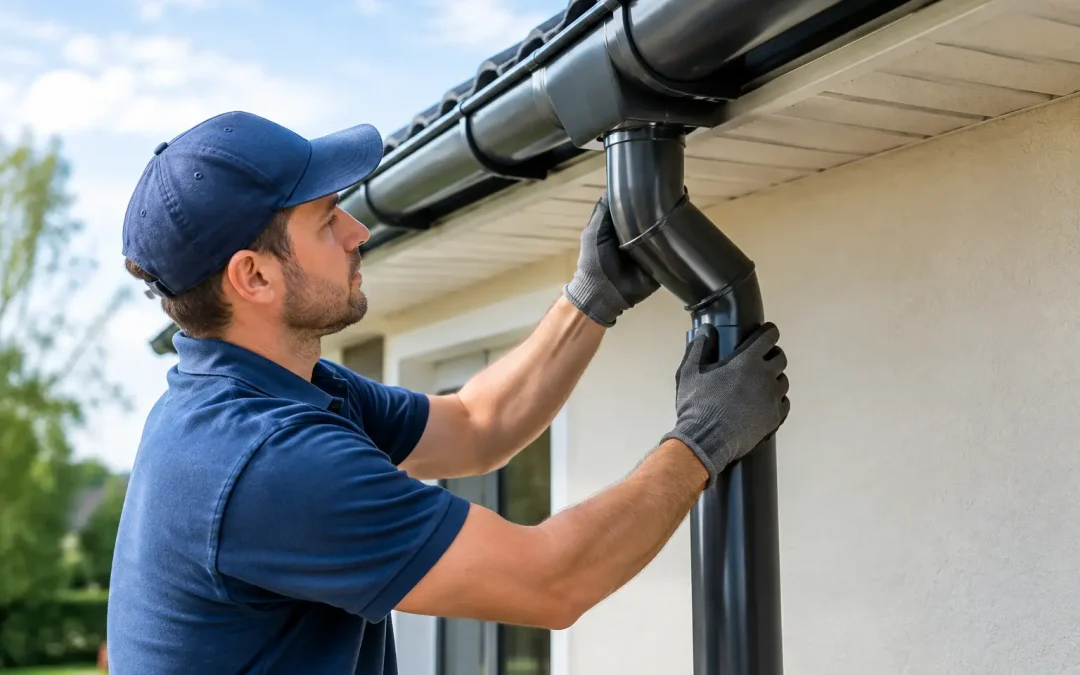
A downpipe can look like a small part of the roofline, but it has a serious job to do. When gutter downpipe installation is poorly planned or fitted, rainwater can run down external walls, collect around the foundations, soak brickwork and create damp problems that are far more expensive to put right.
For homes across Nottingham and the Midlands, heavy rainfall is not unusual. A well-fitted guttering system needs more than tidy-looking pipes. It needs the right capacity, a clear route for water, secure fixings and a safe point of discharge away from the property.
Why downpipe position matters
Gutters collect rainwater from the roof, but downpipes are what move it safely to the ground. If there are too few downpipes, or they are positioned in the wrong places, water can back up in the gutter during a downpour. It may then overflow over the front edge, spill behind the guttering or run across fascias and soffits.
The best location depends on the size and shape of the roof, the gutter run, and where existing drains or suitable soakaways are located. A long gutter length may need more than one outlet to cope properly with the volume of water. This is particularly relevant on larger detached homes, extensions and properties with wide roof slopes.
Positioning must also take the rest of the property into account. A downpipe should not discharge water close to a wall, patio or doorway where it can cause pooling, staining or a slippery surface. It should never send water towards a neighbouring property.
What proper gutter downpipe installation involves
A good installation starts with checking the roofline rather than simply replacing pipe for pipe. Old guttering may have been fitted around an existing problem, so copying the same layout does not always deliver the best result.
Checking the fall of the guttering
Guttering needs a gradual fall towards the outlet. The slope is slight enough that it should not spoil the appearance of the roofline, but sufficient for rainwater to travel to the downpipe instead of sitting in the gutter.
If the fall is incorrect, water may stand still after rain. This adds unnecessary weight, encourages dirt and moss to build up, and increases the chance of overflow. A gutter that looks level from the ground is not necessarily fitted correctly.
Choosing suitable outlets and pipe sizes
The outlet connects the gutter to the downpipe, so it must match the gutter profile and be fitted securely. Most residential properties use standard round or square downpipes, but larger roof areas can require greater capacity. The right choice is based on how much water the roof is likely to shed, not simply on what is already in place.
The material matters too. Modern uPVC guttering and downpipes are popular because they are durable, low maintenance and available in colours that complement the property. Black, white and anthracite grey are common choices, although the best finish depends on the existing fascias, soffits, windows and brickwork.
Securing pipes without damaging the wall
Downpipe brackets need to be evenly spaced and firmly fixed to sound masonry or suitable fixings. Loose brackets allow movement in wind and rain, while over-tight joints can restrict the natural expansion and contraction of plastic materials in changing temperatures.
The pipe should run straight and sit neatly against the wall. Where offsets are needed to work around a projection, bay window or extension, they should be planned carefully so water continues to flow freely. A rushed arrangement of bends may look untidy and is more likely to trap debris.
Connecting to drainage safely
At ground level, the downpipe should direct water into a suitable gully, drainage connection or properly designed soakaway. This is where many problems begin. A pipe that ends above ground and discharges beside the house can leave the base of the wall constantly wet.
Older properties sometimes have ineffective gullies, cracked connections or blocked underground drains. These should be investigated before fitting a new downpipe. There is little value in installing quality guttering above if water has nowhere safe to go below.
Repair or replacement: which is the right choice?
A single cracked clip, leaking joint or displaced pipe can often be repaired. If the guttering is otherwise in good condition, replacing the damaged component and clearing the system may be enough.
Replacement is usually the better option where pipes have become brittle, joints repeatedly leak, brackets are failing, or the gutter layout does not handle rainfall effectively. It can also make sense when fascias and soffits are being renewed. Carrying out roofline work together gives a more consistent finish and avoids returning later to disturb newly fitted materials.
It depends on the condition of the whole system. Replacing one section of very old guttering may provide a short-term fix, but it will not solve worn outlets, sagging runs or poor drainage elsewhere on the property. A clear survey should explain what needs attention now and what can reasonably wait.
Signs your downpipes need attention
A quick look outside during or just after rain often reveals whether a system is working as it should. Homeowners should arrange an inspection if they notice any of the following:
- Water overflowing from gutters even when they appear clear.
- Damp patches, green staining or peeling paint on external walls.
- Downpipes that are loose, split, bowed or detached from brackets.
- Standing water around gullies, paths or the base of the property.
- Drips from joints that continue long after rainfall has stopped.
Leaves, moss and roof debris can block the outlet at the top of the downpipe, especially near trees. Regular gutter cleaning helps, but frequent blockages may also indicate that the gutter fall is wrong or the outlet is too small for the roof area.
Why workmanship makes the difference
Downpipe work is often treated as a minor job, but it is closely connected to the wider condition of the roofline. Water escaping from gutters can damage timber fascias, stain render, affect soffits and contribute to damp around the home. The visible issue may be one leaking joint, while the cause sits higher up in a poorly supported gutter run.
Professional fitting means the work is measured, aligned and checked rather than guessed at from ground level. It also means assessing the condition of the existing roofline, using suitable fixings and leaving the area clean once the work is complete. The aim is not merely to make water disappear during the next shower, but to protect the property through years of changing weather.
For homeowners planning guttering, fascia or soffit work, it is sensible to ask how the water will be managed from roof to ground. A proper quotation should make clear what is being replaced, where downpipes will run, and whether any drainage concerns have been identified.
Plan the job before the rain finds the weakness
There is rarely a convenient time for a gutter to fail. Problems tend to show themselves during the heaviest rain, when access is difficult and water is already reaching places it should not. Addressing loose, overflowing or damaged downpipes early is usually simpler and less disruptive than waiting for damp marks or rotten roofline timber to appear.
MTF Roofing Ltd can assess the condition of your roofline and provide clear advice on the most suitable repair or replacement work for your home. A carefully planned downpipe installation is a practical investment in keeping rainwater where it belongs – safely away from your property.