A roof rarely fails all at once. More often, the warning signs build slowly – a patch of damp in the loft, a few slipped tiles after bad weather, guttering filling with bits of old roofing material. Many homeowners put these issues down to normal wear, but there comes a point where another repair stops being the sensible option. Knowing the top signs your roof needs replacing can help you avoid bigger damage, rising costs and repeated call-outs.
For some homes, a targeted repair is still the right answer. For others, especially older properties or roofs with a history of problems, replacement offers better long-term value. The key is spotting the difference early and getting clear advice before minor issues turn into structural ones.
Top signs your roof needs replacing rather than repairing
One damaged area does not always mean the whole roof has reached the end of its life. If a handful of tiles have slipped in a storm, or a small section has been affected by a localised issue, a repair may be enough. The concern starts when problems are spread across the roof, keep returning, or show that the materials themselves are wearing out.
Age is one of the clearest indicators. Many pitched roofs can last for decades, but not indefinitely. If your roof is getting on in years and has never had major work done, it is worth looking more closely at its overall condition. Flat roofs also have a lifespan, and older felt or worn coverings often become more vulnerable to splits, ponding and leaks over time.
Repeated leaks are another strong sign. A one-off leak caused by a cracked tile or damaged flashing can often be repaired without much disruption. But if water keeps finding its way in, especially in different areas, the problem may be more widespread. At that stage, patching one point after another often becomes false economy.
Visible damage from the ground
You do not need to climb onto the roof to notice when something is wrong. In many cases, the first clues are visible from outside the property.
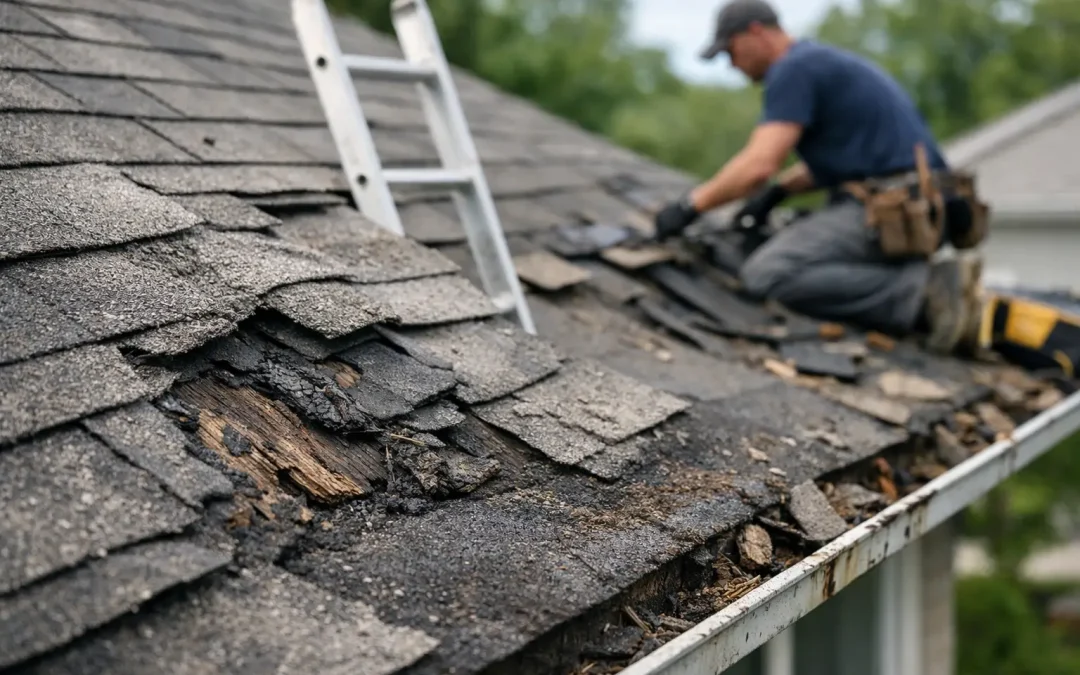
Missing, slipped or uneven tiles are an obvious one. A few isolated tiles can usually be replaced, but when larger sections look tired, uneven or regularly shift out of place, it may point to failing fixings, ageing underlay or general decline across the roof.
You may also notice cracked tiles, worn ridge tiles or mortar that is breaking away. On older roofs, bedding mortar can deteriorate badly, particularly after years of exposure to wind, frost and rain. If ridge lines are loose or sections of the roof no longer look secure, it is not something to leave.
Sagging is more serious. A roofline should appear straight and even. If there is a dip along the ridge or a section looks as though it is sinking, that can suggest underlying structural movement or long-term water damage in the timbers beneath. In that case, a full inspection is needed quickly.
What the loft can tell you
Some of the most useful warning signs are inside the roof space. Homeowners often first notice a problem when they go into the loft for storage and see staining, damp patches or daylight coming through.
If you can see light between the tiles or boards, the roof is no longer providing the level of protection it should. Small gaps may not seem urgent in dry weather, but they leave the property exposed once wind-driven rain arrives.
Damp insulation, mould growth and water staining on rafters are all signs that moisture is getting in. That does not automatically mean a full replacement is needed, but if these issues are widespread or have been present for some time, the roof covering may be failing beyond a simple repair.
A loft that feels unusually cold or draughty can also point to roofing issues, especially when combined with visible wear outside. Good ventilation matters, but uncontrolled air movement through damaged areas is another matter altogether.
Materials appearing in the gutters
Guttering often tells its own story. If you are finding granules, fragments of old felt, broken mortar or repeated debris washing down from the roof, it can indicate that the surface materials are deteriorating.
On pitched roofs, crumbling mortar from verges or ridge lines is a common issue on older properties. On flat roofs, worn coverings may start to shed material as they age. These signs are easy to miss because they build up gradually, but they often point to general wear rather than one isolated fault.
Blocked or overflowing gutters can also make roofing problems worse by allowing water to back up around the eaves. Sometimes the guttering itself needs attention. In other cases, it is a sign that the roofline as a whole is overdue for upgrade work.
Recurring repairs that never quite solve it
One of the clearest top signs your roof needs replacing is when you keep paying for repairs but never feel the issue has been properly dealt with. A patch here, a tile there, another leak six months later – it soon adds up.
There is a point where continuing to repair an old roof costs more than replacing it properly. That does not mean every roofer should jump straight to recommending a re-roof. A trustworthy contractor will tell you when a repair is still worthwhile. But if multiple parts of the roof are failing at once, replacement often becomes the more sensible and more reliable option.
This is especially true if previous work has been carried out poorly. It is not uncommon to see roofs where quick fixes, mismatched materials or careless installation have created further problems down the line. In those cases, starting again with proper materials and workmanship can save a lot of stress.
Flat roof warning signs
Flat roofs deserve a separate mention because they tend to fail differently from tiled roofs. Leaks may not always show directly below the point of entry, which can make the source harder to identify.
If you are seeing standing water that lingers long after rain, bubbling or blistering on the surface, splits in the covering, or recurring leaks around edges and joints, the roof may be nearing the end of its serviceable life. Some flat roof issues can be repaired, but older coverings often continue to deteriorate once they start breaking down.
Where the deck beneath has been affected by moisture, there may also be soft spots underfoot. That is a sign to stop delaying and have the roof checked properly.
When age and appearance both point the same way
Sometimes the decision is not based on one major failure. It is the overall picture. An ageing roof with patchy repairs, faded materials, uneven lines and repeated maintenance issues may still be standing, but it is no longer doing the job as well as it should.
For many homeowners, replacement is not just about preventing leaks. It is also about improving the appearance of the property, upgrading roofline components such as fascias, soffits and guttering, and knowing the work has been done to a proper standard. A new roof can make a home look noticeably smarter while giving far more confidence through winter weather.
If you are planning other exterior improvements, it often makes sense to look at the roof as part of the wider condition of the property rather than as a separate issue.
What to do if you think your roof needs replacing
If several of these signs sound familiar, the next step is simple – get the roof inspected by an experienced, fully insured contractor who deals with residential re-roofing work regularly. You want a clear assessment, honest advice on whether repair or replacement is the better route, and a detailed quotation that explains what is included.
A proper survey should look at more than just the visible outer covering. The condition of the underlay, battens, flashings, ridges, verges and roofline all matter. So does the general age of the roof and whether previous repairs have left weak points behind.
At MTF Roofing Ltd, that practical, no-nonsense approach is exactly what homeowners across Nottingham and the wider Midlands tend to value. Clear advice, quality materials and tidy workmanship matter far more than sales talk when you are making decisions about your home.
If your roof is showing its age, leaking more than once, or simply looking tired and unreliable, it is worth acting before the next spell of bad weather makes the decision for you.