
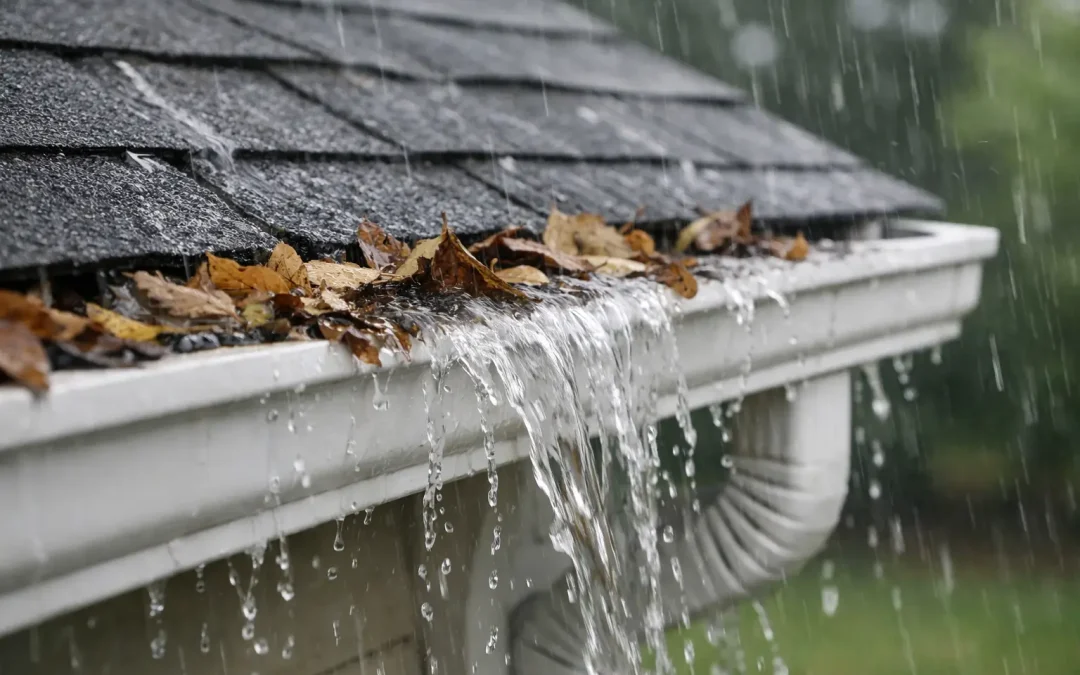
You usually notice overflowing gutters when the rain is already hammering down – water spilling over the front edge, running down brickwork, splashing by the front door, or pooling around the base of the house. If you are asking, why are my gutters overflowing, the short answer is that something is stopping water from flowing away as it should. The cause might be simple, such as a blockage, or it could point to a bigger issue with the guttering, roofline, or roof itself.
The trouble with overflowing gutters is that people often treat them as a minor nuisance. In reality, repeated overflow can stain walls, damage fascias and soffits, wash away pointing, and leave too much water sitting close to the property. Over time, that can lead to more expensive repairs than the original gutter problem.
Why are my gutters overflowing in heavy rain?
Heavy rainfall does put more pressure on any gutter system, but properly fitted guttering should still cope with normal British weather. If water is regularly pouring over the side, there is usually an underlying fault that needs attention.
One of the most common reasons is a build-up of leaves, moss, silt and general debris. This tends to collect in the runs and at the outlets, where the downpipe joins the gutter. Once that flow is restricted, rainwater has nowhere to go and spills over the edge instead. Homes with nearby trees often see this more often, but even properties without overhanging branches can end up with moss washed down from the roof.
Another common cause is incorrect fall. Gutters are not fitted dead level. They need a slight slope so water naturally runs towards the outlet. If that fall is wrong, water can sit in the gutter, back up during rain, and eventually overflow. This can happen because the original installation was poor, or because brackets have moved over time.
Capacity can also be an issue. Some older or poorly chosen systems are simply not suited to the roof area they are draining. A small gutter on a large roof slope may struggle during sustained downpours. That does not always mean the whole system is wrong, but it can mean certain sections need upgrading.
The most common causes of gutter overflow
Blocked gutters are the first thing most people think of, and for good reason. Debris builds up gradually, often unnoticed from the ground, until a period of rain exposes the problem. If water is only overflowing from one section, a local blockage is likely. If it is happening in several places, the system may have multiple build-ups or a broader drainage issue.
Blocked downpipes are just as common. In some cases, the gutter itself looks fairly clear, but water still cannot escape fast enough because the downpipe is packed with leaves, moss, or dirt. That causes the water level to rise back along the gutter run until it spills out.
Loose, sagging or poorly supported guttering is another frequent issue. When brackets fail or sections pull away from the fascia, the gutter can dip in the middle. Water then collects in the low point instead of flowing away properly. Standing water adds weight, which makes the sagging worse. It becomes a cycle that rarely improves on its own.
Joint failure can also play a part. If seals at the unions have worn out or sections have shifted apart, water may leak through joints and give the appearance of overflow. In bad weather, that leaking can be substantial enough to soak walls and paths below.
Then there is roof-related debris. Moss is a big one on many homes across the Midlands, especially on older properties or shaded roof slopes. During wet and windy weather, loose moss washes into the gutters, where it holds water and creates stubborn blockages. If a roof is shedding large amounts of moss, simply clearing the guttering may only solve the problem for a short while.
When the problem is not just the guttering
Sometimes the question is not only why are my gutters overflowing, but whether the gutters are getting more water than they should in the first place. A roof fault can change how rainwater enters the system.
If tiles have slipped, underfelt is damaged, or water is running behind the gutter because of roof edge problems, it can look like the gutter has failed when the issue actually starts higher up. Rotten fascias can also affect the way gutter brackets sit, leading to poor alignment and weak support.
This is why a proper inspection matters. Clearing debris is one thing. Identifying whether the roofline is sound enough to support the guttering properly is another. There is little value in repeatedly cleaning a system that is badly fitted, undersized, or attached to failing timber.
Signs your gutters need more than a clean
A simple clean may be enough if the guttering is structurally sound and the blockage is the only issue. But there are a few signs that suggest repair or replacement may be the better option.
If you can see sections bowing or dipping, the support is likely compromised. If joints are leaking in several places, seals may have perished or the system may have moved out of line. If water marks are running down the outside walls even after debris has been cleared, there could be a problem with the fall, capacity, or bracket spacing.
You should also watch for peeling paint on fascias and soffits, damp patches near the roofline, green staining on brickwork, and puddling around the base of the property after rain. These are all signs that water is not being directed away properly.
Age matters as well. Older plastic guttering can become brittle, warped or loose over time, especially if it has had years of standing water, frost, and sun exposure. In that case, spending money on repeated patch repairs may not be the most sensible long-term choice.
Can overflowing gutters damage your home?
Yes, and the damage is often gradual enough to be missed at first. Overflowing water can soak external walls, contribute to damp issues, and wear away mortar joints over time. It can also damage painted surfaces, encourage algae growth, and leave unsightly streaks on the front of the house.
At roofline level, constant overflow can affect fascias, soffits and the fixings that support the guttering itself. At ground level, too much water falling in one area can erode soil, flood pathways, and leave excess moisture around the footings. On colder days, that runoff can also create slippery surfaces.
The bigger risk is delay. A small overflow issue in autumn can turn into rotten timber, loose gutter runs or internal damp concerns if it is ignored through winter.
Should you repair, clear or replace the guttering?
That depends on the condition of the system. If the guttering is in good shape and the issue is a straightforward blockage, a professional clear and check may be all that is needed. If brackets are loose, falls are wrong, or one section has shifted, a targeted repair can often restore proper flow.
Replacement becomes the stronger option when the problems are repeated, the guttering is ageing, or the roofline has broader wear. New guttering is not just about appearance, although it can certainly improve the look of the property. It is about making sure the system is correctly sized, properly aligned and securely fixed so it performs as it should.
For homeowners, the key is not to guess from ground level. Water can travel in misleading ways, and what looks like a blockage may actually be a fitting problem, a failed joint, or weakness in the fascia behind it.
Why are my gutters overflowing on one side only?
If the overflow is limited to one side of the property, that often points to a local issue rather than a whole-system failure. A blocked outlet, a single sagging run, or debris collecting at one corner are common causes. It can also happen where one roof slope takes the brunt of wind-driven rain or has more moss washing down than the other side.
That said, one-sided overflow should not be dismissed as minor. Localised problems still allow water to keep hitting the same wall, windows, or entrance area, which is how visible property damage starts.
A reliable contractor will look at the full picture – the gutters, downpipes, brackets, fascias and roof edge – before advising whether a clean, repair or replacement is the right next step. For homeowners across Nottingham and the wider Midlands, that straightforward approach tends to save time, money and repeat problems.
If your gutters are overflowing, the best time to deal with it is before the next spell of heavy rain turns a manageable repair into a bigger job.