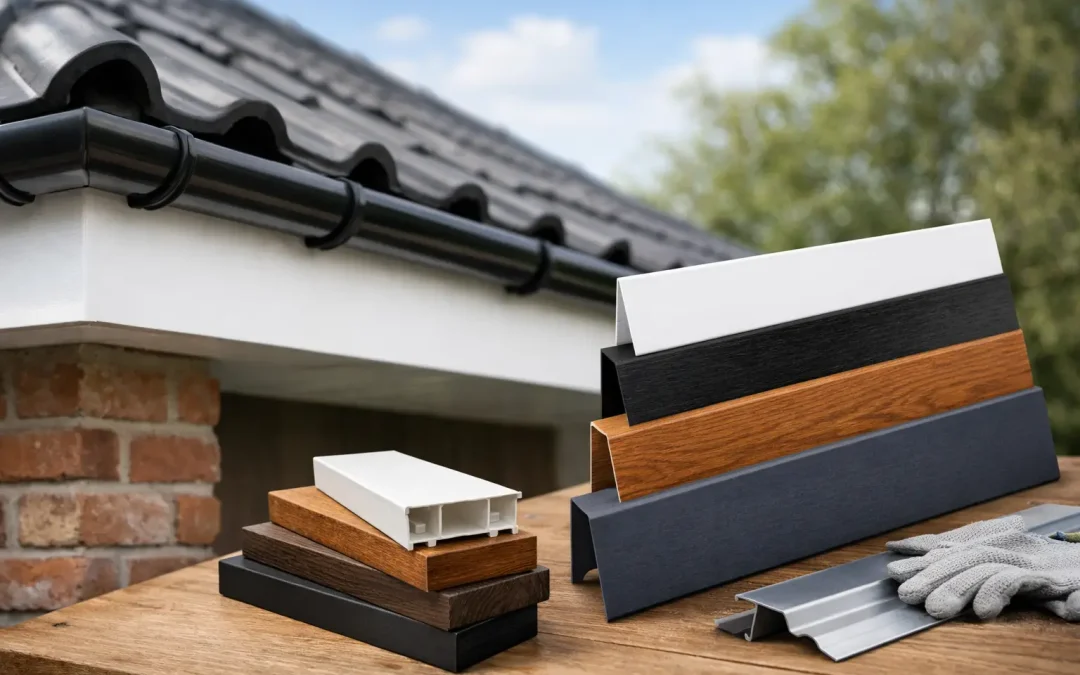
A fascia board usually only gets attention when the paint is peeling, the timber feels soft, or the guttering starts to sag. By that stage, the wrong choice can cost more than expected. If you are comparing the best fascia board materials for your home, the right answer depends on more than appearance. You need something that suits the property, stands up to the weather, supports the guttering properly and does not leave you with constant upkeep.
For most homeowners, the main options are uPVC, timber, aluminium and composite. Each has its place. The best one for your home depends on budget, the age and style of the property, and how much maintenance you are willing to deal with over the years.
What fascias actually do
Fascia boards run along the lower edge of the roof, supporting the bottom row of tiles and providing a fixing point for guttering. They also help protect the roofline from rain getting into the roof structure. If fascias fail, water can start affecting the rafters, soffits and other parts of the roofline.
That is why material choice matters. A fascia is not just a finishing trim. It is a working part of the roofline, and poor-quality boards or badly fitted replacements can cause trouble later.
Best fascia board materials compared
When homeowners ask about the best fascia board materials, they are usually balancing three things – durability, appearance and ongoing maintenance. There is no single material that wins in every category.
uPVC fascia boards
uPVC is the most popular choice on many homes across Nottingham and the Midlands, and for good reason. It is cost-effective, neat in appearance, available in several colours and finishes, and requires very little maintenance compared with timber.
A good-quality full replacement uPVC fascia can last for many years without needing painting or regular treatment. It copes well with wet weather, will not rot, and gives a clean, modern finish. For many standard residential properties, it is the most practical all-round option.
The important detail is quality and fitting. There is a big difference between full replacement fascia boards and thin capping boards fitted over failing timber. If the original timber underneath is already rotting, covering it will not solve the problem. Proper replacement is usually the better long-term job.
uPVC is not always the right visual fit for every property, especially some period homes where a more traditional finish may suit better. Cheaper products can also look flat or flimsy, which is why specification matters.
Timber fascia boards
Timber remains a valid option, particularly on older or more characterful properties where preserving the original look matters. On the right house, timber fascias can look excellent and keep the roofline in keeping with the rest of the exterior.
A properly installed and well-maintained timber fascia can perform well, but it asks more of the homeowner. It needs regular painting or staining to keep out moisture, and if maintenance slips, rot can start. Once that happens, repairs can spread beyond the fascia itself.
That does not make timber a poor choice. It just means it is best suited to homeowners who understand the upkeep involved and are happy to stay on top of it. If you want the most low-maintenance option possible, timber is unlikely to be it.
Aluminium fascia boards
Aluminium is a strong, durable material that offers a smart finish and very good resistance to weathering. It does not rot, it is lighter than many people expect, and it can be a strong long-term investment where a more premium specification is wanted.
It is often chosen on higher-end projects or on homes where a sharper, more contemporary appearance is preferred. In terms of lifespan, aluminium can be very impressive.
The downside is usually cost. It tends to be more expensive than uPVC, both in material and installation. It also needs proper fitting by tradespeople who are used to working with it. For many households, it is more than they need, but for some homes it is a very strong choice.
Composite fascia boards
Composite boards are designed to offer some of the appearance benefits of timber with improved durability and reduced maintenance. Depending on the product, they can be resistant to rot, stable in changing weather and visually appealing.
This can make composite attractive to homeowners who want something a little more premium than standard plastic but less demanding than real wood. That said, product quality can vary, and not every composite system performs the same way over time.
Composite can also sit in a higher price bracket. For some properties that will be worth it. For others, high-spec uPVC may deliver better value.
Which fascia material is best for most homes?
For the average UK home, uPVC is often the best balance of price, performance and ease of maintenance. It is practical, tidy and well suited to the kind of weather exposure rooflines deal with year after year.
That said, the best fascia board materials are not always the cheapest or most common. On a period property, timber may be the more suitable choice visually. On a premium renovation, aluminium or composite may be worth the extra cost. The right answer depends on the house as much as the material itself.
Things homeowners often overlook
One of the biggest mistakes is focusing only on the visible finish. Fascia replacement should include checking the condition of the rafter ends, soffits and guttering fixings. If there is hidden decay behind the old board, that needs dealing with properly.
Ventilation is another point that matters. A roofline should not only look good from the ground. It should also help the roof structure perform as it should. If airflow into the roof space is poor, condensation issues can develop over time.
It is also worth thinking about the guttering at the same time. Fascias carry the weight of the gutters, especially during heavy rain. If the guttering is old, leaking or poorly aligned, replacing both together often makes more sense than splitting the work.
Appearance matters, but so does proper fitting
Even the best fascia board materials will not perform well if the installation is poor. Crooked lines, weak fixings, bad joins and cover-up work over rotten timber are the sort of shortcuts that end up causing repeat problems.
A proper roofline job should look clean and straight, but it should also be built to last. That means sound backing where needed, secure fixing points for the guttering, tidy finishing and a careful inspection of the surrounding roofline before new boards are installed.
For homeowners, that is often the real difference between paying once for a solid job and paying again later to correct rushed work.
How to choose the right material for your property
Start with the condition of the current roofline. If you already have signs of rot, leaking joints, peeling paint or sagging gutters, the issue may be bigger than the fascia board surface. In that case, the choice of material should come alongside a proper survey of the whole roofline.
Next, consider the style of the property. A modern semi-detached house may suit white, black or grey uPVC perfectly well. A period home may look better with timber or a more sympathetic finish. There is no point fitting something low-maintenance if it looks out of place every time you pull onto the drive.
Then think long term. If you want a fit-and-forget option, uPVC or aluminium will usually make more sense than timber. If original character is your priority and you do not mind regular upkeep, timber can still be a sound choice.
Finally, avoid making the decision on price alone. Roofline work protects the property and affects kerb appeal at the same time. A cheap job can become an expensive one if materials are poor or the fitting standard is not there.
A practical view on value
The best value does not always mean the lowest quote. It means getting a fascia material that suits the house, is installed properly and will not let you down after a few winters. In many cases, that points to full replacement uPVC fitted by an experienced roofline contractor. In other cases, a more specialist material is worth the extra outlay.
What matters most is being clear about what you are getting. Ask whether the boards are full replacements or just cappings. Ask what condition the existing timber is in. Ask how the guttering will be supported. Straight answers at the start usually lead to better results.
If you are weighing up the best fascia board materials for your home, a good contractor should help you choose based on the property, not push a one-size-fits-all answer. A roofline should do its job quietly for years, and that starts with choosing the right material for the way your home is built and exposed to the weather.
If your fascias are starting to show their age, it is worth dealing with them before small problems spread into bigger repair work.