A fascia board can look fine from the ground right up until it starts causing bigger problems. If your guttering is sagging, paint is peeling, or you have damp around the roofline, the question is usually the same – when should fascias be replaced? The short answer is when they are no longer doing their job properly, but there are a few clear signs that tell you whether repair is enough or full replacement makes more sense.
For most homeowners, fascias are easy to ignore because they sit just under the edge of the roof and do their work quietly. They support the bottom row of tiles, carry the weight of the guttering, and help protect the roof structure from rainwater. When they start to fail, the damage often spreads beyond the board itself.
When should fascias be replaced rather than repaired?
This depends on the condition of the boards, what material they are made from, and whether the problem is localised or widespread. A small section of minor damage does not always mean the whole roofline needs replacing. If, however, the fascias are rotten, warped, cracked, or pulling away from the property, replacement is usually the safer and more cost-effective option.
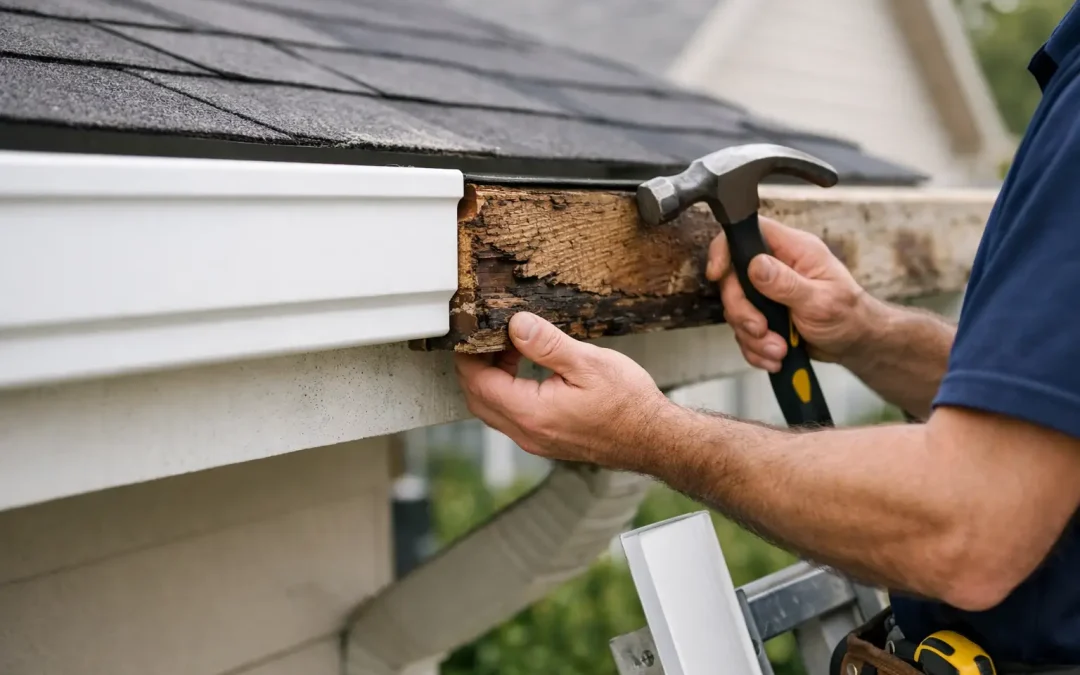
Timber fascias often reach the point where repair stops being worthwhile. Once water gets into the wood, rot can spread behind the surface, and a fresh coat of paint will only hide the problem for a short while. If the gutter brackets have loosened because the timber has softened, the fascia is no longer giving proper support. At that stage, replacing it is generally the right call.
With older plastic systems, problems can be a bit different. You might see brittleness, splits, discolouration, or boards that have become loose over time. In some cases, a previous installer may have capped over failing timber rather than removing it. That can leave hidden decay underneath, which means the outside looks tidy while the structure behind continues to deteriorate.
Common signs your fascias need attention
The most obvious sign is visible rot or cracking, but not every problem is that easy to spot from ground level. Overflowing gutters, recurring leaks at the roof edge, and staining on external walls can all point to fascia issues. If the guttering keeps pulling away or dipping in places, the boards behind it may be failing.
Peeling paint on timber fascias is another warning sign, especially if it keeps returning not long after repainting. That usually suggests moisture is getting in. In more advanced cases, you may notice damp or mould in the loft near the eaves, as water can track into the roof structure.
Pest activity can also be a clue. Birds, wasps, and insects often find their way into gaps where fascias and soffits have come loose or decayed. That does not always mean full replacement is needed, but it is worth having the roofline checked before a small access point turns into a larger repair.
How long do fascias usually last?
There is no single answer because lifespan depends on material, exposure, installation quality, and ongoing maintenance. Well-fitted uPVC fascias can last for decades with very little upkeep. Timber can also last a long time, but only if it is properly protected and regularly maintained.
In practice, age on its own is not the best guide. Some rooflines start to fail early because of poor fitting or long-term water overflow. Others stay sound for many years because the materials are good and the property has been looked after. The better question is not just how old the fascias are, but what condition they are in now.
If your home is older and still has original timber fascias, it is worth checking them before obvious damage appears. By the time rot is visible from outside, there may already be hidden issues affecting the ends of rafters or the fixings that hold the guttering in place.
Why delaying replacement can cost more
Fascias are not just trim. They are part of the working roofline system, and once they weaken, rainwater control becomes less reliable. Water can start running behind the guttering instead of into it, soaking the wall below and affecting the roof edge.
If rot spreads into the roof timbers, the job becomes bigger than a simple fascia replacement. You may end up needing extra repair work to the rafters, soffits, or felt support trays as well. That is why catching problems early usually saves money and disruption.
There is also the issue of appearance. A tired, stained, or uneven roofline can make the whole property look neglected, even if the rest of the house is well kept. Replacing worn fascias often gives the front and rear of a home a noticeably cleaner finish while also improving weather protection.
Repair or replace – what is the better value?
If the damage is minor and isolated, a repair may be sensible. That might include fixing a short section, re-securing gutter brackets, or dealing with a small area before it worsens. For newer installations in otherwise good condition, repairs can be the practical option.
But repeated patching on an ageing roofline often ends up costing more in the long run. If one section has failed because the material is at the end of its life, nearby sections are often not far behind. In those cases, replacement gives you a clean start and avoids a cycle of ongoing call-outs.
This is especially true where timber has been capped rather than fully removed in the past. Homeowners are sometimes told the outside has been upgraded, only to find the original boards underneath are still decaying. Proper replacement means removing failed material, checking the condition beneath, and fitting the new system correctly.
When should fascias be replaced on older homes?
Older homes across Nottingham and the wider Midlands often have rooflines that have been repaired in stages over many years. That can leave a mix of old timber, later coverings, mismatched guttering, and hidden weak points. If your property falls into that category, it is often worth looking at the roofline as a whole rather than one board at a time.
Replacement is usually the better option when the fascias have visible age-related wear across multiple elevations, when guttering support is unreliable, or when there is evidence that water has already been getting behind the boards. It is also worth considering if you are carrying out other exterior works, such as roof repairs or new guttering, because doing everything together can be more efficient and leave you with a neater result.
A proper survey matters here. What looks like a simple fascia issue may uncover rotten timber ends, poor ventilation, or damage caused by years of overflowing gutters. An experienced contractor should explain clearly what needs replacing, what can be retained, and why.
What to expect from a fascia replacement job
A good fascia replacement should not be about covering over a problem and moving on. The old, failed material needs to come off so the roof edge can be inspected properly. Any damaged timber behind it should be identified and dealt with before the new fascias are fitted.
The new system should then be installed securely, with attention paid to the guttering line, the soffits, and the overall finish. This is what makes the difference between a roofline that lasts and one that starts giving trouble again after a short time. Tidiness matters too. Homeowners want a job done properly, but they also want the property left clean and looked after.
That is why many people prefer to use an established local contractor rather than taking a chance on the cheapest quote. With roofline work, poor fitting can create just as many issues as worn materials.
The best time to get fascias checked
If you have noticed any of the warning signs, the best time is now rather than after the next spell of heavy rain. Even if the boards do not need immediate replacement, a proper inspection can tell you where things stand and whether any early action is needed.
It also makes sense to have fascias looked at if you are already booking roof repairs, replacing guttering, or seeing recurring damp at the top of external walls. These problems often connect. A straightforward inspection can save guesswork and help you avoid paying twice for related work.
For homeowners who want peace of mind, the sensible approach is simple. If the fascias are sound, keep them maintained. If they are failing, replace them before the damage spreads. A well-fitted roofline protects the home, supports the guttering properly, and keeps the property looking cared for – which is exactly what it should do.