
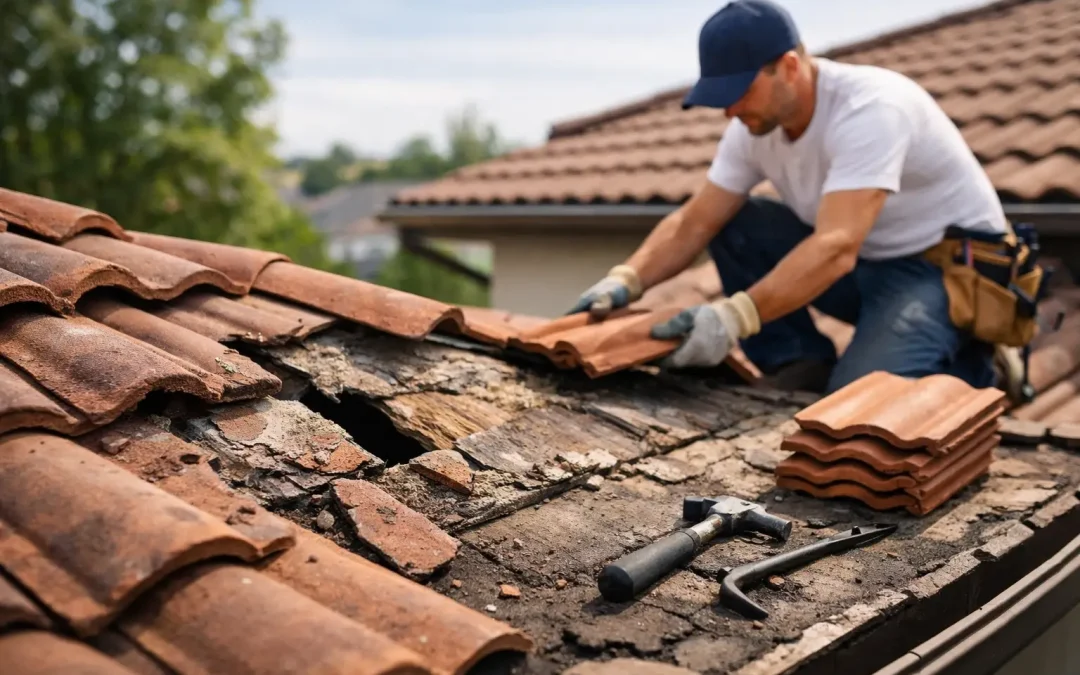
A missing tile after strong winds is usually a repair job. A roof with recurring leaks, widespread cracking and ageing materials is a different matter. Knowing when should roof tiles be replaced can help you deal with problems before water reaches the timber beneath, where a relatively simple roofing issue can become a far more costly one.
For homeowners across Nottingham and the Midlands, the right answer is rarely based on the roof’s age alone. The condition of the tiles, the underlay, battens, ridges and the roof structure all need to be considered together. A proper roof survey gives a clearer picture than trying to judge the roof from ground level.
When should roof tiles be replaced rather than repaired?
Roof tiles should be replaced when damage is widespread, the roof is no longer keeping out water reliably, or the existing materials have reached the end of their useful life. If only a small number of tiles are cracked, slipped or missing, replacing those individual tiles may be all that is required.
The difficulty is that isolated faults are not always isolated for long. A tile can slip because its fixing has failed, but it can also be a sign that the nails, battens or mortar around it are deteriorating. Where the same issue keeps returning in different areas, a piecemeal repair can become poor value compared with a planned replacement.
A roofer should check beneath the surface as well as above it. Tiles may look reasonable from the garden while the felt underlay has torn, the battens have weakened, or water has been tracking into the roof space for some time. Replacing tiles without addressing those underlying faults will not provide a lasting solution.
Signs your roof tiles may need attention
Cracked, broken or missing tiles
A cracked tile can allow rainwater to pass underneath, particularly on a roof exposed to driving wind. Missing tiles leave a more obvious gap, but even a small break should be dealt with promptly. Water entering below the tile covering may soak battens and insulation before any damp mark appears indoors.
One or two damaged tiles after a storm can normally be replaced to match the existing roof as closely as possible. If there are breaks across several slopes or rows, it is worth investigating why they are failing. Repeated frost damage, weathering and brittle old concrete tiles can point towards a wider replacement need.
Slipped tiles and loose ridge tiles
Slipped tiles should never be ignored. They can expose the roof below and, in severe cases, create a falling hazard. Loose ridge tiles, which run along the top of the roof, need particular attention because they are more exposed to wind and rain.
Older roofs often rely on mortar bedding at ridges and verges. Crumbling or missing mortar does not automatically mean a full re-roof is needed, but it does need professional repair. Modern dry-fix systems may be considered during larger replacement work, as they avoid relying solely on mortar to hold ridge components in place.
Damp patches, leaks or daylight in the loft
A water stain on a bedroom ceiling is a late warning sign, not necessarily the point at which the leak began. Check the loft during daylight hours, from a safe position, for signs of daylight, wet insulation, staining on timbers or a musty smell. Do not step between joists or attempt to inspect the outside roof yourself.
Leaks do not always mean every tile must be replaced. Faulty flashing around a chimney, worn leadwork, blocked gutters or a damaged valley can all cause water ingress. The source needs to be identified properly before deciding on the right repair.
Moss growth and surface wear
Moss on its own is not proof that a roof needs replacing. It is common on shaded or north-facing slopes and can make a roof look older than it is. However, heavy moss can hold moisture, obstruct gutters and hide cracked or worn tiles.
Avoid aggressive pressure washing. It can damage the tile surface, dislodge pointing and force water beneath the covering. If cleaning is appropriate, it should be carried out carefully as part of a wider assessment of the roof’s condition.
Granular, porous or visibly weathered tiles
Concrete tiles can gradually become more porous as their surface wears away. Clay tiles may last a very long time, but they can still crack or fail through impact, frost and movement. Signs of advanced wear include flaking surfaces, crumbling edges, extensive pitting and tiles that break easily during routine work.
Matching replacement tiles can also become difficult on older roofs. A slightly different colour is often unavoidable due to weathering, but if the original tile profile is no longer available and failures are widespread, replacement of a whole slope or roof may produce the better result.
Age matters, but condition matters more
Roof coverings do not have one fixed expiry date. The lifespan depends on the tile type, the quality of the original installation, local weather exposure, ventilation and maintenance. A well-fitted roof with sound underlay and regular repairs can continue to perform well for decades. Equally, a younger roof installed poorly may develop trouble far sooner.
As a broad guide, an older roof that is approaching several decades of service deserves closer inspection, especially if it has never had significant maintenance. That does not mean replacement is automatic. It means the roof should be assessed before minor problems become persistent leaks.
The supporting materials are often the deciding factor. Battens, underlay and fixings usually age differently from the tiles above them. During a full re-roof, these components can be renewed together, giving the roof a dependable base rather than simply placing new tiles over ageing materials.
Repair, partial replacement or a full re-roof?
The sensible option depends on the scale and cause of the problem. A targeted repair is usually appropriate where damage is localised and the rest of the roof remains sound. Replacing a few tiles, repairing a valley, renewing flashing or securing ridge tiles can restore protection without unnecessary work.
Partial replacement may suit a single roof slope that has suffered greater weather exposure than the rest of the property. This can be practical where matching materials are available and the adjoining roof sections are still in good condition.
A full re-roof is normally the better long-term choice where there are repeated leaks, extensive tile failure, failing underlay, rotten battens or substantial work needed across the roof. It is a bigger investment, but it allows the whole covering and its supporting layers to be renewed correctly. It can also improve the appearance of the property and provides an opportunity to address ventilation, insulation and roofline details where needed.
The lowest immediate price is not always the most economical answer. Repeated call-outs to chase leaks on a roof that is clearly failing can cost more over time and cause further damage inside the home.
What happens during a professional roof survey?
A reliable roofer will inspect the roof covering, ridges, verges, valleys, flashings, gutters and roofline. Where access allows, they will also look in the loft for evidence of water ingress, ventilation issues and deterioration to the roof structure.
You should receive a clear explanation of what has been found, what work is necessary now and what may be monitored for the future. Photographs can be useful where areas are difficult to see from the ground. A written quotation should set out the proposed materials and scope of work, rather than leaving you uncertain about what is included.
For larger replacement projects, ask how the property will be protected during the work, how waste will be removed and whether the contractor is fully insured. Good workmanship includes leaving the site tidy and treating the home with care from start to finish.
Do not wait for a major leak
Roofs rarely fail all at once. More often, small defects allow water in gradually until a period of heavy rain reveals the damage. Checking after storms, keeping gutters clear and arranging an inspection when you spot a slipped tile can prevent avoidable disruption.
If you are unsure whether your roof needs a few replacement tiles or a more complete solution, MTF Roofing Ltd can provide a straightforward assessment and a free, no-obligation quotation. The best time to act is when the warning signs first appear, while there is still a simple, well-planned way to protect your home.