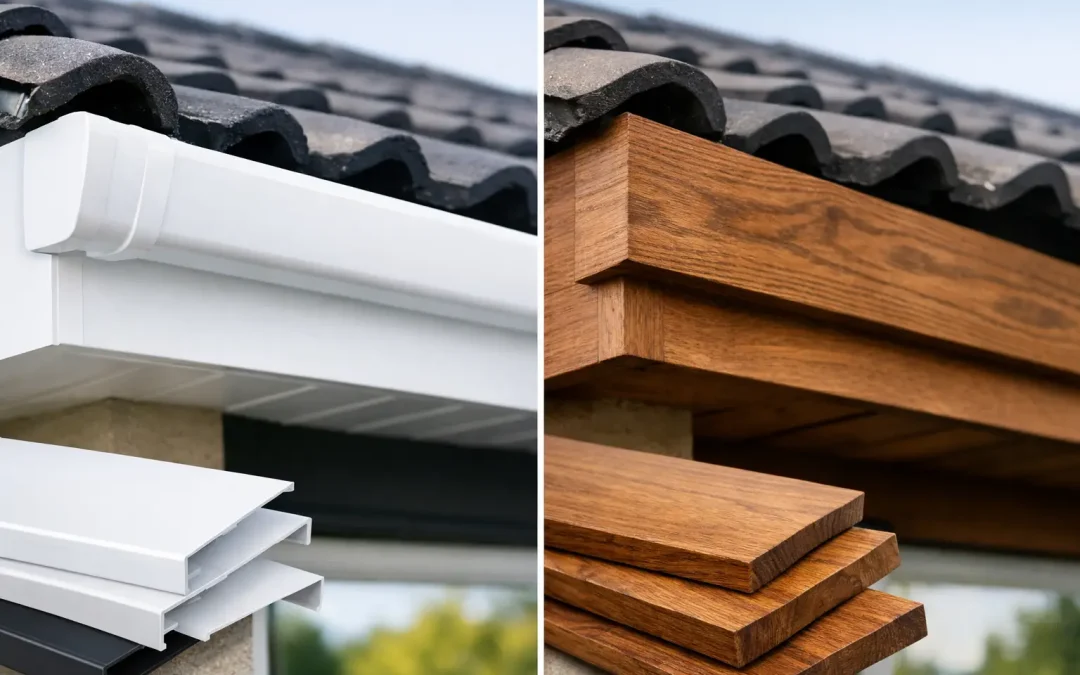
A fascia board may sit just below the edge of your roof, but it does a great deal of work. It supports the guttering, closes off the roofline and helps protect the rafters from rain, wind and pests. When old boards start to rot, peel or sag, choosing between uPVC fascias vs timber is about more than simply picking a colour.
For many homes across Nottingham and the wider Midlands, uPVC is the practical replacement choice. Timber still has a place, particularly on older or character properties, but it needs a different level of care. The right option depends on your property, the condition of the roofline and how much ongoing maintenance you are prepared to take on.
What does a fascia board do?
Fascia boards run along the lower edge of a pitched roof. The guttering is normally fixed to them, so they need to be securely installed and strong enough to cope with the weight of rainwater during a downpour.
They also work alongside the soffits, which are the boards fitted underneath the roof overhang. Together, fascias and soffits give the roofline a neat finish while helping to protect the timber structure behind them. If either is damaged, water can find its way into places it should not be, potentially leading to rotten rafters, damp patches and costly repairs.
That is why a roofline replacement should never be treated as a purely cosmetic job. A good installer will inspect the existing timber, the guttering, ventilation and the roof edge before recommending the most suitable material.
uPVC fascias vs timber: the main differences
The clearest difference is maintenance. uPVC fascia boards are made to withstand the weather without regular painting or sealing. Timber fascias can look excellent, but they need protection from moisture throughout their life.
Maintenance and day-to-day care
uPVC fascias are low maintenance. A wash with warm soapy water from time to time is usually enough to remove dirt and keep them looking smart. They do not rot, and modern quality boards are designed to hold their colour well for many years.
Timber needs more attention. Even properly painted timber can develop cracks in the paint finish, especially on exposed elevations. Once moisture gets into those weak points, the wood can swell, soften and begin to rot. Regular inspection, preparation and repainting are essential if timber fascias are to last.
This does not make timber a poor material. It simply means it suits homeowners who value its traditional appearance and are willing to budget for ongoing upkeep. For a busy household looking for a long-lasting, tidy finish with less to worry about, uPVC is often the more straightforward option.
Appearance and property style
Timber has a natural warmth that some homes need. On period properties, cottages and houses with original painted joinery, timber fascia boards may be the best way to retain the building’s character. They can be painted in almost any shade and shaped to match existing details.
uPVC is available in far more finishes than the basic white boards many people remember. White remains a popular choice because it gives a clean, bright roofline. Black, anthracite grey and wood-effect finishes can also work well when chosen carefully to complement windows, doors, cladding and guttering.
The quality of the fitting matters just as much as the colour. Straight lines, correctly finished corners, secure gutter brackets and neatly matched soffits make a visible difference from the ground. A good roofline installation should improve the appearance of the home without looking out of place.
Lifespan and weather resistance
Quality uPVC is highly resistant to rain, frost and damp conditions. It will not absorb water in the way timber does, which makes it particularly suitable for roof edges where gutters can overflow or joints can leak. It is also not vulnerable to wood-boring insects.
Timber can last for a long time when it is correctly specified, treated, painted and maintained. However, the roofline is one of the most exposed parts of a house. Repeated wet weather, blocked gutters and poor ventilation can shorten its lifespan considerably.
It is worth remembering that no fascia material can compensate for a faulty roof or overflowing guttering. If water is regularly running behind the gutter, even a new installation can suffer. Resolving the cause of the problem is part of doing the job properly.
Cost over the years
The upfront cost of roofline work varies with access, property size, existing condition and whether guttering, soffits or repairs are needed at the same time. Timber can sometimes seem competitively priced at first, depending on the type selected and the detail required. Bespoke timber work may cost more due to preparation and finishing.
uPVC can be a cost-effective long-term choice because it normally requires far less maintenance after installation. There is no regular painting cycle to plan for, and there is less risk of decay caused by moisture. For many homeowners, that lower level of ongoing work is a major part of the value.
The cheapest quotation is not always the best value. Thin boards, rushed fitting and covering over decayed timber can lead to problems returning sooner than expected. A clear quotation should explain what is being removed, what is being installed and whether any damaged timbers will be repaired if found during the work.
Do not simply cover over rotten timber
One common shortcut is to fit a plastic capping board over old timber fascias. This can be acceptable only where the timber behind is sound, dry and capable of supporting the guttering. It is not a cure for rot.
If the original fascia is soft, cracked or damaged by years of water ingress, it should be removed and replaced. Covering it can hide the issue for a while, but moisture and decay may continue behind the new surface. Guttering fixed into weakened timber can eventually pull away, particularly when it is carrying heavy rainwater or debris.
A full replacement fascia board, correctly fixed to sound rafters, gives a more dependable result. It also gives the installer the opportunity to inspect areas that are normally hidden, including the roof edge and any signs of decay.
Ventilation matters as much as the boards
Roofline upgrades are a good time to check ventilation. Your roof space needs suitable airflow to help control condensation. Without it, moisture can build up in the loft and affect insulation, timbers and felt.
Modern uPVC systems can include ventilated soffits or discreet ventilation solutions where required. The exact approach depends on the roof construction, so it should be assessed as part of the survey rather than added as an afterthought.
This is another reason to use an experienced roofing and roofline contractor rather than viewing fascia replacement as a simple cosmetic fitting job. The visible boards matter, but the condition of the structure behind them matters more.
When timber is still the right choice
Timber may be the better option if you own a listed building, live in a conservation area or have a period property where retaining original materials is important. Planning restrictions or local guidance may influence what can be fitted, so it is sensible to check before work starts.
It can also be right where existing timber details are a defining part of the house. In those cases, use suitable treated timber, ensure it is properly primed and painted, and keep gutters clear so water is not constantly sitting against the boards.
For a standard modern home, however, uPVC usually offers the best balance of appearance, durability and low maintenance. It can give the property a fresh, well-finished look while removing the cycle of scraping and repainting old timber.
Choosing the right roofline solution for your home
Before deciding, look beyond the fascia boards themselves. Check whether the soffits are stained or damaged, whether gutters overflow, whether joints leak and whether the gutter line is sagging. These issues often appear together because they have the same underlying cause: an ageing roofline that is no longer directing water away effectively.
A proper survey should establish whether you need fascias only, a complete fascia, soffit and guttering replacement, or repairs to the roof edge as well. It should also account for safe access and a tidy finish around existing roof tiles, brickwork and downpipes.
MTF Roofing Ltd takes this practical approach because a roofline should protect your home as well as improve how it looks. Whether uPVC fascias or timber are the right fit, the key is sound preparation, quality materials and fitting work that is built to last.
If your current boards are flaking, soft to the touch, pulling away from the roof or allowing gutters to sag, do not wait for the next heavy spell of rain. Having the roofline checked early gives you the chance to deal with a manageable repair before water causes wider damage.