If you are asking, “should I change my fascias and soffits to uPVC?”, there is usually a reason. Paint may be peeling from the timber, gutters may be overflowing or sagging, or you may have noticed damp patches, wasp nests or rot around the eaves. These are not just cosmetic issues. Your roofline helps support the guttering, protect the ends of the rafters and allow the roof space to ventilate properly.
For many homes, replacing tired timber fascias and soffits with quality uPVC is a sensible long-term upgrade. It reduces maintenance, gives the property a clean finish and can deal with issues that have been developing behind old boards. However, it is not a job that should be rushed or treated as a simple cover-up. The condition of the roofline behind the boards matters just as much as the new material you can see from the ground.
Should I change my fascias and soffits to uPVC?
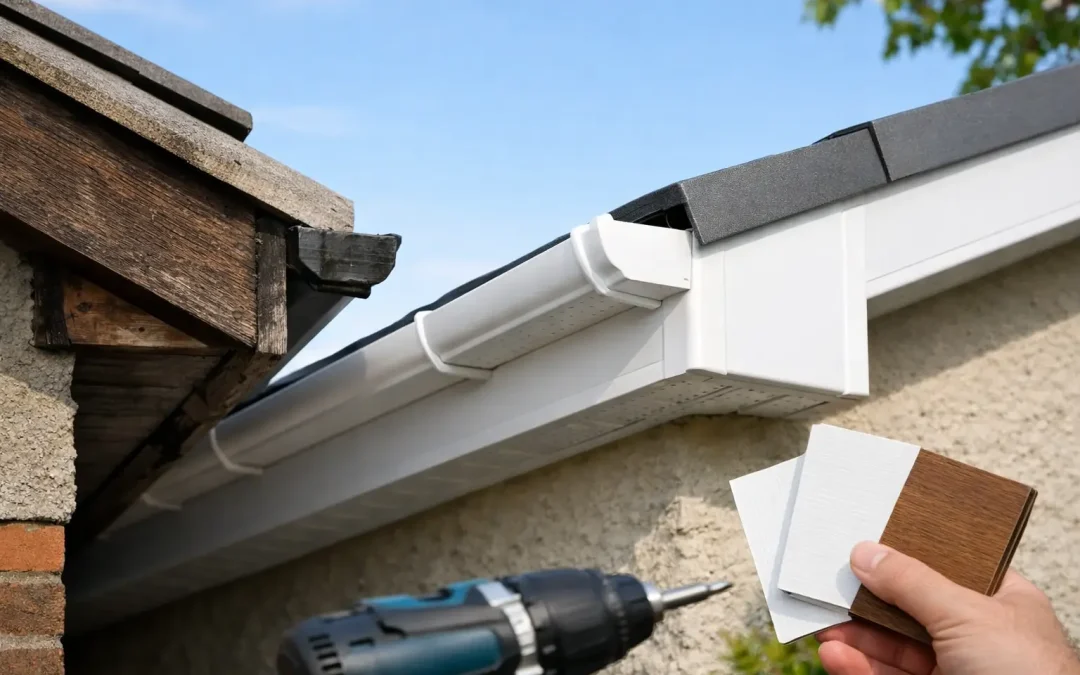
In most cases, uPVC is worth considering when existing timber boards are rotten, repeatedly needing repainting, no longer holding gutter brackets securely or allowing water into the roof edge. Modern uPVC fascias and soffits are designed to withstand the weather without the regular sanding, filling and painting that timber requires.
That said, replacement is not automatically necessary just because the boards look old. Sound timber that is properly maintained may still have years of service left. Some period properties also suit traditional timber details better, and owners may prefer to retain them where the condition allows.
The right answer depends on what is happening behind the visible boards. A proper survey should establish whether the rafters are sound, whether the roof edge has suffered water damage, and whether the gutters are causing or worsening the problem. Replacing the fascia without addressing a leaking gutter, damaged felt or rotten rafter ends can leave the underlying issue unresolved.
What fascias and soffits actually do
Fascias are the long boards fixed along the lower edge of a roof. They are the boards that guttering is normally attached to, so they need to be strong enough to carry the weight of the gutter when it is full of rainwater, leaves or debris.
Soffits sit underneath the fascia, closing the gap between the wall and roof edge. They give the eaves a tidy appearance, but they also play an important practical role. Ventilated soffits can allow air to move through the roof space, helping to control condensation and protect roof timbers.
Because both parts sit where the roof, guttering and external walls meet, they are exposed to a lot of weather. Overflowing gutters, slipped roof tiles and poor drainage can all allow water to reach the boards. Timber can cope well when it is maintained, but once paint fails and moisture gets in, decay can spread quickly.
Signs your roofline may need replacement
A close inspection from ground level can reveal obvious defects, but some problems only become clear when the guttering and old boards are removed. It is worth arranging a professional inspection if you notice several of the following signs:
- Peeling paint, soft timber, cracking boards or visible rot around the eaves.
- Gutters that sag, pull away from the roofline or leak at the brackets.
- Damp marks on external walls, mould in the loft or signs of condensation near the eaves.
- Gaps, nesting insects, birds entering the roof space or damaged soffit panels.
You may also find that water runs behind the gutter instead of into it. This can happen where the fascia has warped, the guttering has been poorly positioned or the roof felt has deteriorated at the edge. It is a common cause of staining and damp to brickwork, particularly after heavy rainfall.
The benefits of changing to uPVC
The main benefit of uPVC is lower maintenance. Unlike painted timber, it does not need regular decorating to keep it protected. A wash down from time to time is normally enough to keep it looking smart, particularly where dirt builds up beneath gutters or on sheltered elevations.
Quality uPVC roofline products are also stable, weather-resistant and available in several finishes. White remains a popular choice, but black, anthracite grey and wood-effect options can suit different styles of property. The aim should be a finish that complements the windows, guttering, brickwork and roof rather than simply following a trend.
Replacement also gives the installer the opportunity to fit new guttering and downpipes where needed. This is often worthwhile because old guttering may already be brittle, leaking at joints or poorly aligned. A complete roofline upgrade can improve how rainwater is carried away from the property as well as improving its appearance.
Just as importantly, removing old boards allows the roof edge to be checked properly. Any rotten timber, damaged felt or problems with the rafter ends can be identified and dealt with before new fascias and soffits are fitted.
The trade-offs to consider before replacing timber
uPVC is low maintenance, but it is not maintenance-free. Gutters still need clearing, downpipes need checking and the roofline should be inspected after severe weather. Dirt, algae and overflow marks can make even new boards look neglected if drainage is not looked after.
The quality of the installation is also crucial. Cheap installations sometimes involve fitting thin plastic boards over decaying timber. This may look acceptable initially, but it can trap moisture, hide rot and leave the guttering fixed to weak material. It is not a proper replacement and can create a more expensive repair later.
Ventilation must be considered too. Blocking old ventilation points or fitting unventilated soffits where the roof requires airflow can contribute to condensation in the loft. The correct approach will depend on the construction of the roof and the existing ventilation arrangement.
Finally, cost should be judged against the scope of work, not just the visible length of new board. A fair quotation should make clear whether it includes safe access, removal of old materials, replacement of any damaged timber, suitable ventilation, guttering work and clearing up afterwards. A very low price can sometimes mean essential parts of the job have been left out.
What a proper uPVC roofline replacement should include
A professional replacement starts with an inspection rather than a guess from the driveway. The condition of the fascias, soffits, gutters, roof felt and visible rafters should be assessed, along with any signs of water ingress or poor ventilation.
Where full replacement is required, the old boards should be removed so the structure behind them can be checked. If rot is found in rafter ends or timber supports, it should be repaired before the new roofline is fitted. New fascias need secure fixings capable of supporting the guttering, and soffits should be installed neatly with the right ventilation provision for the roof.
Guttering should then be aligned carefully so water runs to the downpipes without standing in the runs or overflowing behind the fascia. The finished work should look clean from ground level, but it should also perform properly when the next period of heavy rain arrives.
Is it better to replace fascias, soffits and guttering together?
Often, yes. If the gutters are old, leaking or fixed to failing timber, replacing them alongside the fascias makes practical sense. It avoids paying for access twice and gives the whole roof edge a consistent finish.
There are occasions where only part of the roofline needs attention. A local repair may be suitable where damage is limited and the remaining materials are sound. Equally, gutters can sometimes be replaced without changing the fascia if the boards are strong and in good condition. An honest assessment should explain the difference between what needs doing now and what can reasonably wait.
For homeowners across Nottingham and the wider Midlands, MTF Roofing Ltd can assess the condition of your roofline and explain the options in plain terms. The aim is not to sell a replacement where a repair will do, but to make sure the work carried out protects the home properly.
If your fascias are peeling, your gutters are leaking or you are simply tired of maintaining old timber, a survey is the sensible next step. A well-fitted uPVC roofline should give your home a tidy, durable finish while ensuring the roof edge, guttering and ventilation are all working as they should.