A flat roof that feels cold in winter or bakes the room below in summer is usually telling you the same thing – the insulation is not doing its job properly. For many homeowners, looking at flat roof insulation options starts after a leak, a roof replacement, or rising energy bills. The right choice can make a noticeable difference to comfort, running costs and the lifespan of the roof itself.
Why flat roof insulation options matter
Insulation is not just there to meet building standards. On a flat roof, it plays a big part in how well the whole system performs. Poor insulation can lead to heat loss, condensation problems and extra strain on the roof covering over time. That matters whether you are dealing with a garage roof, dormer, extension or a larger flat roof over living space.
What catches many homeowners out is that there is no single best answer for every property. The right system depends on the age of the roof, the available height, the condition of the deck, the type of covering being used and whether the roof is being repaired or fully replaced. A good roofer should explain the practical pros and cons, not just push one option because it is easier to fit.
The main types of flat roof insulation
When people compare flat roof insulation options, they are usually choosing between a warm roof, a cold roof or, less commonly on homes, an inverted roof. The names sound technical, but the difference is really about where the insulation sits within the roof build-up.
Warm roof insulation
A warm roof places the insulation above the roof deck and below the waterproof covering. In most domestic projects, this is the preferred option. It keeps the deck and supporting structure warmer, which greatly reduces the risk of condensation forming inside the roof.
This setup also tends to give more reliable thermal performance because the insulation layer is continuous across the roof. If you are replacing an ageing felt roof with a modern rubber flat roof, for example, a warm roof system is often the most sensible route. It brings the roof up to a better standard and avoids many of the issues that come with ventilating a cold roof correctly.
The main trade-off is build-up height. Because the insulation sits above the deck, the roof level becomes higher. On some properties, that can affect trims, thresholds, upstands or where the flat roof meets the wall. It is usually manageable, but it needs to be allowed for in the quote and the planning of the job.
Cold roof insulation
A cold roof places the insulation below the roof deck, typically between or beneath the joists. This was more common on older flat roofs and may still be used where roof height is very restricted.
It can work, but it needs proper ventilation above the insulation to allow moisture to escape. If that ventilation is poor, warm air from inside the property can meet the colder deck and create condensation. Over time, that can lead to damp, timber problems and reduced performance.
For that reason, cold roofs are often less forgiving in real homes than they look on paper. They depend heavily on correct detailing, and small mistakes can cause bigger issues later. If a homeowner is already opening up the roof for major work, moving to a warm roof system is often the better long-term investment.
Inverted roof insulation
An inverted roof puts the waterproof layer below the insulation, with the insulation sitting above it and usually held in place by paving or ballast. You are more likely to see this on balconies, terraces or some commercial-style flat roofs than on a standard domestic extension.
It has its uses, particularly where the roof surface will be walked on, but it is more specialised. For most residential properties in Nottingham and across the Midlands, warm roof construction is the more straightforward and commonly recommended solution.
Common insulation materials for flat roofs
The build-up type matters, but so does the insulation board itself. Different materials offer different levels of thermal performance, thickness and cost.
PIR boards
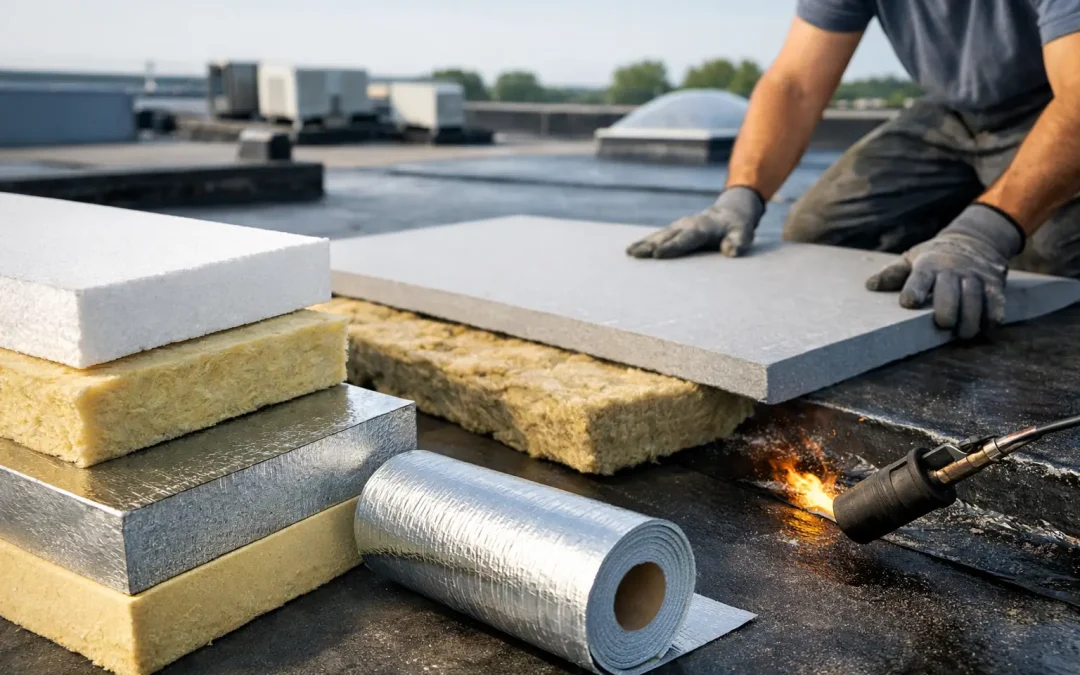
PIR insulation boards are widely used on domestic flat roofs. They offer strong thermal performance without needing excessive thickness, which is useful where roof height is limited. They are lightweight, practical to install and suited to many modern warm roof systems.
For many homeowners, PIR hits the balance between performance, cost and available space. That is one reason it is such a common choice on replacement flat roofs.
Mineral wool
Mineral wool is more often associated with pitched roofs and internal insulation, but it can appear in some flat roof constructions, particularly cold roofs. It provides good sound resistance and is non-combustible, but it generally needs more thickness to achieve the same thermal result as PIR.
That extra depth can be a drawback if space is tight. It is also more important to make sure it stays dry and is fitted correctly.
EPS and XPS boards
Expanded polystyrene and extruded polystyrene boards are used in some flat roof systems, with XPS particularly suited to inverted roofs because of its moisture resistance. These products can be effective in the right application, but they are less common than PIR on standard domestic warm roofs.
The best material is not always the one with the best figures on a data sheet. It is the one that fits the roof design properly and can be installed to a high standard without compromise.
Which flat roof insulation option is best for a home?
In most cases, a warm roof is the best all-round answer for a domestic flat roof over a habitable room. It usually provides better energy efficiency, lowers condensation risk and gives a more dependable finish when paired with a quality waterproof system.
That said, there are situations where the answer is less straightforward. If you are dealing with a small porch roof, detached garage or an older structure with fixed height limitations, a cold roof approach may still be considered. The key is knowing what compromises come with that choice.
This is where site survey matters. What works well on one extension in Derby may not be right for a dormer in Mansfield or a garage conversion in Newark. A proper assessment should look at the existing structure, not just price up a standard package.
Cost, value and what affects the price
Homeowners often ask which insulation option is cheapest. Cold roof insulation can look cheaper at first because the insulation goes below the deck and may involve fewer changes to the roofline. But upfront cost is only part of the picture.
A warm roof may cost more initially, particularly if the roof covering is being fully stripped and replaced. Even so, it often offers better long-term value because it performs more reliably and reduces the chance of condensation-related problems. If you are already investing in a new flat roof, cutting corners on insulation rarely pays off.
Price will usually depend on roof size, access, condition of the existing deck, thickness of insulation required, edge details, drainage, and the type of waterproof covering being fitted. Good workmanship also matters. A flat roof is only as good as the way the whole system is put together.
Don’t treat insulation as a separate job from the roof
One of the biggest mistakes homeowners make is treating insulation as an add-on rather than part of the roof build. On a flat roof, everything works together – deck, vapour control layer, insulation, covering, trims and outlets. If one part is wrong, the rest can suffer.
That is why patching over an old roof while trying to improve insulation from below does not always solve the real issue. Sometimes the better decision is to replace the roof properly and get the insulation right at the same time. It is a bigger job, but it usually gives a far better result.
For homeowners who want a roof that looks smart, performs properly and lasts, a clear survey and honest advice are worth far more than a rushed low quote. At MTF Roofing Ltd, that practical approach is what helps customers make the right decision for their property, rather than the quickest one.
What to ask before agreeing to work
If you are comparing quotes, ask where the insulation will sit, what material is being used, how condensation risk is being managed and whether the proposed build-up suits your property. If a contractor cannot explain that clearly, it is a warning sign.
You should also ask how the new roof height will affect adjoining details, whether damaged decking is included if found, and what finish you can expect around the edges. Those are the points that separate a tidy, well-fitted job from one that causes problems later.
A flat roof should do two things well – keep the weather out and help keep the home comfortable. When the insulation is chosen properly and fitted as part of a complete roofing system, you get both. If you are weighing up flat roof insulation options, the best starting point is simple: choose the solution that suits the roof you actually have, not the one that only looks cheapest on paper.