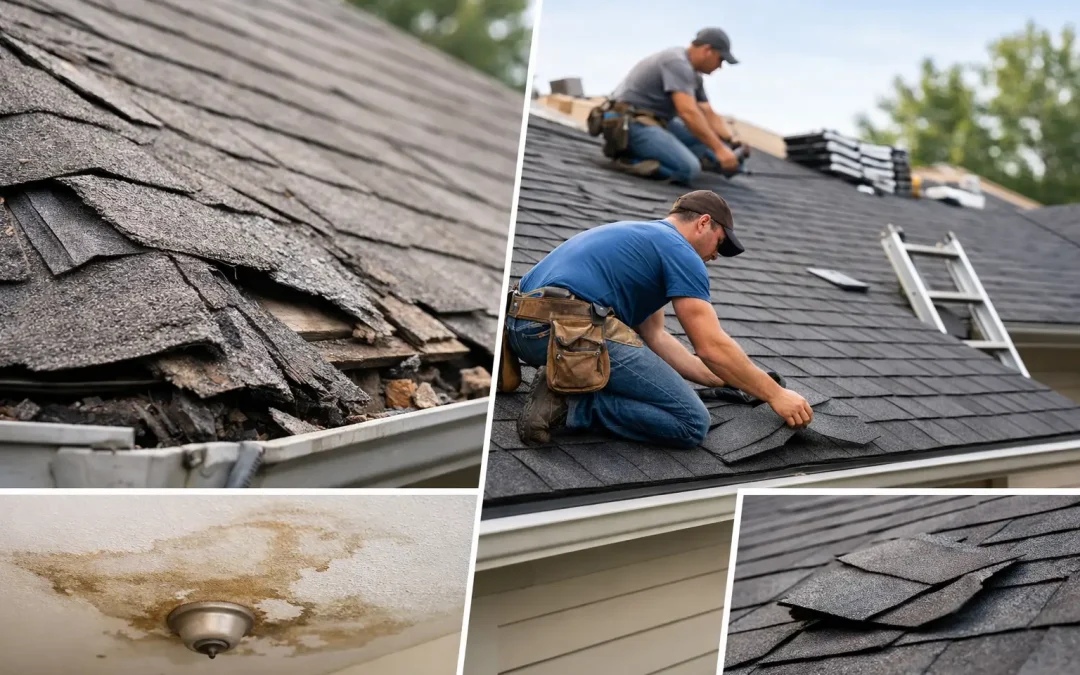
A roof rarely fails without giving some warning first. A damp patch in the loft, a loose tile after high winds or gutters that suddenly overflow can all point to a larger issue. Knowing the best signs you need reroofing helps you deal with problems while they are manageable, rather than waiting for water damage to affect the structure and finish of your home.
A full re-roof is a significant piece of work, so it should not be recommended simply because a roof looks old. Many faults can be repaired properly and economically. However, where the covering, timbers or roofline have reached the end of their serviceable life, repeated patch repairs can become poor value. The key is an honest inspection that identifies the cause of the problem, not just the visible symptom.
1. Your roof has passed its expected lifespan
Most tiled and slate roofs can protect a home for decades, but their lifespan depends on the original materials, installation quality, weather exposure and previous maintenance. Concrete tiles may last 40 to 60 years, while natural slate can last considerably longer when it has been fitted and maintained correctly. Flat roofs vary more widely, especially older felt systems.
Age alone does not mean your roof must be replaced. A well-kept roof may have years left in it, while a poorly fitted one can deteriorate far sooner. But if your roof is approaching the usual lifespan for its material and is also showing leaks, widespread tile defects or tired roofline components, a re-roof is worth considering.
2. Missing, cracked or slipping tiles are becoming common
One broken tile can often be replaced. The concern begins when missing, cracked, loose or slipping tiles appear in several areas of the roof. This may mean the tiles have become brittle, the fixings are failing or the battens beneath are no longer holding as they should.
Look at the roof from ground level after heavy wind or rain. Uneven tile lines, gaps, exposed underfelt and tiles collected in the garden are all reasons to arrange an inspection. Do not climb onto the roof yourself. Damaged coverings can be unsafe underfoot, and it is easy to cause more harm by walking across aging tiles.
If the damage is localised, a repair may be the sensible choice. If tile failure is widespread, replacing isolated sections repeatedly can leave you spending money on a roof that is continuing to decline.
3. You can see daylight or water in the loft
Your loft often provides the clearest picture of what is happening above it. On a bright day, check for pinpricks of daylight coming through the roof covering. Small points of light do not always mean there is an immediate leak, but they show where wind-driven rain could find its way in.
Water staining, damp insulation, mould, dripping or a musty smell are more urgent signs. Pay attention to the area around chimney stacks, roof valleys, vents and joins with neighbouring properties, as these are common points for water ingress.
A roof leak does not automatically mean you need a full replacement. Flashing, valleys and isolated damaged tiles can often be repaired. Yet when leaks appear in more than one area, or return after previous repair work, it may be time to assess the whole roof rather than treat each issue separately.
4. The underfelt and battens are failing
The underfelt beneath the tiles is a secondary layer of protection, designed to help manage moisture and wind-blown rain. On older roofs, it can become torn, brittle or sagging. In the loft, you may see felt hanging between rafters, splitting around fixings or deteriorating into fragments.
Battens are the timber strips that support the tiles. If they have become damp, rotten or weakened, replacing a few tiles on top will not solve the underlying problem. Accessing and renewing failed underfelt and battens usually means stripping back a substantial section of the roof. Where the issue is widespread, a full re-roof is generally the sounder long-term option.
5. Your roofline is rotting, staining or pulling away
Fascias, soffits and guttering do more than tidy the edge of a roof. They help protect the eaves, guide rainwater away from the walls and allow the roof space to ventilate correctly. Peeling paint, rotten timber, sagging gutters and gaps at the eaves can indicate long-term exposure to water.
Sometimes roofline work can be completed as a separate upgrade. New fascias, soffits and guttering can improve the appearance of a property and reduce maintenance. But if the eaves timbers are damp, water is getting behind the fascia or the roof covering is failing at the edges, it makes sense to inspect the roof at the same time.
6. Moss is lifting tiles or blocking drainage
A light layer of moss is common on roofs in shaded locations across the Midlands. It is not, by itself, proof that a roof needs replacing. The issue is when moss has built up heavily enough to retain water, push tiles apart, block gutters or conceal cracks and faults beneath it.
Avoid aggressive pressure washing. It can damage tile surfaces, disturb mortar and force water beneath the covering. A professional assessment can establish whether the roof needs careful cleaning, a repair or more substantial work. If moss has highlighted already worn tiles and poor drainage, a re-roof may be the better way to put things right.
7. The ridge tiles or mortar are loose
Ridge tiles sit along the highest point of a pitched roof and are exposed to the weather from every direction. Cracked mortar, loose ridge tiles and sections that have moved out of line should be dealt with promptly. Falling roof materials pose a risk to people, vehicles and neighbouring property.
In some cases, ridge tiles can be rebedded or mechanically fixed as a focused repair. However, loose ridges alongside aging tiles, damaged felt and failing roofline can be another indication that the roof is due for more comprehensive attention.
8. Your flat roof is blistering, cracking or ponding
Flat roofs need a different type of inspection. Standing water that remains for more than a short period after rainfall, bubbling or blistering in the surface, splits at edges and visible cracks around outlets should not be ignored. Water can work its way into layers below long before it becomes obvious inside the home.
A small split in an otherwise sound flat roof may be repairable. Where the surface is tired throughout, the falls are poor or water has affected the deck beneath, replacement is often more reliable. Modern rubber flat roof systems can provide a durable, neat finish when fitted to a properly prepared base.
9. You are paying for repeated repairs
There is nothing wrong with repairing a roof when the rest of it remains in good condition. Good repairs extend the life of a sound roof and avoid unnecessary disruption. The balance changes when call-outs become regular, leaks move from one place to another or each storm reveals a fresh problem.
Keep a note of previous work, including where repairs were made and when. If several areas have needed attention over a short period, ask for a full roof survey and a clear comparison between further repairs and a re-roof. The lowest immediate cost is not always the best value over the next five or ten years.
10. The roof is affecting the inside of your home
Water marks on ceilings, bubbling paint, damp walls around upper rooms and mould in loft spaces should be investigated quickly. While condensation can cause moisture problems, particularly in poorly ventilated homes, roof defects must be ruled out before assuming that is the cause.
Roof leaks can travel along timbers and felt before appearing inside, so the visible stain may not sit directly below the fault. A careful inspection should look at the roof covering, flashings, valleys, gutters, loft ventilation and any signs of damaged timber. This gives you a clearer basis for deciding whether targeted repairs are enough.
What a proper re-roof assessment should include
The best signs you need reroofing are useful indicators, but they are not a substitute for a close inspection. A dependable roofing contractor should explain what they can see, identify whether the problem is isolated or widespread, and set out the work in plain terms.
For a full re-roof, this usually means discussing the condition of tiles or slates, underfelt, battens, valleys, flashing, ridges and roofline. You should also understand which materials are proposed, how waste will be managed and what will happen if hidden issues are found once the old covering is removed. Clear quotations and sensible answers are a good sign that the work is being approached properly.
MTF Roofing Ltd provides surveys and no-obligation quotations for homeowners across Nottingham and the wider Midlands. With more than 15 years of hands-on experience, the team can advise whether a repair, roofline upgrade or complete replacement is the right route for your property.
If you have noticed one of these warning signs, arranging an inspection before the next spell of bad weather can protect more than your roof. It can protect the rooms, timbers and peace of mind beneath it.