
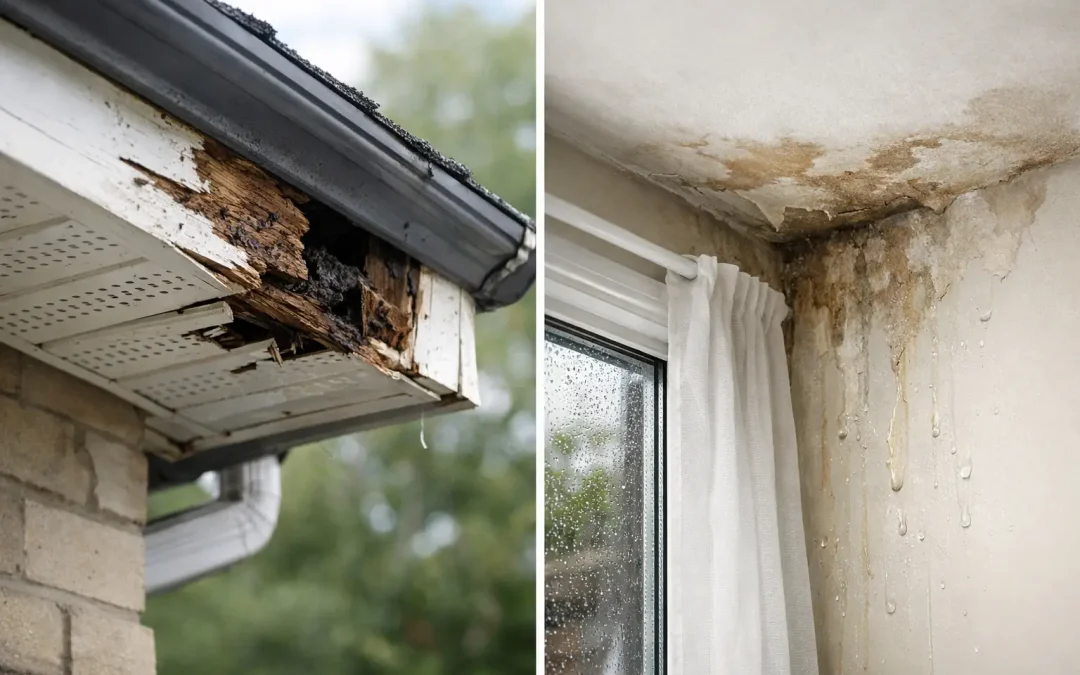
A dark patch at the top of a bedroom wall, peeling paint around a window or a musty smell in the loft can be worrying. So, can damaged soffits cause damp? Yes – when soffits are cracked, rotten, loose or poorly fitted, they can allow rainwater and wind-driven moisture into vulnerable parts of the roofline. The damage is not always obvious from ground level, which is why early checks and proper repairs matter.
Soffits are the boards fixed underneath the edge of your roof, bridging the gap between the external wall and fascia board. They help give the roofline a clean finish, but their job is also practical. Together with fascias, guttering, tiles and roof ventilation, they help keep water where it belongs: outside your home.
How damaged soffits can cause damp
A soffit does not usually deal with the full force of rainfall in the way that roof tiles or guttering do. However, it protects the underside of the eaves, where several parts of the roof meet. If water gets behind a damaged section, it can track into the eaves, wall cavity, loft space or ceiling area.
Timber soffits are particularly vulnerable once their paint finish fails. Rainwater can soak into exposed wood, causing it to swell, split and rot. As the board deteriorates, gaps can form at the joints or where it meets the fascia. Water then has a route into areas that should remain dry.
UPVC soffits will not rot, but they can still crack, warp, come loose or be fitted with poorly sealed joints. A broken vent, missing end cap or gap around a pipe can also admit water and pests. The issue may be worse during prolonged rain, high winds or when gutters overflow above the affected area.
It is worth remembering that damp is often the result of more than one fault. Damaged soffits may be part of the problem, but blocked gutters, leaking downpipes, slipped tiles, defective flashing or poor loft ventilation can create very similar symptoms. A proper inspection should identify the actual water path rather than simply replacing the first visibly damaged board.
Signs your soffits may be letting water in
The clearest warning signs are outside. Look for flaking paint, soft or crumbling timber, staining beneath the eaves, sagging boards, visible gaps or sections that have pulled away from the fascia. You may also notice gutter brackets becoming loose, as failing fascia and soffit boards do not provide a secure fixing point.
Inside, damp linked to the roofline often shows up near the top of external walls or on ceilings close to the edge of the property. Brown water marks, bubbling plaster, mould growth and a persistent cold, damp feel can all point to moisture getting in. In a loft, look for wet insulation, dark staining on rafters, damp timbers or daylight visible where it should not be.
These signs do not automatically mean the soffits are to blame. Condensation can cause mould in lofts, while plumbing leaks and penetrating damp elsewhere in the wall can produce similar marks. The timing can offer a useful clue. If a patch worsens after heavy rain or strong winds, an external roofline or roofing fault becomes more likely.
Watch the gutters as well
Gutters and soffits work side by side. When a gutter is blocked with leaves, moss or debris, water can back up and overflow over the rear edge rather than into the downpipe. That water runs directly over the fascia and soffit, repeatedly soaking the area below.
Even good-quality soffits can struggle if they are exposed to this cycle for months or years. If the gutter is sagging, incorrectly pitched, leaking at a joint or too small for the roof area, rainwater may also spill onto the roofline. Repairing only the soffit without dealing with the guttering can mean the same problem returns.
The difference between damp and condensation
Not all moisture around the roof space comes through a damaged roofline. Condensation happens when warm, moisture-laden air from the home meets cold surfaces in the loft. It is more common in winter and can leave water droplets on roof felt, timbers and cold pipework.
Soffit vents play a part here. Many roof spaces need ventilation at the eaves to allow air to circulate and reduce condensation. If old soffit vents are blocked, covered during insulation work or removed during an unsuitable repair, moisture can build up inside the loft. In that case, the soffit may be contributing to damp by restricting ventilation rather than allowing rainwater in.
This is why roofline work needs to be planned as a whole. The aim is to keep rain outside while maintaining the correct airflow inside the roof space. Simply sealing every gap is not always the right answer, especially where a ventilated roof design is required.
What happens if you leave damaged soffits untreated?
Small defects rarely improve on their own. Water can spread along timber, behind cladding or through insulation before it becomes visible inside. By the time a ceiling stain appears, the source may have been present for some time.
Left untreated, damaged soffits can lead to rotten fascias, loose gutters, damage to rafter ends and damp insulation. Wet insulation loses its effectiveness, making rooms colder and potentially increasing heating costs. Persistent moisture can also encourage mould, which is unpleasant in any home and should be dealt with promptly.
There is a safety aspect too. Loose timber, failed guttering and sections of roofline hanging away from the property should not be ignored. Avoid trying to inspect or repair high-level boards from a ladder unless you are properly equipped and experienced. A close inspection can be carried out safely and will establish whether a local repair is suitable or whether a wider replacement is the better long-term option.
Repair or replace: what is the right option?
The right solution depends on the condition of the full roof edge, not just the worst-looking section. If a small area has been damaged by an impact, a local repair may be all that is needed. This can be a sensible option where surrounding boards, fascia and guttering are sound.
Where timber soffits are soft in several places, paint is failing across the property or the fascias are also rotting, replacement is often more cost-effective over time. Replacing tired timber roofline with quality UPVC soffits, fascias and guttering can reduce ongoing maintenance and give the property a smart, consistent finish.
The condition of the roof should also be checked. If tiles, underfelt or flashing above the roofline are failing, new soffits alone will not stop the leak. A reliable contractor should explain what has caused the issue, show you the condition where possible and provide a clear quotation for the work required. There is little value in a quick cover-up that leaves water entering behind the boards.
A sensible approach before work begins
A thorough survey should assess the soffits, fascias, gutters, roof covering and the affected internal area. This helps separate rainwater ingress from condensation and avoids unnecessary work. Any blocked gutters should be cleared, leaking joints repaired and defective roof tiles or flashings addressed alongside the roofline where needed.
At MTF Roofing Ltd, we take this practical approach when inspecting homes across Nottingham and the wider Midlands. The focus is on finding the cause, explaining the options clearly and completing repairs or replacements to a standard that protects the property for the years ahead.
Can damaged soffits cause damp? Yes, but act on the cause
Damaged soffits can cause damp, particularly when gaps and decayed boards let rainwater into the eaves or when failed ventilation contributes to condensation in the loft. But roofline damp should never be guessed at. Similar symptoms can come from gutter faults, roof leaks or moisture within the home, and each needs a different remedy.
If you have noticed staining around the eaves, soft soffit boards, overflowing gutters or damp patches that worsen after rain, arrange an inspection before the next spell of bad weather. A timely, well-fitted repair can protect the roof edge, keep the home dry and prevent a manageable job from becoming a larger one.