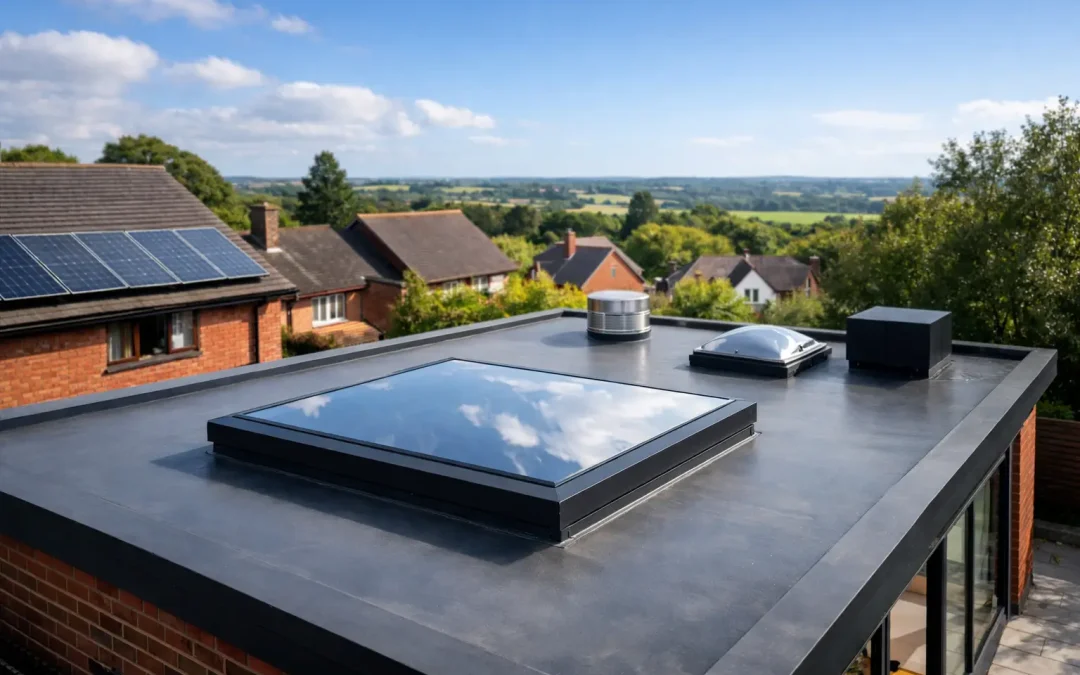
A flat roof over an extension, garage or dormer should not be the part of the house you worry about whenever heavy rain arrives. The future of flat roofing is less about chasing the latest trend and more about using better materials, improved insulation and proper installation to give homeowners dependable, long-lasting protection.
For many properties across Nottingham and the Midlands, older felt flat roofs are reaching the end of their working life. Cracking, blistering, standing water and repeated patch repairs are common signs that a more permanent replacement should be considered. Modern flat roofing systems have moved well beyond the short-lived flat roofs many homeowners remember, but the system still needs to suit the property and be fitted properly.
The future of flat roofing starts with better materials
Rubber roofing, particularly EPDM, has become a popular choice for residential flat roofs because it is hard-wearing, flexible and well suited to the changeable British weather. A quality rubber membrane can often be installed in large, continuous sections, reducing the number of joints where water could eventually find a way through.
This matters on extensions and garages, where a flat roof is often exposed to rain, frost, strong sun and falling debris from nearby trees. Unlike older felt systems that may require several layers and frequent attention, a well-fitted rubber roof provides a clean, modern finish with far less maintenance.
Other systems also have their place. GRP fibreglass roofing can offer a tough, attractive surface, especially where the roof has a more complex shape or needs a neat edge detail. Liquid-applied systems may be useful for certain repair and overlay projects. There is no single material that is right for every home, which is why a proper survey is more valuable than a quick price over the phone.
The key point is that the membrane is only one part of the roof. The condition of the deck, the edge trims, flashings, outlets and connection to the existing house all affect how well the finished roof performs.
Better insulation will shape the future of flat roofing
Homeowners are rightly paying more attention to heat loss, condensation and rising energy costs. A flat roof replacement can be an opportunity to improve insulation rather than simply cover over an existing problem.
A warm roof construction places insulation above the roof deck and below the waterproof covering. This helps keep the structure warmer, reducing the risk of condensation forming within the roof. It can also improve comfort in an extension that feels cold in winter or overheats too easily when the weather turns warmer.
The right approach depends on the existing build-up, available roof height and whether doors, windows or neighbouring details limit how much the roof level can be raised. On some older properties, fitting additional insulation may mean adjusting fascias, flashings or drainage details. Those are not extras to overlook – they are part of making sure the roof works as a complete system.
A more insulated roof can cost more at the outset, but it may offer better value over its lifespan. It is particularly worth discussing when replacing a roof over a kitchen extension, garden room or converted garage that is used every day.
Good drainage remains non-negotiable
A roof described as flat should still have enough fall to guide water towards the correct outlet. Water that sits on a roof for long periods puts extra pressure on the covering, encourages dirt to build up and can reveal weaknesses sooner.
The future will bring smarter materials, but it will not remove the need for sound roofing basics. Correct falls, clear gutters, suitable outlets and carefully formed edges remain essential. If water is regularly pooling on a roof, the answer is not always another patch. The roof may need its drainage or overall construction assessed.
For homeowners, it is sensible to keep gutters and outlets clear, particularly after autumn leaf fall and periods of high wind. A blocked outlet can turn a small amount of standing water into a much bigger issue.
Solar panels and roof access need early planning
More homeowners are considering solar panels, and a flat roof can provide useful space where a pitched roof is shaded, poorly oriented or already crowded. However, solar equipment should not be treated as an afterthought.
Before panels are installed, the roof needs to be checked for its condition, load capacity, drainage and remaining life. There is little sense fitting solar panels over a tired covering that may need replacing shortly afterwards. Removing and refitting the array later can add unnecessary cost and disruption.
The mounting method also matters. Ballasted systems can add significant weight, while penetrations through the waterproof layer need careful detailing. A well-planned roof replacement can allow for future solar use, even if panels are not being fitted straight away.
Access is another consideration. A flat roof may need occasional inspection, cleaning around rooflights or maintenance to solar equipment. Details such as safe access routes, durable walk pads and protected outlets can make future maintenance simpler without compromising the roof covering.
Rooflights will continue to change how extensions feel
Flat roof extensions are no longer simply functional additions at the back of a property. Many homeowners want brighter kitchens, dining spaces and family rooms, and rooflights are often central to that transformation.
Fixed rooflights, opening units and lantern-style designs can bring natural light into the middle of a home where ordinary windows cannot. They can make a modest extension feel more open, but they must be correctly sized and fitted. Large areas of glazing can increase solar gain in summer, while poorly detailed rooflight upstands can become a weak point for leaks.
The best result balances light, ventilation, privacy, insulation and roof design. This is another reason to avoid treating the roof as the final job once an extension is almost complete. The roofing contractor should understand the full layout before the waterproofing work begins.
Greener roofs have potential, with practical limits
Green roofs, where low-growing planting sits over a waterproof roof system, are likely to become more common in some residential projects. They can soften the look of an extension, support biodiversity and help slow rainwater runoff during heavy showers.
They are not suitable for every property. A green roof adds weight, needs the right drainage layers and requires a structure designed or confirmed to carry it. It also needs some maintenance, especially while planting becomes established. For a simple garage roof or a replacement on an older extension, a durable rubber roof may be the more straightforward and sensible option.
There is also growing interest in finishes that help reduce heat build-up on exposed roofs. Lighter surfaces and better insulation can help, although the right choice depends on the building design and the type of waterproofing system being used.
Workmanship will matter more than fashionable claims
The biggest change in flat roofing is not a single new product. It is the growing expectation that a roof should be designed, prepared and installed as a complete job, not rushed through with cheap materials and vague promises.
A reliable contractor should inspect the existing roof, explain what has caused any damage and set out what is included in the quotation. Homeowners should be clear on whether rotten decking will be replaced if found, how edges and wall flashings will be finished, what insulation is proposed and how waste will be removed from site.
It is also worth asking about guarantees, insurance and previous work. The lowest quote can become expensive if corners are cut on preparation or detailing. A flat roof is only as dependable as the work beneath and around its visible surface.
At MTF Roofing Ltd, the focus is on giving homeowners clear advice and fitting high-spec flat roofing systems with care. Whether the job is a leaking garage roof, an ageing extension or a wider home upgrade, the aim is the same: a tidy finish that protects the property properly.
The best time to think about the future of your flat roof is before a small leak turns into damaged ceilings, insulation or timber. A professional inspection can help you decide whether a repair is still worthwhile or whether replacement will give your home the better long-term result.