
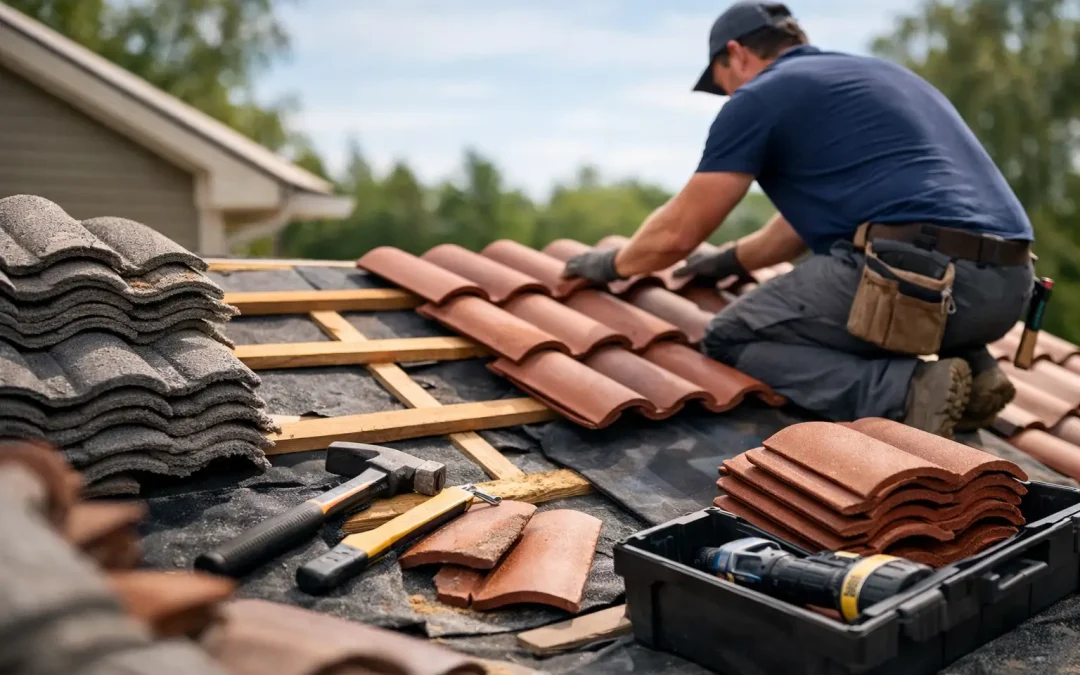
A tile on the ground after a windy night is easy to spot. The more serious problems are often less obvious: a cracked tile beneath the surface, loose bedding around the ridge, or rain finding its way through a small gap and into the roof space. This guide to roof tile replacement explains what homeowners should look for, when a simple repair may be enough, and when a wider roofing job is the sensible choice.
When does a roof tile need replacing?
Roof tiles are built to withstand years of rain, frost, wind and changing temperatures, but no roof covering lasts forever. Clay and concrete tiles can crack after impact or frost damage. Slates can split, slip or lose their fixing. Strong winds may lift tiles, while failing mortar can leave ridge or verge tiles loose.
Replacing an individual tile is often straightforward when the surrounding roof is in sound condition. It becomes more involved when damage is widespread, the battens beneath the tiles are affected, or the roof is reaching the end of its working life.
It is worth arranging an inspection if you notice a tile on the ground, gaps or uneven lines on the roof, damp patches in the loft, staining on upstairs ceilings, or debris in the gutters that appears to be from the roof. A leak does not always sit directly below the damaged tile. Water can run along the underfelt or timbers before it becomes visible inside the house.
A guide to roof tile replacement: repair or re-roof?
The right answer depends on the condition of the whole roof, not only the tile you can see from the garden. A professional survey should identify the source of the issue and check the surrounding materials before recommending work.
A localised tile replacement may be suitable where the damage has a clear cause, such as a fallen branch or a small number of slipped tiles after high winds. The replacement should match the existing tile as closely as possible in profile, size and colour. This matters for appearance, but it also helps the tiles interlock and shed water correctly.
A larger repair may be required if several tiles are cracked, loose or weathered across different areas. At this stage, the roofer should also inspect the underfelt, battens, flashings, valleys and roofline. Replacing surface tiles without addressing rotten battens or defective flashing can leave the underlying problem in place.
A full re-roof is usually worth considering when the roof has recurring leaks, widespread tile deterioration, failing underlay, extensive moss-related damage, or age-related wear throughout. It is a bigger investment, but repeatedly patching a roof that has reached the end of its serviceable life can cost more over time and cause avoidable disruption inside the home.
Why matching the replacement tile matters
Not all roof tiles are interchangeable. Even tiles that look similar from ground level may differ in their dimensions, thickness, interlocking pattern or fixing method. Using an unsuitable tile can create a gap, restrict the water flow across the roof, or put pressure on neighbouring tiles.
Older properties can present an added challenge because the original tile range may no longer be made. In that case, an experienced roofer may be able to source a close match, use reclaimed tiles where appropriate, or advise on a practical alternative that maintains the roof’s weather protection and appearance.
Colour variation is also normal, particularly on older concrete tiles and natural slate. A newly fitted tile may look different at first, but it should be chosen to blend as closely as possible with the existing roof. The priority is always a secure, correctly fitted and watertight repair, rather than a cosmetic shortcut.
What a proper tile replacement involves
Safe access comes first. Roofing work should not be carried out by balancing on ladders or walking across fragile areas of the roof. Depending on the height, pitch and position of the damage, suitable ladder access, roof ladders or scaffolding may be needed to protect both the property and those carrying out the work.
The damaged tile is then carefully removed without disturbing sound neighbouring tiles. The roofer checks the batten beneath, the underfelt and the fixings before installing the replacement. If the batten is soft, split or rotten, it needs attention before a new tile is fitted. Otherwise, the repair may not hold securely.
Replacement tiles should be fixed in line with the roof design and current good practice. Some tiles rely on interlocking and overlap, while others need nails, clips or specific mechanical fixings, especially in exposed locations. Ridge, hip and verge tiles require their own approach, as these areas are particularly vulnerable to wind-driven rain and movement.
Once the work is complete, the roof should be checked for alignment, secure fixing and clear water paths. Any broken material and debris should be removed from the roof and gutters, leaving the area tidy.
Do not ignore the cause of tile damage
A broken tile may be an isolated incident, but it can also be a symptom of another issue. Moss growth, for example, can retain moisture and lift tiles as it thickens. Poorly maintained gutters can overflow onto roof edges and affect fascias, soffits and brickwork. Loose mortar around ridge tiles can allow movement that damages adjoining tiles.
Storm damage deserves particular attention. After severe wind, it is tempting to replace the tile that has fallen and assume the problem is solved. However, wind can loosen fixings across a wider area. A close inspection can reveal tiles that are no longer secure before they become a danger or allow water into the property.
Roof ventilation and condensation should also be considered where damp is visible in the loft. A tile replacement will stop rain entering through a specific gap, but it will not resolve moisture caused by insufficient ventilation. The diagnosis needs to be right before the work begins.
Can homeowners replace roof tiles themselves?
For most homeowners, roof tile replacement is best left to a qualified roofing contractor. The work involves height, fragile surfaces, sharp materials and the risk of causing further damage by standing in the wrong place. It is also easy to miss a problem with the underlay, battens or adjacent tiles when working from a ladder.
There is a difference between a temporary measure and a lasting repair. Covering an area with a sheet after a storm may help limit water ingress until help arrives, provided it can be done safely from ground level or through safe access. Attempting a permanent repair without the correct equipment, materials and experience can turn a small issue into a larger one.
If water is entering the property, move belongings away from the affected area, use a container to catch drips where necessary, and avoid touching light fittings or electrical points near the leak. Contact a roofing specialist promptly rather than waiting for the next spell of rain to show how far the issue has spread.
Choosing a contractor for tile replacement
Ask whether the contractor will inspect the roof rather than quote solely from a photograph or a view from the ground. A clear written quotation should explain what is being replaced, whether access equipment is included, and whether related defects have been found.
It is reasonable to ask about insurance, experience with your roof type and the proposed tile match. You should also expect clear communication about timing, the likely duration of the work and how the site will be left afterwards. A dependable roofing firm will not pressure you into unnecessary work, but it will explain plainly if a small repair is unlikely to provide a lasting result.
For homeowners across Nottingham and the wider Midlands, MTF Roofing Ltd carries out roof repairs and replacement work with a focus on proper surveys, quality materials and tidy workmanship. The aim should always be to protect the home properly, not simply cover the visible symptom.
Act before a small gap becomes a bigger repair
A missing or cracked tile is rarely something to leave until spring or after the next storm. Rainwater can damage insulation, timbers and ceilings long before a leak becomes obvious in the room below. Early inspection gives you more options, whether that means replacing one tile, carrying out a targeted repair or planning a re-roof at the right time.
If you are unsure about the condition of your roof, a professional assessment is the sensible next step. It provides a clear view of what needs doing now, what can be monitored, and how to keep your home dry, secure and looking well cared for.