
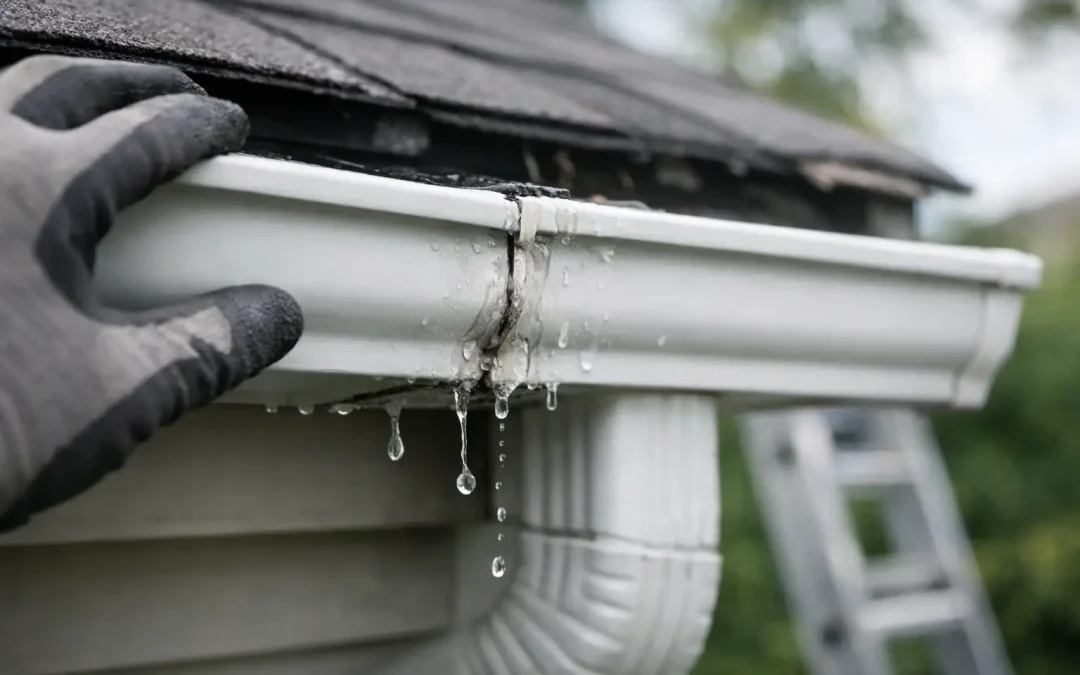
A small drip from a gutter joint can look harmless, particularly during a heavy Midlands downpour. But water escaping at a connection can run down brickwork, soak the fascia board and collect around the base of the property. Knowing how to spot gutter joint leaks early gives you a better chance of arranging a straightforward repair before damp and water damage become more costly.
Gutter joints are the connectors that join lengths of guttering together, or connect them to corners, stop ends and outlets. They rely on a secure fit and a rubber seal to keep rainwater moving towards the downpipe. Age, movement, trapped debris and poor fitting can all cause these seals to fail.
Look for drips in the right place
The clearest sign of a leaking joint is water dripping from the underside or back edge of a connector while it is raining. This is different from water spilling over the front of the gutter, which usually points to a blockage, inadequate capacity or an incorrect fall.
From ground level, watch the guttering during steady rain if it is safe to do so. Pay particular attention to the joins between straight sections, the corners and the outlet above the downpipe. A joint may only leak once the gutter has filled with water, so a quick look at the start of a shower does not always reveal the problem.
Do not climb a ladder in wet or windy conditions to inspect a suspected leak. A clear view from the ground, or from an upstairs window where possible, is usually enough to identify whether water is escaping from a joint. If access is needed, it is safer to have it checked by an experienced contractor.
Check for marks after the rain has stopped
You do not have to catch a gutter joint in the act to spot trouble. Leaks often leave evidence behind on the wall and roofline below. A narrow dark streak under a gutter connection is a common warning sign, especially if it appears more pronounced after rainfall.
Look for green algae, moss staining or a dirty vertical line on the brickwork. Repeated drips keep one small area damp, which encourages this growth and leaves marks that can be difficult to remove. Paint that is blistering or peeling on timber fascias, soffits, window frames or render can also indicate that water is landing in the same place time after time.
At ground level, check for a consistently wet patch, splashed soil or staining around paths and paving. If the leak is close to a doorway, bay window or extension, do not ignore it. Water running down an exterior wall can find its way into small cracks, mortar joints and vulnerable areas around openings.
Notice when a joint looks out of line
A gutter joint does not always fail because the rubber seal has perished. Sometimes the gutter itself has shifted. Plastic guttering expands in warm weather and contracts in cold weather, while brackets can loosen over time. If a length of gutter has pulled partly out of its connector, the seal may no longer sit correctly.
Stand back and look along the gutter run. It should appear supported, straight and gently directed towards the downpipe. A section that sags, dips near a joint or sits at a noticeably different angle may be holding water. The extra weight places strain on the joint and can cause water to escape from the back or underside.
Also look for gaps at the ends of the gutter where they enter the connector. A visible gap does not automatically mean there is a leak, as joints need allowance for expansion, but it is worth checking if there are signs of water below. Cracked plastic, loose clips or a connector that has warped are stronger indications that repair or replacement is needed.
Separate a joint leak from an overflow
This distinction matters because the solution is not always the same. When a gutter is full of leaves, moss, roof grit or debris, rainwater may overflow over the front edge along a wider length of the run. Cleaning the guttering and downpipe may resolve the issue, provided the joints and brackets are sound.
A joint leak is normally more localised. You may see a steady drip at one connector even though the rest of the gutter is coping well. It can still be made worse by a blockage further along the system, because standing water increases pressure on the seals. For that reason, a proper inspection should consider the whole gutter run rather than simply applying sealant to the point where water appears.
Water coming from behind the gutter also deserves attention. This may be a failed joint, but it can indicate that the gutter is set too close to the fascia, has been fitted with the wrong fall or is overflowing at the rear. The repair depends on the cause, which is why a close assessment is better than guessing.
Common reasons gutter joints start leaking
Most gutter joint leaks develop gradually. Rubber seals harden, flatten or split with age and exposure to changing weather. Dirt can build up around the joint, stopping the gutter section from sitting properly against the seal. In colder months, trapped water can freeze and expand, adding further stress.
Poor installation can also lead to early failure. If brackets are spaced too far apart, the gutter can sag under rainwater and debris. If the joint was forced, fitted unevenly or not allowed room for normal movement, it may leak despite looking fairly tidy from below.
Older properties can present another issue. Fascia boards may have deteriorated behind the guttering, allowing brackets to work loose. In that situation, replacing a joint alone may provide only a short-term result. The condition of the gutter, brackets, fascia and downpipe should be considered together.
When a simple repair may be enough
If the guttering is otherwise in good condition, a leaking joint can often be repaired by removing the affected section, cleaning the connection and fitting a new quality seal or connector. The gutter should then be refitted with the correct alignment and fall so water drains freely.
It depends on the age and condition of the system. A single failed seal on relatively modern guttering is very different from several leaking joints, brittle plastic, sagging runs and loose brackets. Repeated patch repairs can soon become poor value if the rest of the installation is reaching the end of its working life.
Sealant is sometimes used as a temporary measure, but it should not be treated as a cure for a loose, cracked or incorrectly fitted joint. Applied over dirt or standing water, it rarely lasts. It can also make a later repair more difficult if the underlying issue has not been dealt with properly.
Protect the roofline, not just the gutter
Leaking gutter joints are easy to put off because the water is outside. The trouble is that gutters are designed to keep rainwater away from the building fabric. Once water repeatedly reaches the fascia, soffit, wall or foundations, the repair can extend beyond the guttering itself.
A professional inspection can identify whether the problem is a seal, a blockage, inadequate support, incorrect falls or worn roofline boards. At MTF Roofing Ltd, we take a practical view of the full roofline so homeowners can understand what needs doing now and what can reasonably wait.
If you have noticed dripping joints, staining below the gutter or water collecting where it should not, arrange an inspection before the next spell of heavy rain. A properly fitted repair keeps water moving where it belongs and helps your home stay dry, tidy and protected.