A flat roof rarely fails without warning. Staining on a ceiling, cracking around an edge, loose trims or water sitting in the same place after rain can all point to a roof that needs attention. Choosing the best flat roof materials is not simply about picking the longest guarantee. It is about selecting a system that suits the roof, the property and the standard of installation needed to keep water out for years to come.
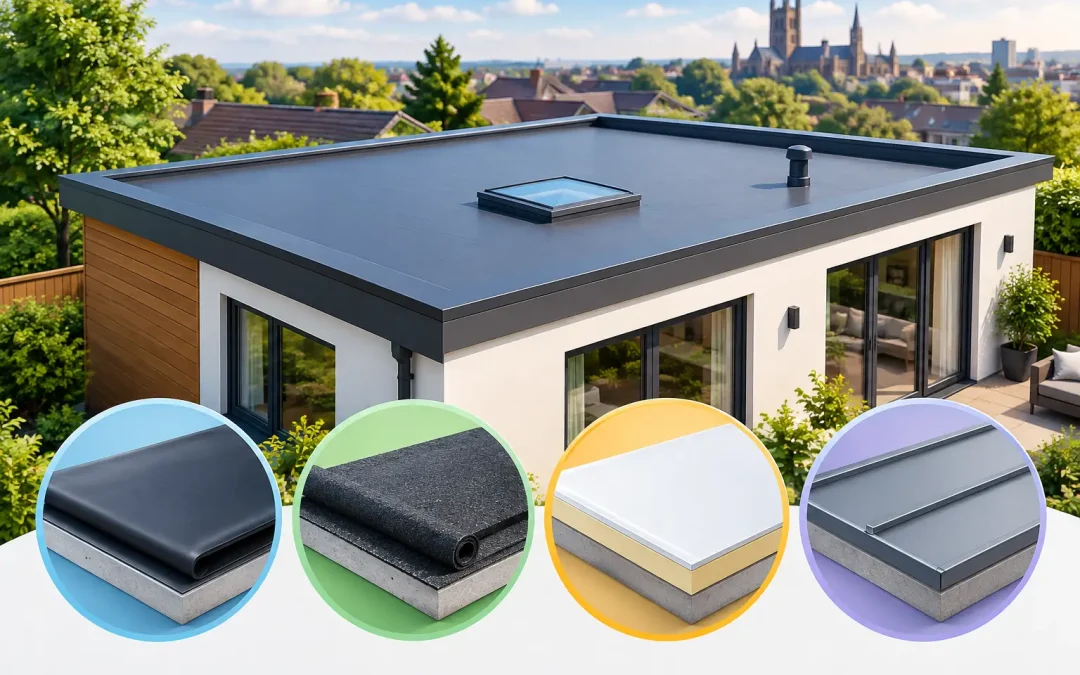
For garages, extensions, dormers, porches and bay windows across the Midlands, the most suitable option often comes down to EPDM rubber, GRP fibreglass or a modern felt system. Each can perform very well when it is fitted properly. Each also has situations where another material may be the better choice.
Best flat roof materials for UK homes
There is no single material that is right for every flat roof. The size and shape of the roof, access for installation, the existing deck, drainage and the finish you want all matter. A good roofer should inspect these details before recommending a system, rather than offering the same product for every job.
EPDM rubber roofing
EPDM is a tough synthetic rubber membrane and is one of the most popular choices for residential flat roofs. It is commonly used on garage roofs, extensions and larger areas because it can often be installed in one piece with very few joints. Fewer seams mean fewer potential weak points for water to find.
A quality EPDM roof is flexible, copes well with changing temperatures and has a clean, understated appearance. It is also well suited to the British weather, including heavy rain and frosty winters. For a straightforward rectangular roof with sound decking and sensible drainage, rubber roofing is often an excellent long-term choice.
The quality of the membrane, adhesives, edge trims and workmanship all affect its performance. The roof must be properly bonded, the perimeter securely finished and all upstands sealed correctly. Rubber is not a shortcut product – it needs careful preparation to give the lasting result homeowners expect.
GRP fibreglass roofing
GRP, often called fibreglass roofing, creates a hard, joint-free surface. It is made by applying resin and glass-fibre matting over a suitable deck, then finishing it with a protective top coat. Once complete, it provides a smart, solid finish that is especially popular on smaller roofs, porches, bay windows and balconies.
One of GRP’s main strengths is its appearance. It can give a crisp, modern finish with neatly formed edges and can be shaped around more detailed roof layouts. Because there are no overlapping joints across the main roof area, it offers very good water resistance when installed as a complete system.
It does need the right conditions and preparation. The deck must be dry, stable and suitable for the system, while the resin work needs to be carried out at the correct temperature. A poorly prepared fibreglass roof can crack or fail around weak details, so this is a material where experienced fitting makes a real difference.
Modern felt roofing
Modern felt is a long way from the thin, short-lived coverings many people remember. High-performance felt systems use multiple layers of bitumen-based membrane, often with a mineral-finished cap sheet to protect the surface. They remain a practical and cost-effective solution for many garages, sheds, extensions and repair projects.
A properly installed felt roof is durable, repairable and adaptable around awkward details. It can also be a sensible choice where budget is a major consideration, provided the full system is specified rather than a single cheap layer being laid over an existing problem.
The trade-off is that felt roofs have more laps and joints than a single-ply rubber roof. These areas must be formed and sealed carefully, particularly around outlets, corners and abutments. Good materials and skilled installation are what separate a dependable felt roof from one that begins to lift or leak prematurely.
Liquid-applied roof systems
Liquid-applied coatings are useful for certain roofs with complex shapes, numerous penetrations or difficult details. The material is applied as a liquid and cures to form a waterproof membrane, allowing it to follow awkward contours around pipes, skylights and junctions.
This can be a useful option for repairs or overlays where the existing roof is sound and suitable to retain. It is not, however, a cure for rotten decking, trapped moisture or poor falls. Any underlying issue needs dealing with before a new waterproof layer is applied.
How to choose the right material
The best material is only part of the decision. A roof survey should establish what is underneath the current covering and how the roof handles rainwater. Homeowners are sometimes quoted for a new surface when the deck, insulation or drainage also needs attention. That can lead to an attractive roof that does not solve the real problem.
Check the roof deck and insulation
A flat roof covering needs a firm, dry base. If boards have softened through water damage, they should be replaced rather than covered over. The type of deck can also influence the system used. For example, GRP is commonly laid over suitable OSB boarding, while EPDM can work well across properly prepared timber decks.
If the roof is being replaced over a heated extension, insulation deserves equal consideration. A warm roof arrangement places insulation above the roof structure, helping to reduce heat loss and condensation risk. The correct build-up and ventilation requirements depend on the property, so this should be assessed as part of the whole job rather than added as an afterthought.
Do not overlook drainage
Despite the name, a flat roof should not be completely flat. It needs a designed fall that directs water towards a gutter, outlet or drainage point. Small amounts of ponding can occur on some roofs after rainfall, but water that remains for long periods can place unnecessary stress on any roofing system.
Blocked gutters, undersized outlets and poorly positioned falls are common causes of trouble. When a flat roof is renewed, it is worth checking that the roofline and guttering can carry water away properly too.
Pay attention to edges and junctions
Leaks often begin at the details, not in the middle of the roof. The joins where a roof meets a wall, door threshold, skylight, parapet or gutter need to be finished with care. Drip trims, flashings, sealants and upstands may look like small parts of the work, but they are essential to keeping the system watertight.
This is also why comparing quotes on price alone can be misleading. One quotation may include replacement decking, new fascias, proper edge trims and removal of waste, while another may only cover a basic overlay. Ask what preparation and finishing work is included, as well as which material is being proposed.
When replacement is better than a repair
A local repair can be the sensible answer when damage is limited to one split, failed joint or damaged edge and the rest of the roof remains sound. It can extend the roof’s serviceable life and prevent a small issue becoming internal damage.
If the covering is cracked in several places, the surface is blistering, water is getting into the deck or repairs have become a regular expense, replacement is usually the more dependable route. Removing failed materials allows the roofer to inspect the structure, correct defects and install a complete system with compatible components.
Avoid simply laying a new layer over an old roof without checking what is below. An overlay can be appropriate in the right circumstances, but it should never hide wet timber, poor drainage or an unstable surface.
Why fitting quality matters as much as the material
The best flat roof materials can only perform as well as the preparation and fitting behind them. A reliable installation starts with a clear survey, an honest explanation of the options and a written quotation that sets out the work. During the job, the area should be kept tidy, details finished properly and waste removed when the work is complete.
For homeowners, the aim is simple: a roof that looks right, drains properly and provides confidence when the weather turns. MTF Roofing Ltd takes that practical approach, recommending a suitable system for the roof rather than pushing a one-size-fits-all answer.
If you are seeing signs of wear on a garage, extension or dormer roof, arrange an inspection before the next spell of heavy rain. A clear assessment now can help you choose a material and repair plan that protects your home without paying for work you do not need.