
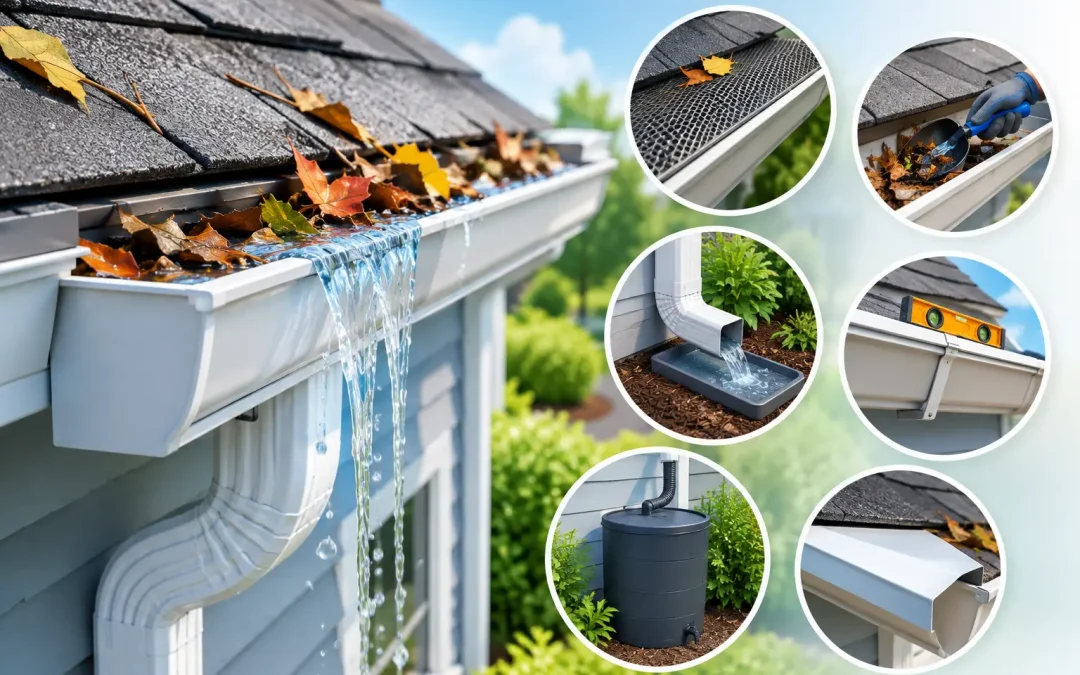
A gutter overflowing in heavy rain is not just an annoyance at the front door. Water can run down brickwork, soak the ground around the property, stain render and find its way into fascias, soffits and roof edges. The best ways to stop overflowing gutters start with identifying why the water is not moving away as it should.
In many cases, the cause is straightforward: leaves, moss and roof debris have built up inside the gutter or blocked the downpipe. Sometimes, though, the problem is poor gutter falls, leaking joints, damaged brackets or a system that is too small for the roof. Getting the cause right matters, because simply clearing the visible debris will not fix a gutter that has been fitted incorrectly or has reached the end of its working life.
1. Clear leaves, moss and debris regularly
Blocked gutters are the most common cause of overflow. Leaves collect quickly around autumn, but moss from roof tiles, twigs, seed pods and general dirt can create a blockage at any time of year. Once wet debris settles in the gutter, it holds water and forms a dense layer that stops rainwater reaching the downpipe.
A clear-out is particularly worthwhile after autumn and after prolonged windy weather. Homes close to trees will usually need more frequent attention than properties with open surroundings. Do not forget the outlets where the gutter meets the downpipe – this is often where a small amount of debris causes a complete blockage.
Cleaning is a practical job, but working at height is not something to take lightly. Use a stable ladder on firm, level ground and avoid attempting the work in rain, high winds or icy conditions. If access is awkward, the roof is steep, or you are not comfortable working from a ladder, it is safer to arrange professional help.
2. Check that downpipes are flowing freely
A gutter can look clear from above while the downpipe is blocked lower down. Water may pool at the outlet, then spill over the front or back of the gutter as the rain continues. This can be mistaken for a gutter capacity problem when the real issue is hidden inside the pipe.
On a dry day, carefully flush the gutter with water and watch what happens at the bottom of the downpipe. A steady flow is what you want. If water backs up, comes out slowly or appears at a joint halfway down, the pipe needs clearing or repairing.
Downpipes can also become detached, cracked or poorly aligned after storms or impact damage. Check that each section is securely connected and that the lower outlet directs water into a suitable drain or gully rather than against the wall or paving.
3. Look for sagging gutters and loose brackets
Guttering needs a slight fall towards the downpipe. It should not be noticeably sloping, but it must be fitted accurately enough for water to drain away rather than sit in the middle. When brackets loosen or the gutter begins to sag, water gathers in low spots and eventually overflows.
Stand back from the property after rain if possible. Pools of standing water, sections bowing between brackets or water running over one particular point are all signs that the alignment needs attention. Old plastic guttering can also become brittle and distort over time, especially where it has been exposed to years of changing temperatures.
A small adjustment may be enough where the gutter itself remains sound. If several brackets have failed, joints are leaking and the gutter is warped, replacement is often the more sensible long-term option. Repeated patch repairs can cost more than putting a properly sized, correctly fitted system in place.
4. Repair leaking joints before they worsen
Not every gutter problem involves an obvious overflow. Water leaking from a joint can track down the fascia board and wall, leaving dark marks or damp patches that gradually become more serious. In winter, trapped water can freeze around a weak joint and force it further apart.
Gutter seals can wear out, while sections may move slightly over the years. The repair needed depends on the condition of the system. A sound gutter may only need a new seal or a joint refitted correctly. If the surrounding gutter is cracked, faded, brittle or pulling away from the roofline, replacing the damaged run can provide a better result.
It is worth dealing with leaks promptly. Fascias and soffits are designed to protect the roof edge, but regular water exposure from faulty guttering can cause timber boards to rot and leave the roofline looking tired.
5. Make sure the guttering is the right size
Standard domestic guttering is suitable for many homes, but not every roof sheds water at the same rate. A large roof area, a steep pitch, a long gutter run or frequent heavy rainfall can place more demand on the system. If the gutters overflow during intense downpours despite being clean, correctly aligned and connected to clear downpipes, capacity may be the issue.
Larger-profile guttering, extra downpipes or a revised layout can improve drainage where needed. This is especially relevant on extensions, conservatories and flat roofs, where water may collect and discharge into one limited section of guttering.
Bigger is not automatically better. The system still needs to suit the property, look proportionate and be fitted with the correct fall. A proper inspection will establish whether the problem is capacity or a simpler fault such as a blocked outlet.
6. Keep roof moss under control
Moss may look harmless on roof tiles, but it can create a regular gutter maintenance issue. Rain loosens moss from the roof and carries it into the gutter, where it swells, holds moisture and blocks outlets. Large clumps can quickly create a dam in a narrow section of guttering.
Avoid aggressive scraping or pressure washing, as this can damage tiles or force water into areas it should not reach. The right approach depends on the roof material, its age and the amount of growth present. A roof inspection can identify whether careful moss treatment, tile repairs or gutter cleaning will offer the best result.
If moss returns quickly, consider the surrounding cause as well. Overhanging branches increase shade and drop debris into the gutters, so sensible trimming can reduce the workload. Any tree work should be carried out responsibly, with care taken not to damage the roof or gutters.
7. Consider gutter guards carefully
Gutter guards can reduce the amount of large leaves entering the system, particularly on properties surrounded by mature trees. They are not a maintenance-free answer, however. Fine debris, moss and seeds can still settle on top of some guards, preventing water from entering the gutter properly.
The type of roof and nearby trees make a difference. Guards may help where broad leaves are the main issue, but they are less useful if the roof sheds a lot of moss or fine grit. Poorly fitted guards can also lift in wind or make future cleaning more difficult.
Before investing, deal with existing blockages, check the gutter alignment and make sure the downpipes are clear. A guard should support a well-maintained system, not hide faults that need repairing.
When overflowing gutters need professional attention
There are times when a clear-out is enough, and times when the guttering is showing a wider roofline problem. Arrange an inspection if you notice recurring overflows, water running behind the gutter, damp marks inside the property, rotting fascias, loose sections, cracks or gutters pulling away from the eaves.
It is also sensible to seek advice after storm damage. High winds can loosen brackets, shift downpipes and expose weak joints that were previously holding together. Early repairs are usually more straightforward than waiting for water damage to spread across the roof edge and exterior walls.
For homeowners across Nottingham and the wider Midlands, MTF Roofing Ltd can inspect guttering, fascias and soffits, explain the condition clearly and carry out repairs or replacement work to a high standard. The aim is not to replace parts unnecessarily, but to provide a lasting solution that keeps rainwater moving where it should.
A gutter should quietly do its job in the background. Keeping it clear, secure and correctly fitted gives your roofline a far better chance of protecting the home when the next spell of heavy rain arrives.