A chimney can look sound from the driveway while the mortar holding its brickwork together is starting to fail. Because it sits above the main roofline and takes the full force of rain, frost and wind, a chimney stack often shows wear before other parts of the roof. Knowing how to check chimney pointing from a safe position can help you act before small gaps lead to loose bricks, damp or more extensive repair work.
Chimney pointing is the mortar between the bricks. When it is in good condition, it helps keep the stack stable and limits the amount of water that can enter the brickwork. It is not a job for a homeowner to inspect up close on a roof, but there are several useful signs you can look for from ground level.
How to check chimney pointing safely
Start from the ground on a dry, bright day. Stand far enough back to see the whole chimney stack and use binoculars or the zoom function on a phone camera if needed. You are looking for the overall condition of the mortar joints, not trying to diagnose every small mark in the brickwork.
Sound pointing generally appears complete and even, with mortar filling the joints between each brick. It may be weathered and slightly discoloured on an older chimney, which is not automatically a problem. The concern is when mortar has visibly washed out, cracked deeply or fallen away.
Look at more than one side of the stack where possible. The side facing prevailing weather often deteriorates first, while a sheltered side can look much better. If you can only see the front of the chimney, bear in mind that it does not tell the whole story.
Do not climb onto the roof, lean a ladder against the chimney or attempt to prod the mortar from height. Chimneys can be less stable than they appear, and access itself creates a risk to both you and the roof covering. A proper inspection can be carried out safely by an experienced roofing contractor with suitable access equipment.
Signs that chimney pointing needs attention
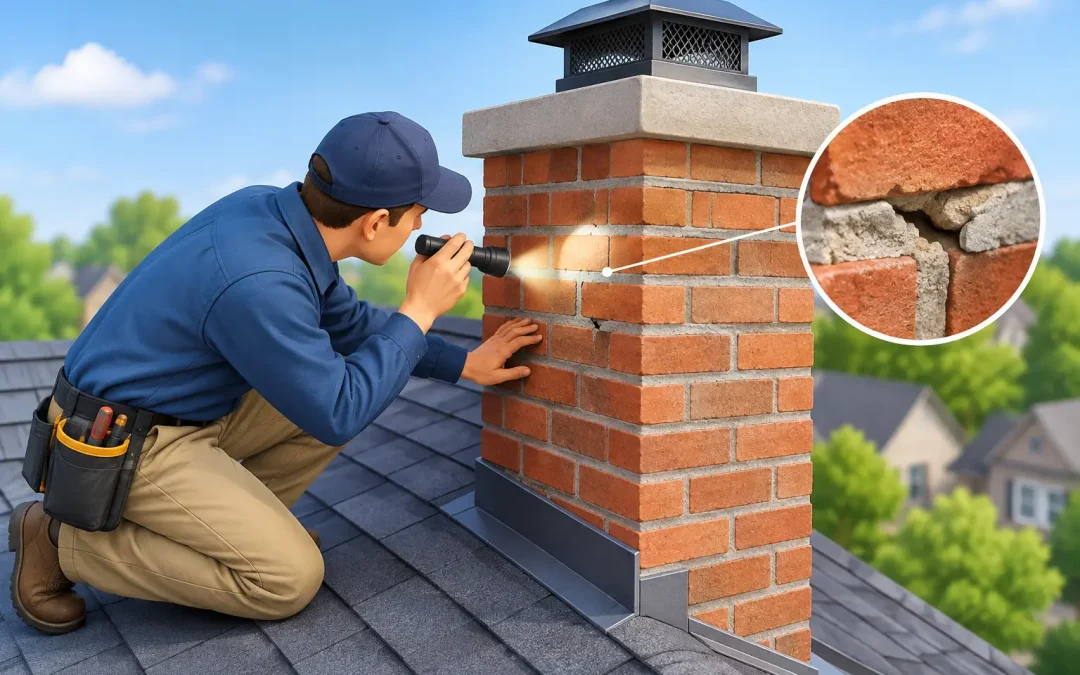
The most obvious warning sign is missing mortar. From the ground, this can look like dark recesses or open lines between the bricks. You may also see joints that appear thin, sandy or uneven compared with the rest of the stack.
Cracks through the mortar are another common sign. Fine surface cracks can occur as mortar ages, but wider or repeated cracks, particularly around the upper courses of brickwork, should be checked. Water can enter these openings, freeze in cold weather and gradually force the mortar apart.
Look for loose fragments at the bottom of the chimney or on the roof below. Small pieces of mortar, brick dust or broken brickwork can indicate that the stack is shedding material. This does not always mean the entire chimney needs rebuilding, but it is a reason to arrange a professional assessment promptly.
Other visible clues include:
- mortar that has become deeply recessed behind the brick face
- crumbling, soft-looking joints or areas with a powdery finish
- spalled bricks, where the face of the brick has broken away
- vegetation growing from joints, which suggests moisture and long-term deterioration
- a chimney that appears to lean, bulge or have uneven brick courses
A leaning or bulging stack is more serious than ordinary weathered pointing. Keep people away from the immediate area below if there is any concern about falling masonry, and arrange an urgent inspection.
Check for related signs inside and around the home
Chimney pointing problems do not always show themselves as a visible gap in the mortar. Water entering a worn stack can travel through the brickwork or roof space before it becomes noticeable indoors.
Check the rooms around the chimney breast for damp patches, peeling paint, discoloured wallpaper or a musty smell. These signs can have several causes, including flashing defects, condensation or issues with the roof covering, so they should not be treated as proof that the pointing is at fault. They do, however, give a roofer useful information during a survey.
If you have safe access to the loft, look for staining on timbers or insulation near the chimney breast. Avoid disturbing any material and do not walk on unsupported ceiling areas. A damp mark in the loft may be linked to failed chimney flashing, a damaged flue, defective pointing or a combination of problems.
Also check the roof line beneath the stack from the ground. Slipped tiles, cracked slates or debris caught in the gutters can point to masonry deterioration above. Gutters should be cleared as part of normal home maintenance, but do not assume that every bit of grit is simply ordinary roof dirt if it keeps returning below a chimney.
Pointing, flashing and brickwork are different repairs
It is easy to describe any chimney issue as “bad pointing”, but different faults need different work. Pointing is the mortar between bricks. Flashing is the weatherproof material where the chimney meets the roof. Brick replacement deals with damaged or frost-affected bricks, while chimney pots, flaunching and leadwork are separate elements again.
A chimney can have sound-looking pointing but leak because the flashing has lifted or split. Equally, new flashing will not solve water entering through open mortar joints higher up the stack. This is why a proper survey matters. The visible symptom inside the property may be some distance from the actual route water is taking.
Older properties need particular care. Some traditional brickwork was built with lime-based mortar, which behaves differently from hard modern cement mortar. Using an unsuitable mortar can trap moisture or cause damage to softer bricks over time. A competent contractor will assess the age and condition of the chimney before recommending the most appropriate repair method and materials.
When does worn pointing become urgent?
There is no single timetable because exposure, chimney age, brick condition and previous repairs all make a difference. A few shallow, weathered joints may only need monitoring and a planned repair. Open joints, loose mortar or damaged bricks should be dealt with sooner rather than later.
Act quickly if you notice masonry falling, a loose chimney pot, clear movement in the stack, significant cracking, or water entering the property during rain. These are not jobs to leave until warmer weather. Repeated wetting and freezing can make an existing weakness worse over a single winter.
It is also sensible to arrange an inspection before major roof work, selling a property or fitting a new appliance that uses the chimney. Addressing a chimney repair while scaffolding is already in place for other work can sometimes be more practical than arranging access twice. That said, the repair should be based on the chimney’s actual condition, not carried out simply because access is available.
What a professional chimney pointing repair involves
A good repair is more than pressing fresh mortar into visible holes. Loose and failed mortar needs to be carefully removed to a suitable depth without damaging the surrounding bricks. The joints are then prepared, dampened where appropriate and repointed with a compatible mortar, finished neatly to help shed water.
Where necessary, damaged bricks are replaced and related defects such as cracked flaunching, loose pots or failed flashing can be assessed at the same time. The goal is to leave the stack secure, weather-resistant and in keeping with the rest of the property.
The extent of work depends on what the survey finds. Localised repointing can be suitable where deterioration is limited to a small area. If joints are failing across the whole stack, a more comprehensive repoint may offer better value and a more consistent result. In severe cases, partial rebuilding may be the safer option. An honest contractor should explain the condition clearly, set out the recommended work and provide a straightforward quotation before starting.
Avoid quick fixes that hide the problem
Painting over failing mortar, applying sealant to a wet chimney or filling gaps without removing loose material can make a stack look better briefly without addressing why it is deteriorating. Pressure washing is also a poor idea for older brickwork and mortar, as it can force water into the chimney and remove already weakened joints.
Regular visual checks are usually enough for homeowners. Make a note if a crack grows, debris appears after bad weather or a damp patch returns. Clear photographs taken from the same position can be useful when comparing changes over time and discussing the issue with a roofing specialist.
If you are unsure what you are seeing, a professional inspection is the safest next step. MTF Roofing Ltd can assess chimney and roof defects across Nottingham and the wider Midlands, explain the work in plain terms and provide a free, no-obligation quotation. A timely check can protect the chimney, the roof beneath it and the rooms inside your home.