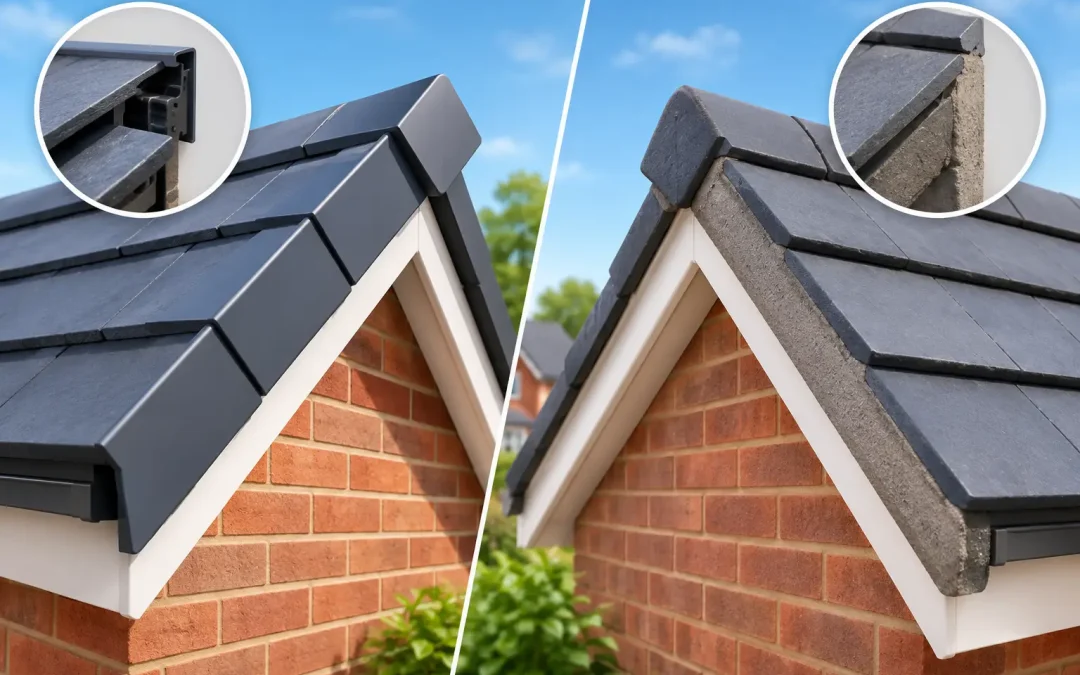
A loose section of mortar at the edge of a roof can look like a small problem, but it can soon allow tiles to move, water to reach the roofline and wind to cause further damage. When weighing up dry verge vs mortar, the right choice depends on your roof’s condition, the style of the property and whether you want a traditional finish or a lower-maintenance upgrade.
Both systems are used to secure and finish the tiles along a gable end. A properly fitted verge should protect the exposed tile edges from wind and rain while giving the roof a neat, completed appearance. The difference is in how those tiles are held in place.
What is a mortar verge?
A mortar verge is the traditional method. Roofing mortar is applied along the gable edge to bed and point the verge tiles, creating the familiar cemented line seen on many older homes across Nottingham and the Midlands.
When it is installed correctly and maintained over time, mortar can provide a smart, traditional-looking finish. It is often a good visual match for period properties, cottages and roofs where the existing detail needs to be retained. It can also be the most appropriate choice where only a local repair is needed and the surrounding roof is otherwise in sound condition.
The drawback is that mortar is exposed to the weather. Over the years, repeated wetting, frost, heat and movement in the roof structure can cause it to crack or break away. Once gaps appear, the verge tiles may become loose and birds, insects and wind-driven rain can find their way into vulnerable areas.
A small crack does not always mean the entire verge needs replacing. However, patch repairs only make sense when the underlying bedding is still firm and the tiles have not moved. Simply applying fresh mortar over failing material rarely provides a lasting repair.
What is a dry verge system?
A dry verge system uses purpose-made interlocking caps, normally made from durable uPVC, fitted over the edge of the roof tiles. The units are mechanically fixed rather than relying on mortar, creating a tidy line along the gable end.
Dry verge units are available in a range of colours and profiles, so they can be selected to complement common tile styles and roofline finishes. They are particularly popular during re-roofing work, roofline upgrades and repairs where the existing mortar verge has repeatedly failed.
Because the system is fixed mechanically, it is designed to allow for normal movement without cracking in the way mortar can. This makes it a practical option for homeowners looking to reduce ongoing maintenance at the roof edge.
Dry verge vs mortar: the main differences
The biggest difference is long-term maintenance. Mortar is a traditional material, but it can deteriorate as it ages and may need repointing or repair. A quality dry verge system does not rely on cement and is less likely to suffer from frost damage or crumbling joints.
Appearance matters too. Mortar has a more classic look and may suit a property where preserving the existing character is a priority. Dry verge has a cleaner, more uniform finish. On many modern homes, or homes with new fascias, soffits and guttering, it can make the roofline look sharper and more complete.
Installation requirements are also different. Mortar repairs can sometimes be carried out in smaller sections, provided the surrounding tiles and bedding remain secure. Dry verge is usually best considered as a full run along the gable, as the units need to be correctly aligned and fixed from bottom to top. The roof edge, undercloak, battens and tiles must all be checked first. A new dry verge fitted over an unsound roof edge will not solve the real problem.
When mortar may be the better option
Mortar is not automatically the wrong choice. It may be suitable when a homeowner wants to maintain a traditional roof appearance, when a small area has been damaged by a one-off impact, or where a like-for-like repair is needed to match neighbouring details.
It can also be appropriate for certain older properties where a plastic verge would look out of place. The key is workmanship. The tiles must be secure, the roof edge properly supported and the mortar mixed and applied correctly. Poorly applied mortar can fail surprisingly quickly, especially on an exposed gable end.
If the existing mortar is generally sound, with only one or two localised weak points, a targeted repair can be more sensible than replacing the whole verge. A proper survey should establish whether the issue is genuinely local or part of wider deterioration.
When a dry verge is worth considering
Dry verge is often the stronger long-term choice where mortar has cracked, fallen out or been repaired several times. It is also well suited to re-roofing projects, replacement verge tiles and homes receiving new roofline products.
For properties exposed to strong winds or driving rain, a professionally installed dry verge can offer useful extra confidence at one of the roof’s most vulnerable edges. It gives each verge tile a consistent finish and removes the need for large areas of exposed mortar.
Homeowners who prefer a low-maintenance solution often choose dry verge for this reason. It still needs an occasional visual check, particularly after severe weather, but there is no mortar line to repoint as it ages.
That said, not every dry verge installation is the same. The units need to suit the tile profile, be correctly fixed and be finished properly at the eaves and ridge. Cheap materials, rushed fitting or poor preparation can leave gaps and spoil both the weather protection and appearance.
Cost: look beyond the first repair
The cost of dry verge versus mortar depends on the length of the gable, roof access, tile condition and whether additional repairs are needed. A small mortar repair may cost less upfront than fitting a dry verge system. That can make it the right decision where the rest of the verge is secure.
Where mortar is failing across the full length of the roof edge, repeated patching can become false economy. Labour, access equipment and follow-up visits add up, while loose mortar may return after another winter. Installing a dry verge as part of a planned repair or re-roof can offer better value over the life of the roof.
The quotation should make clear what is included. Ask whether loose tiles will be secured, damaged battens or undercloak replaced where needed, and whether the old mortar will be removed safely. A clear scope of work helps avoid surprises once work begins.
Signs your verge needs attention
A verge inspection is sensible if you can see cracked, missing or loose mortar, tiles sitting unevenly along the gable, damp marks in the loft near the roof edge, or pieces of mortar on the ground below. You may also notice gaps where birds have started nesting or daylight visible around the edge of the roof from inside the loft.
Avoid climbing onto the roof or trying to push loose tiles back into place. Verge work is carried out at height and a tile that appears secure can shift underfoot. A roofing professional can assess the condition from safe access and explain whether a repair, a dry verge upgrade or more extensive roof work is needed.
Choosing a finish that suits your home
There is no one answer for every property. Mortar can be the right fit for a traditional home and a well-contained repair. Dry verge is often the practical upgrade for homeowners dealing with recurring cracks, ageing roof edges or a wider roof refurbishment.
At MTF Roofing Ltd, the focus is on checking the condition behind the visible damage before recommending work. A good repair should address the cause, not just cover the symptom. If you are unsure which finish suits your roof, a clear survey and no-obligation quotation can give you the confidence to make the right decision before a minor verge issue becomes a larger repair.