A roof valley is one of the hardest-working parts of your roof. It is where two slopes meet, directing a large volume of rainwater down towards the gutters. When leaves, moss and other debris build up there, water can back up beneath the tiles. Knowing how to clear roof valleys safely can help prevent avoidable leaks, but it is not a job to take lightly.
For many homeowners, the safest option is to inspect the valley from ground level and arrange professional help if there is a visible blockage. Roof work involves real risks, particularly on wet, steep or older roofs. A careful approach protects both your home and the person carrying out the work.
Why blocked roof valleys cause problems
Roof valleys collect more water than most other areas of a pitched roof. During heavy rain, water from both roof slopes is channelled through this narrow section. If a layer of leaves, twigs, moss or loose tile debris restricts the flow, water may overflow sideways or sit against the surrounding tiles.
Over time, this standing water can find its way beneath tile edges, damage valley lining, rot timber battens or cause damp patches in loft spaces and upstairs rooms. Blocked valleys can also add pressure to gutters and downpipes, especially where the same debris has travelled down the roof.
The problem is common around properties with nearby trees, but even homes in open areas can experience a build-up after autumn weather or high winds. Older roofs may be more vulnerable because tiles, mortar, flashings and valley materials can deteriorate with age.
Check the valley before attempting to clear it
Start with a visual inspection from the ground. Binoculars can help you see whether leaves have formed a visible dam, whether moss is gathering in the channel, or whether a tile appears to have slipped towards the valley. Look after rainfall too. Water spilling over the side of the valley, dripping from an unexpected area, or overflowing gutters can all point to a blockage.
If you have safe access to the loft, check for fresh water marks, damp insulation, staining on timbers or a musty smell. These do not always mean the valley itself is at fault, but they are good reasons to have the roof assessed promptly.
Do not assume every dark patch or clump of moss can be dealt with by simply brushing it away. A valley that looks blocked may also have cracked lining, split leadwork, worn mortar or broken tiles underneath the debris. Removing the build-up without checking the condition below can leave an existing defect unnoticed.
How to clear roof valleys with care
If the roof is low, the pitch is shallow and access can be achieved safely, clearing light, dry debris may be possible. Conditions matter. Never work on a roof during rain, frost, high winds or when tiles are damp and slippery. Avoid stepping directly onto tiles wherever possible, as they can crack under weight or move unexpectedly.
Use a stable, correctly positioned ladder on firm, level ground. It should extend sufficiently above the eaves for a secure handhold, and ideally be footed by another adult. For anything beyond simple access from a ladder, proper roof ladders, fall protection and experience are needed. This is where a professional roofer is the sensible choice.
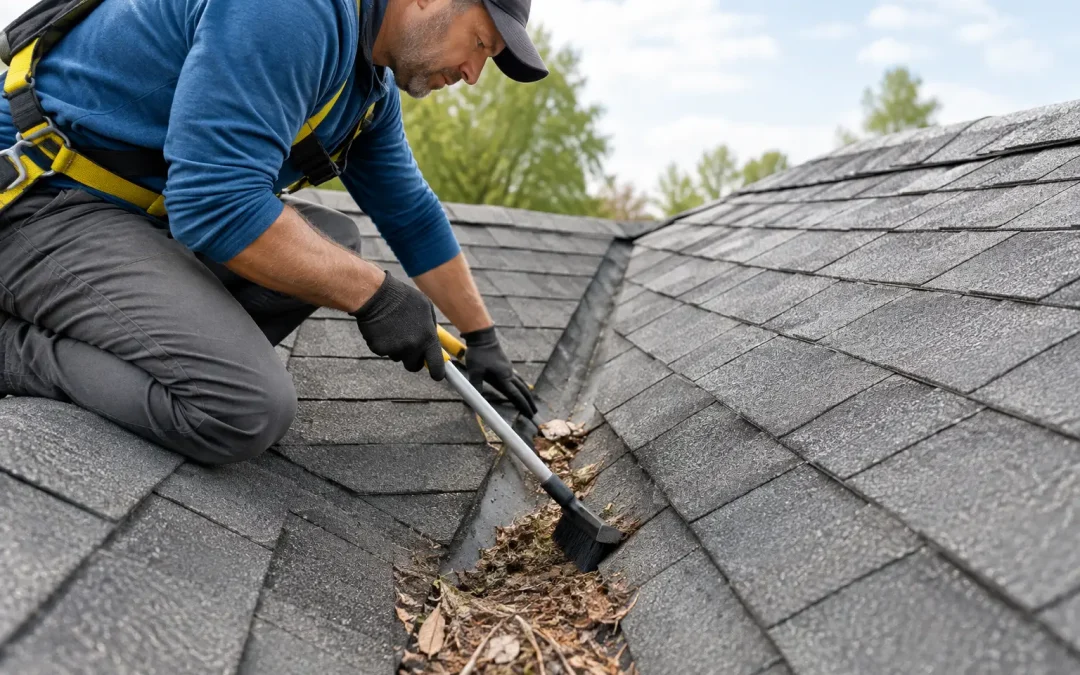
From a safe position, remove loose leaves and twigs by hand while wearing suitable gloves. Place the debris in a bucket or bag rather than pushing it down the roof. Brushing material into the gutter may only move the blockage to the downpipe, creating another problem below.
A soft hand brush can be used for remaining dry debris, working gently down the valley in the direction of water flow. Take care not to scrape aggressively at the valley lining, lift tile edges or dislodge mortar. Clay and concrete tiles can be damaged more easily than many people expect, particularly on an older roof.
Once loose debris has been removed, check that water has a clear path into the gutter. A small amount of clean water can be poured carefully into the upper part of the valley to confirm that it flows freely. This should only be done when it is safe to do so and never by directing a high-pressure jet at the roof.
Avoid pressure washing and harsh tools
Pressure washing may appear to be a quick fix for moss and dirt, but it can cause more damage than it solves. High-pressure water can drive moisture beneath tiles, disturb pointing, strip protective surface finishes and loosen fragile components. It can also force debris into the gutters and downpipes.
Metal scrapers, wire brushes and sharp tools should also be avoided. They can scratch lead, damage fibreglass or felt valley liners, and break tile edges. If moss is heavily established, it is often a sign that the roof needs more than a quick clear-out. The condition of the tiles, valley lining and surrounding roof area should be checked as part of the work.
Clear the gutters at the same time
A clear valley will not perform properly if the gutter beneath it is full. Debris washed down from the roof can lodge at the valley outlet, stop water entering the gutter and cause overflowing during the next downpour.
Check the gutter run, outlet and downpipe for leaves and moss. If water is not draining through the downpipe, there may be a blockage lower down. Clearing gutters and valleys together is usually the best way to restore proper drainage and reduce repeat problems.
It is also worth looking at whether nearby branches are overhanging the roof. Pruning back vegetation can reduce the amount of leaf fall, shade and moss growth. Any tree work should be carried out responsibly and with consideration for nesting birds and local requirements.
Signs the valley needs professional repair
Clearing a blockage will not fix a damaged valley. Arrange a professional inspection if you notice water marks indoors, loose or cracked tiles, a visible gap in the valley, rusted metal, lifted leadwork or recurring debris in the same spot. Moss growing heavily beneath tiles or mortar falling into the gutter are also warning signs.
Some valley designs use lead, while others use fibreglass, felt or dry-fix systems. Each has different repair requirements. On older properties, traditional lead valleys may need careful dressing or replacement. On newer roofs, a cracked plastic or fibreglass valley trough can allow water beneath the tiles even when it looks reasonably clear from above.
A roofer can safely remove debris, inspect the valley channel and surrounding tiles, repair any defects, and make sure water is reaching the gutter as it should. This is particularly worthwhile where access is difficult, the roof is steep, or there has already been a leak.
How often should roof valleys be checked?
Most homes benefit from a visual check twice a year, usually after autumn leaf fall and again following winter weather. Properties near mature trees may need more frequent attention. It is also sensible to inspect the roof after storms, especially if branches, tiles or large amounts of debris have been blown onto it.
Regular checks are far less disruptive than dealing with a leak after water has entered the roof structure. They also give you a better chance of spotting small issues before they develop into damaged battens, stained ceilings or more extensive repair work.
If your roof valley is blocked, damaged or difficult to reach, do not take unnecessary risks. MTF Roofing can inspect roof valleys, clear problem areas and carry out repairs where needed across Nottingham and the wider Midlands. A straightforward professional check can keep rainwater moving where it belongs – away from your home.