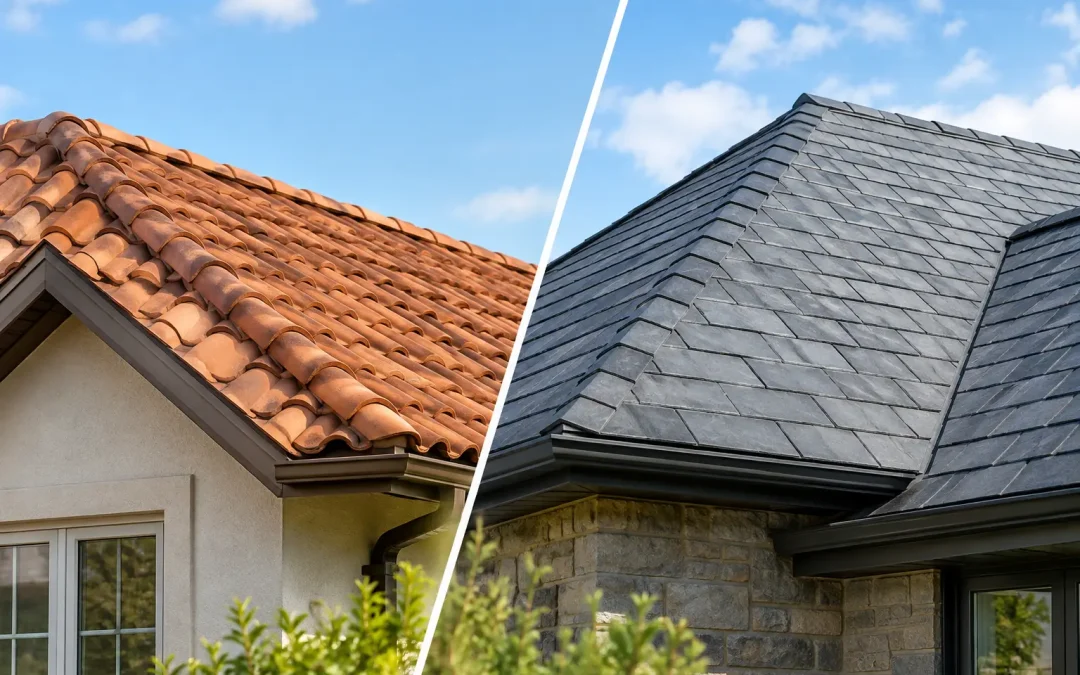
A roof replacement is not simply a choice between two colours or finishes. In a tile roof vs slate decision, the material affects the look of your property, the amount of weight on the roof structure, the cost of the work and how the roof performs over decades of Midlands weather.
Both options can provide a smart, weatherproof finish when they are fitted properly. The right choice depends on your home, your budget, the existing roof construction and whether you are trying to retain a traditional character or create a cleaner modern appearance.
Tile Roof vs Slate: The Main Differences
Roof tiles are usually made from concrete or clay. Concrete tiles are widely used on homes across Nottinghamshire and the wider Midlands because they are hard-wearing, available in a broad choice of profiles and colours, and offer good value for a full re-roof. Clay tiles have a more traditional finish and tend to keep their colour well, although they usually cost more than concrete.
Natural slate is a stone product, split into thin sheets and laid in overlapping courses. It has a distinctive, refined appearance that suits many period properties, rural homes and houses in conservation areas. A slate roof can last for a very long time, but it needs a sound structure and skilled installation to achieve that lifespan.
There are also man-made slate alternatives. These can offer a similar appearance at a lower initial cost and with less weight than some natural slates. However, they should not be treated as identical to natural slate in terms of lifespan, finish or long-term value.
The most noticeable difference is usually appearance. Tiles create a more textured roofline and can be chosen in smooth, interlocking or traditional profiles. Slate gives a flatter, finer finish with narrow lines and a natural variation that is difficult to replicate. Neither is automatically better. A neat tiled roof may be the best match for a 1970s or newer property, while slate can preserve the character of an older home.
Cost: Initial Outlay and Long-Term Value
For many homeowners, cost is the starting point. A concrete tile roof is generally the more affordable option for both materials and labour. Interlocking tile systems can also cover a roof more quickly than individual slate, which can help keep installation costs under control.
Natural slate normally has a higher initial price. The material itself is more expensive, and laying slate is detailed work that takes time. Each slate must be fixed and aligned correctly, with proper attention paid to headlap, side lap, valleys, ridges and abutments. Cutting corners on this part of the job can lead to movement, water ingress and costly repairs later on.
That said, a higher upfront cost does not always mean poor value. Good-quality natural slate can outlast many other roofing materials, sometimes by generations when it is maintained properly. If you expect to remain in the property for a long time, or own a house where slate is part of its character, the investment may make sense.
Tiles can also offer excellent value. Modern concrete and clay products are designed to withstand regular rain, frost and wind, and a properly installed tile roof can give decades of dependable service. The better option is the one that suits the property and allows the whole roof system to be renewed properly, rather than spending the entire budget on a premium covering while neglecting the underlay, battens, flashings or roofline.
Weight and the Condition of the Roof Structure
The weight of the proposed roof covering matters more than many people realise. Before changing from one material to another, a roofer should assess the rafters, roof pitch and overall condition of the structure.
Concrete tiles can be heavy, particularly compared with some slate products. Clay tiles vary by type, while natural slate can also be substantial depending on its thickness and source. It is not safe to assume that slate is always lighter than tile, or vice versa. The exact product and the way it is laid make a difference.
If an older roof was originally designed for slate, changing to a heavier tile may require further checks. Equally, if you are replacing an ageing tiled roof with slate, the roof needs to be suitable for the fixing method and coverage required. Any rotten timbers, sagging areas or damaged rafters should be dealt with before the new covering goes on.
A full survey is the sensible place to start. It allows the contractor to identify issues that cannot be seen from ground level, including worn felt, perished battens, failed flashings and problems around chimneys or valleys. A new roof covering is only as reliable as the structure beneath it.
Lifespan and Ongoing Maintenance
Natural slate has a strong reputation for longevity, and rightly so. High-quality slate is naturally resistant to water and can remain sound for well over a century. However, the fixings, leadwork and supporting materials will not necessarily last as long as the slate itself. At some point, even a slate roof may require repairs or more extensive renewal work.
Concrete tiles typically have a shorter expected lifespan than natural slate, but they remain a durable choice for residential properties. Over time, surface weathering, frost damage or occasional cracked tiles can occur. Individual tiles are often straightforward to replace when the surrounding roof is in good condition.
Clay tiles can last a long time and develop an attractive aged finish. They are less likely to fade than concrete, but they can be more brittle if walked on carelessly during repairs. Whichever material you choose, access should be handled carefully to avoid unnecessary breakages.
Maintenance is not usually demanding, but it should not be ignored. Regular visual checks after severe weather can help spot slipped tiles, missing slates, loose ridge mortar or blocked gutters before a small issue becomes a leak. Moss growth is common in shaded areas, but aggressive cleaning methods can damage roof coverings. If cleaning is required, it should be assessed carefully rather than treated as a quick cosmetic job.
Weather Performance in the Midlands
A roof in Nottingham, Mansfield, Derby or the surrounding areas needs to deal with persistent rain, winter frost, strong gusts and occasional heavy downpours. Both tile and slate can perform well in these conditions when the roof is designed and installed correctly.
The key is not simply the covering. Proper underlay, sound battens, secure fixings, correctly formed valleys and well-fitted leadwork all play an essential part in keeping water out. Ridge and hip systems also need to be secure, particularly on exposed properties where wind uplift can be a concern.
Roof pitch matters too. Some tile profiles are suitable for lower pitches than others, while slate needs to be laid within the manufacturer’s recommendations and with the correct overlap. Using the wrong material for the pitch can create problems regardless of how good the tile or slate looks on day one.
Appearance, Planning and Property Value
Slate is often the natural choice for Victorian and Edwardian properties, cottages and homes in areas where traditional materials are expected. If your roof is visible from the street, replacing original slate with a mismatched tile can change the character of the property considerably.
For homes built with concrete or clay tiles, replacing like for like often provides the most balanced result. Modern tile ranges offer plenty of choice, from traditional red and brown tones to contemporary greys and darker finishes. The aim should be a roof that suits the brickwork, windows and surrounding homes rather than following a short-lived trend.
If you live in a conservation area or own a listed property, there may be restrictions on the materials and appearance of the roof. It is worth checking before work begins. Planning requirements can affect the choice of slate, tile colour, profile and detailing around the roofline.
A well-fitted roof can improve kerb appeal and reassure future buyers that the property has been maintained. Poor workmanship has the opposite effect. Uneven lines, untidy verges, badly finished flashings and mismatched repairs are easy to spot and may point to larger concerns beneath the surface.
Choosing the Right Material for Your Home
Choose tile if you want a dependable, cost-effective roofing material with a wide choice of styles and a finish that suits most modern and traditional homes. It is a particularly practical option where a full re-roof is needed and the existing property already has a tiled appearance.
Choose natural slate if preserving a period look, achieving a premium finish and investing in exceptional longevity are your main priorities. It is often worth considering where the house was built with slate or where local character makes slate the more appropriate choice.
The final decision should be based on a proper roof survey rather than a photograph or a quick comparison of material prices. A contractor should explain the condition of the roof structure, the work needed beneath the covering, the available material options and the expected finish before providing a clear quotation.
For homeowners who are unsure, MTF Roofing Ltd can assess the roof and talk through the practical options in plain English. The best roof is not simply the one that costs the least or lasts the longest on paper. It is the one that is right for your property, fitted carefully and maintained with the same attention to detail.