A new roof is not just a change to how your home looks from the road. The right roofing materials must deal with rain, wind, frost, heat and years of day-to-day exposure, while sitting properly with the age, style and structure of the property. A material that looks right on one house may be a poor choice for another.
For homeowners across Nottingham and the Midlands, the best decision usually comes from looking at the roof as a complete system. The covering matters, but so do the battens, underlay, leadwork, ventilation, guttering and the standard of fitting. Good materials fitted poorly will not give the protection your home needs.
Start with the roof you have
Before choosing a replacement roof covering, a proper survey should establish the roof pitch, condition of the timbers, existing tile type and any signs of movement or water ingress. It should also consider neighbouring properties, particularly on a terrace or semi-detached home, where a major change in appearance may look out of place.
Weight is another practical consideration. Natural slate can be considerably heavier than some modern alternatives, so the roof structure needs to be capable of supporting it. The pitch of the roof also affects what can be used safely. Some materials need a steeper slope to shed water effectively, while flat roofs require an entirely different approach.
A clear quotation should explain what is being replaced and why. If only a small area is damaged, a careful repair and matching replacement tiles may be sensible. If the covering, felt and battens are all nearing the end of their serviceable life, a full re-roof can offer better value than repeated patch repairs.
Roofing materials for pitched roofs
Concrete roof tiles
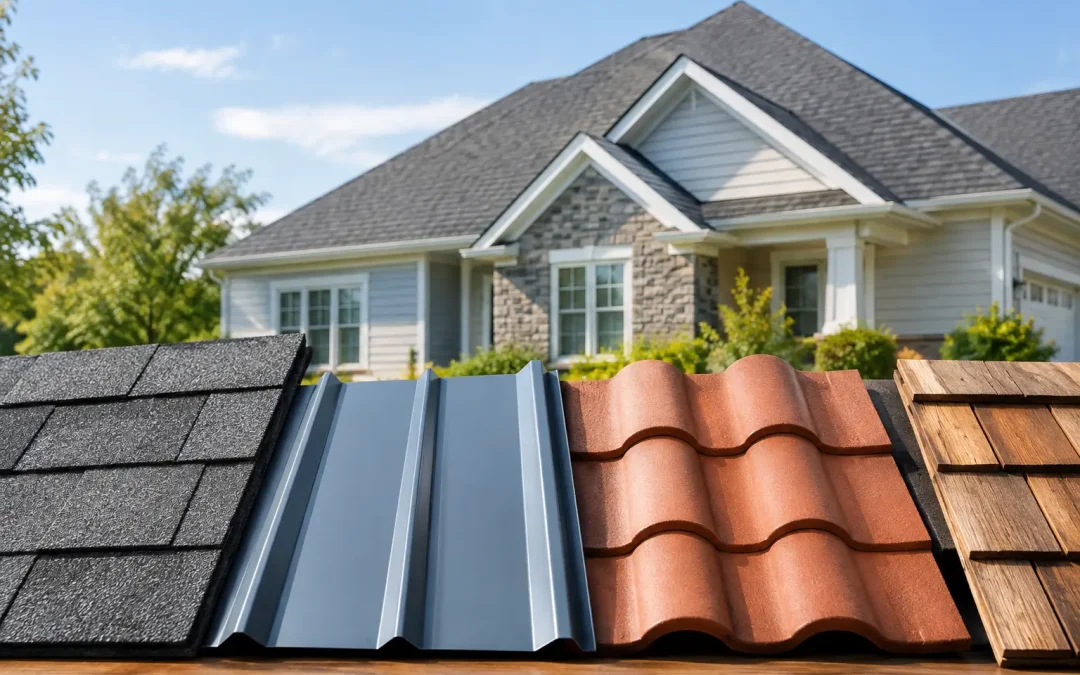
Concrete tiles are a common choice on homes throughout the Midlands. They are durable, widely available and come in a good range of profiles and colours, from traditional red and brown to slate grey. They are often a practical option for homeowners who want a solid, tidy finish without the higher cost of natural slate.
Their main consideration is weight. Concrete tiles are substantial, and the roof structure must be suitable. Colour can also weather and soften over time, particularly on older roofs, although this does not necessarily affect performance. A good installation includes the correct fixings, underlay and neat detailing around verges, ridges and valleys.
Clay roof tiles
Clay has a traditional appearance that suits many period properties and character homes. It holds its colour well and can last for many decades when properly maintained. Clay tiles are particularly popular where homeowners want a warmer, more classic finish than concrete can provide.
They can cost more than concrete and are not all interchangeable, so choosing a profile that works with the roof pitch is essential. Individual tiles can crack if struck or walked on carelessly, which is another reason to use an experienced roofer for repairs, maintenance and access work.
Natural slate
Natural slate is valued for its distinctive appearance and long lifespan. It is a strong choice for many older properties, especially where retaining the original character of the roof matters. Each slate has natural variation, giving the finished roof a quality that manufactured products do not fully replicate.
It is also a specialist material. Correct lap, fixing method and sorting of slate sizes all make a difference to how the roof performs. Natural slate is usually a higher initial investment, but it can be excellent value over the long term when it is specified and fitted correctly.
Man-made slate and lightweight alternatives
Man-made slate can provide a clean, slate-style appearance at a lower cost and weight than natural slate. It may be useful where the existing structure is better suited to a lighter covering or where the budget does not stretch to natural material.
Quality varies between products, so this is not an area to choose on price alone. The appearance, guarantee, fixing system and suitability for the property should all be checked. A good survey helps prevent the disappointment of selecting a product that looks different once it covers the full roof.
Materials for flat roofs
Flat roofs are common on garages, extensions, dormers and porches. Although they are described as flat, they need a suitable fall so water can drain towards the gutters or outlets rather than sitting on the surface. Standing water, failed edges and cracks around upstands are frequent causes of leaks.
EPDM rubber roofing
EPDM rubber roofing is a reliable choice for many residential flat roofs. It is a durable membrane with good resistance to weathering and can often be installed in large, continuous sections. Fewer seams can mean fewer potential weak points when the work is carried out properly.
The preparation beneath the membrane is just as important as the rubber itself. The deck must be sound, the roof needs the correct drainage, and edges must be finished securely. For an extension or garage roof, EPDM can provide a smart, low-maintenance result that suits the British climate well.
Felt roofing systems
Modern torch-on felt systems are very different from the thin, short-lived felt many homeowners remember on old sheds or garages. Multi-layer systems can offer dependable protection when installed over a suitable deck with proper detailing at the edges, joints and wall abutments.
Felt can be a sensible option depending on the roof design and budget. However, the work involves heat and needs careful handling, so it should be completed by trained professionals who understand the required safety and fitting standards.
Fibreglass roofing
Fibreglass, also known as GRP, creates a hard-wearing, joint-free surface and is often used on smaller flat roofs. It can give a crisp finish, particularly on extensions with clean, straight lines. As with other flat-roof systems, it depends on sound preparation and dry conditions during installation.
It is not automatically the best answer for every roof. Complex shapes, existing deck condition and access can all affect which system will give the most dependable result.
Do not overlook the roofline and drainage
A roof covering can only do part of the job if rainwater is not being directed away properly. Fascias, soffits and guttering protect the roof edge, support drainage and help keep the property looking cared for. Rotten timber fascias, sagging gutters or blocked downpipes can allow water to run where it should not, leading to damp, staining and damage to brickwork or roof timbers.
When replacing a roof, it is often worth assessing these areas at the same time. New gutters and roofline products can complete the appearance of the work and reduce the risk of having to arrange separate access and labour later. This does not mean replacing everything as a matter of course, but it does mean making an informed decision while the roof is being inspected.
Matching materials to the property
The cheapest material is not always the most economical option. A roof that suits the property, is correctly specified and is fitted to a high standard should need fewer avoidable repairs over its lifetime. Equally, paying for a premium material does not make sense if a well-fitted alternative will meet the needs of the home just as well.
For a modern estate property, matching the existing tile profile and colour may be the most straightforward route. For an older home, clay or slate may preserve the character that makes the property attractive. For a rear extension, the key priority may be a dependable rubber flat roof with clean drainage details rather than a particular visual style.
Local conditions matter too. Exposed locations can need additional mechanical fixings, while roofs beneath mature trees may need more regular clearing of moss and leaves from valleys and gutters. These are the practical details that should shape the recommendation, not a one-size-fits-all sales pitch.
Choose workmanship as carefully as the material
Ask what is included in the work: removal of old materials, replacement battens and breathable membrane where required, leadwork, ventilation, ridge and verge finishing, waste removal and site tidy-up. A low quotation can leave out essential elements, only for the cost to rise once work has started.
It is also reasonable to ask about insurance, experience and how the contractor will protect the property during the job. Re-roofing is significant work on your home. Clear communication, punctuality and respect for the site should be part of the service, not an extra.
MTF Roofing Ltd takes the time to assess the condition of the roof and explain suitable options in plain terms. The aim is not to push a particular product, but to provide a finish that protects the home and looks right for the property.
If your roof is showing slipped tiles, recurring leaks, worn flat-roof coverings or failing guttering, do not wait for a small problem to become internal damage. A professional survey can give you a clear view of what needs attention now, what can wait, and which material will give your home the confidence it deserves in every season.