A leaking flat roof rarely fails all at once. More often, it starts with a damp patch on the ceiling, a bubble in the felt, or water sitting on the surface longer than it should. This flat roof replacement case study shows how those early warning signs can point to a bigger problem underneath, and why a proper replacement is sometimes the most cost-effective option for a homeowner.
In this example, the property was a typical Midlands home with a flat roof over a rear extension. The roof had been patched before, and for a while those repairs appeared to hold. But over time, the leaks returned. The homeowner had reached the point where they no longer wanted another short-term fix. They wanted the roof dealt with properly, with clear advice on what was wrong and confidence that the new system would last.
The problem behind the leaks
From the ground, the roof did not look disastrous. That is often the case with older flat roofs. A roof can appear serviceable from below while hiding problems in the covering, joints and timber deck. Once we carried out a proper inspection, several issues became clear.
The existing covering had aged badly, with cracks and weak points around the edges. There was evidence of standing water, which had put extra strain on the surface over time. The perimeter details were tired, and previous patch repairs had created uneven areas that did not address the main cause of water ingress. In practical terms, the roof was no longer giving the home reliable protection.
This is where homeowners often face a choice. If the issue is isolated and the roof still has life left in it, a repair can make sense. If multiple parts of the roof are failing at once, repeated patching usually ends up costing more in the long run. In this case, replacement was the sensible route.
Flat roof replacement case study – the survey stage
A good result starts before any materials arrive on site. The survey is where you work out whether the roof covering is the only issue or whether the structure below has also been affected. That matters, because putting a new covering over weakened boards or damp timbers is not a proper job.
For this roof, the survey focused on four things: the condition of the existing surface, the state of the roof deck beneath it, the edge details, and how well the roof was draining. The findings showed that while some of the underlying structure was still sound, parts of the deck had deteriorated and needed replacing. There was no value in trying to build over those areas.
The homeowner was talked through the options in clear terms. That included what could be retained, what needed removing, and why a full replacement would provide better long-term protection than another repair. For most customers, that straightforward explanation is just as important as the fitting itself. People want to know what they are paying for and why the work is necessary.
Removing the old roof properly
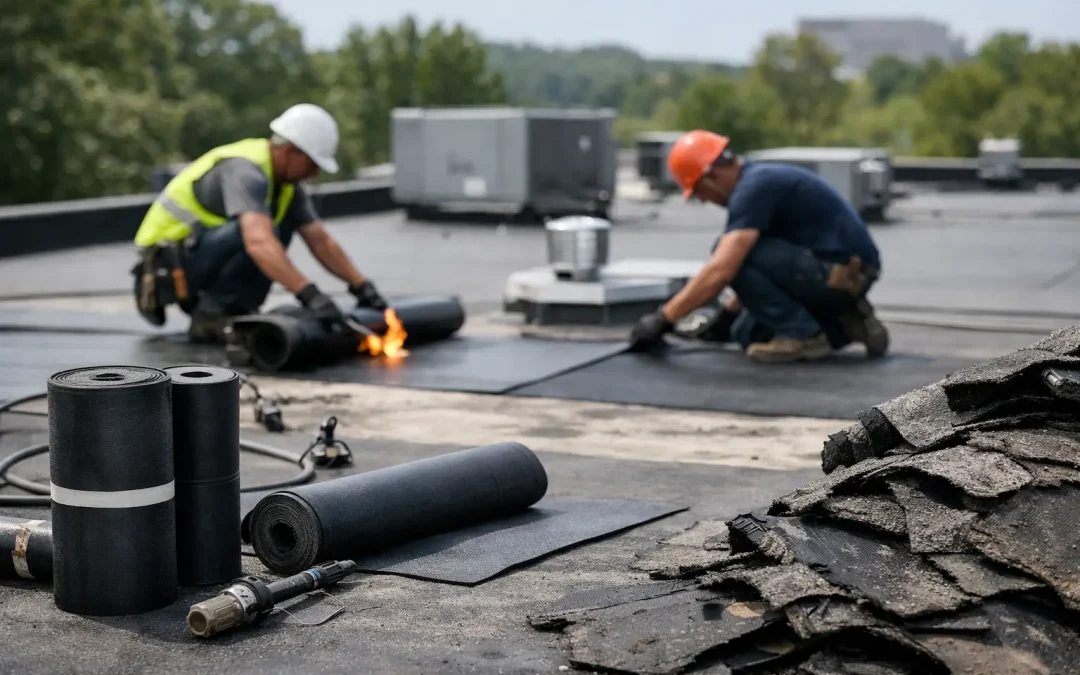
The first stage of the job was stripping back the old flat roof system. This is not just a case of tearing off the top layer and starting again. Careful removal helps reveal hidden defects and allows the new roof to be built on a sound base.
Once the old covering was removed, the extent of wear in the deck was confirmed. Some boards had softened due to moisture exposure and had to be replaced. The edges also needed attention, as tired trims and weak detailing are common points of failure on aging flat roofs.
This part of the job can sometimes alter the scope slightly. Until a roof is opened up, there can be elements you simply cannot see in full. A reliable contractor will explain that from the outset and keep the homeowner informed if additional timber replacement is needed. That honesty matters. No one wants surprises, but no one benefits from hidden problems being covered back over either.
Installing the new flat roof system
Once the roof was stripped and the base prepared, the replacement could be installed properly. For this type of domestic property, a modern rubber flat roof system was the right fit. It provides a clean finish, strong weather resistance and a long service life when fitted correctly.
The new deck sections were installed where required to create a sound, even base. After that, the rubber membrane was laid and fitted with close attention to seams, edges and upstands. Those details make a real difference. A flat roof does not fail because it is flat. It usually fails because the weak points around edges, corners and joins have not been handled properly.
The perimeter was finished with suitable trims to improve both performance and appearance. Water control was also considered carefully, because even the best roof covering will be under unnecessary pressure if drainage is poor. On many homes, improving the finish around the roofline can make the whole extension look sharper as well as more secure.
What changed for the homeowner
The most obvious change was peace of mind. The homeowner no longer had to worry every time there was heavy rain. They had gone from living with repeated leaks and uncertainty to having a new roof installed to a much higher standard.
There was also a visible improvement. Older flat roofs can make part of a property look tired, especially when patch repairs and worn edges start to show. A neatly fitted replacement gave the extension a cleaner, better-kept appearance. That may not be the first reason people replace a roof, but it is often an added benefit once the work is complete.
Just as importantly, the job was handled from start to finish in a way that reduced disruption. Materials were organised properly, the site was kept as tidy as possible, and the waste from the old roof was cleared away. Homeowners notice that. Good workmanship is not only about the finished roof. It is also about how the job is run.
Why this flat roof replacement case study matters
A lot of customers contact a roofer after trying to put off the problem for months, sometimes years. That is understandable. Roof work is rarely something anyone looks forward to arranging. But this case shows why delay can make a smaller issue more expensive.
If a flat roof is already leaking in several areas, if the surface is clearly worn, or if repairs keep failing, it is worth asking whether replacement is now the better investment. There is no one-size-fits-all answer. Some roofs are repairable and should be repaired. Others are past that point, and pretending otherwise only increases the risk of damage to the room below.
For homeowners in Nottingham and across the wider Midlands, the main thing is getting an honest assessment. You need to know whether the problem is localised or whether the roof as a whole has come to the end of its serviceable life. That is where experience counts. A proper survey, clear quotation and well-fitted replacement can save a lot of stress later.
The practical lessons from this job
There are a few straightforward lessons in this example. First, recurring leaks are usually a sign that the underlying issue has not been solved. Second, the condition of the deck beneath the covering matters just as much as the surface itself. Third, a flat roof replacement should never be judged on material alone. The fitting standard, edge detailing and drainage all affect how well the roof performs.
This is also why many homeowners choose an established local contractor rather than the cheapest quote they can find. A poor-quality replacement can look acceptable on day one and still fail early if corners have been cut. Good roofing work should be measured in years of dependable performance, not just in how quickly the job can be done.
At MTF Roofing Ltd, that practical approach is what homeowners value most. They want someone to turn up, assess the roof properly, explain the options without jargon and complete the work to a standard that protects the property.
If your flat roof is showing signs of age, leaking around the edges or simply no longer holding up through bad weather, it is worth getting it looked at before the problem spreads. A well-timed replacement does more than stop water getting in. It restores confidence in your home every time the rain starts.