
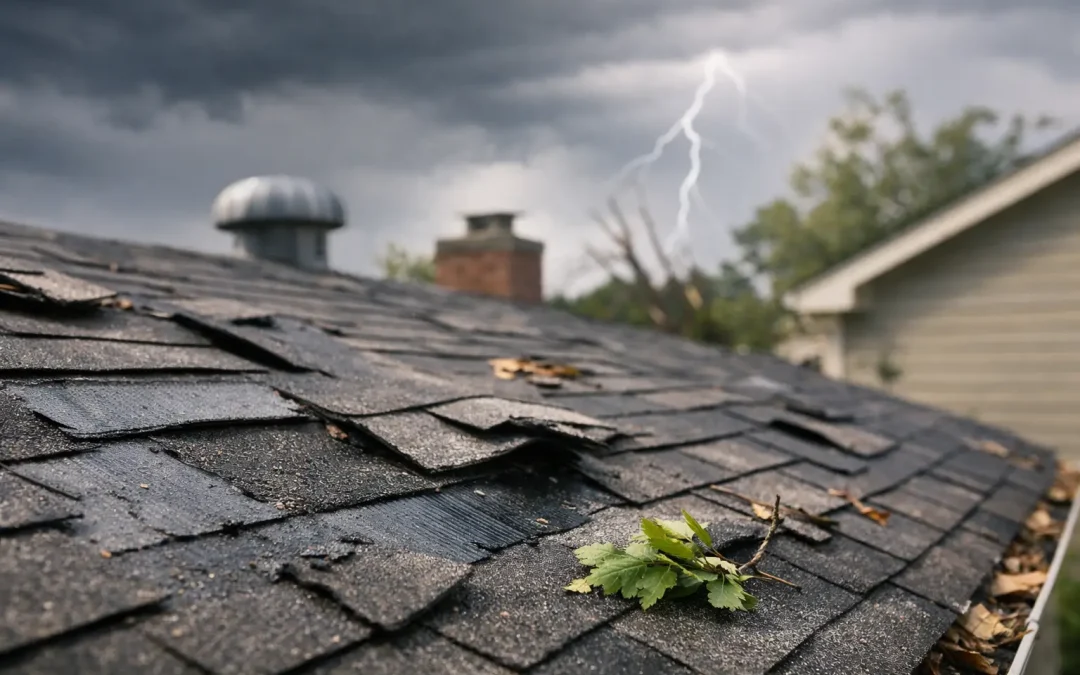
A heavy Midlands storm can leave more behind than branches on the drive. Wind can lift tiles without removing them completely, rain can find a gap no wider than a crack, and overflowing gutters can send water where it should never go. Knowing the signs of storm damaged roofing helps you act before a minor repair becomes a leak, damp patch, or larger section of roof work.
The safest first step is always to inspect from ground level. Do not climb onto a wet, steep, or potentially unstable roof. A clear look from the garden, pavement, loft, and inside the home can reveal plenty, while a professional roofer can assess anything that is difficult or unsafe to reach.
1. Missing, slipped or cracked roof tiles
Tiles and slates are the roof’s first line of defence. After strong winds, look for gaps in the roof covering, tiles that have shifted out of line, cracked pieces, or tiles lying in the garden. A single missing tile may not look urgent, but it can expose the underlay and battens beneath to rain and wind.
It is also worth looking at the ridge tiles along the top of the roof. These are particularly exposed in high winds. If mortar has cracked, crumbled, or fallen onto the ground, the ridge may need attention before tiles work loose.
Not every tile that looks slightly uneven is storm damage. Older roofs can have natural variation, and viewing angles can be misleading. However, a change that has appeared after bad weather is a good reason to arrange an inspection.
2. Loose flashing around chimneys and roof junctions
Flashing is the material fitted around chimneys, dormers, roof valleys, and other joints where water could enter. It is often made from lead or a suitable modern alternative. Storms can lift its edges, crack the surrounding mortar, or loosen fixings.
From the ground, watch for flashing that appears raised, bent, detached, or out of place. Inside, a damp mark near a chimney breast or at the top of an external wall can point to a flashing issue. Water does not always appear directly beneath the fault, so a stain in one room may originate higher up the roof.
Small flashing repairs can be straightforward when dealt with promptly. Left alone, repeated water entry can affect timbers, insulation, ceilings, and internal decoration.
3. Water marks in the loft or on ceilings
One of the clearest signs of storm damaged roofing is new moisture inside the property. Check the loft with a torch when it is safe to do so, ideally during or shortly after rainfall. Look for wet insulation, drips, darkened roof timbers, staining on felt or membrane, and daylight showing through where it should not.
Downstairs, yellow-brown ceiling marks, peeling paint, bubbling plaster, or a damp smell should not be ignored. These symptoms do not always mean the roof itself is at fault. Condensation, leaking pipework, and poor ventilation can cause similar issues. The timing matters: if the problem begins after a storm or worsens in driving rain, the roof should be checked.
Avoid placing weight on a ceiling that is visibly bulging with water. Keep clear of electrical fittings and seek professional advice as soon as possible.
4. Blocked, damaged or overflowing guttering
Gutters, fascias, and soffits play a major role in moving rainwater away from your property. High winds often fill guttering with leaves, moss, twigs, and broken tile fragments. Heavy rain then causes blockages to show themselves, with water overflowing over the gutter edge or running down brickwork.
Check for gutters that are sagging, pulling away from the fascia, leaking at joints, or overflowing in one particular place. Downpipes should discharge water freely rather than backing up at the top. If water regularly runs down an external wall, it can lead to damp, staining, damaged pointing, and deterioration around windows and doors.
Cleaning a simple blockage may solve the issue, but not if the gutter has been pulled loose or the fascia boards behind it are damaged. Older timber roofline products can also rot after prolonged exposure to overflowing water. A proper inspection identifies whether cleaning, re-alignment, repair, or replacement is the right option.
5. Damaged fascias, soffits and roofline boards
Roofline damage is easy to overlook because it sits just below the roof edge. Yet loose fascias, cracked soffits, missing vents, or peeling boards can allow wind and rain into areas that should be protected.
Look up from ground level for sections that appear bowed, split, detached, or discoloured. You may also notice water marks below the eaves or birds and insects getting into a gap. These problems can be more than cosmetic, particularly where water has reached the timber ends of the roof structure.
Modern uPVC fascias, soffits, and guttering are a popular upgrade for homeowners dealing with ageing timber boards, but the right approach depends on the condition of the roofline and the support behind it. Covering over rotten timber without addressing the cause is not a lasting repair.
6. Granules, debris or roof material on the ground
After a storm, take a careful look around paths, patios, and drainage channels. Pieces of slate, tile, mortar, lead, or roofing felt are a clear warning that something above needs attention. On flat roofs, you may find fragments of membrane or loose edge trim after severe wind.
A small amount of moss or ordinary dirt is not necessarily a concern. What matters is new debris following bad weather, especially if it matches materials used on your roof. Keep children and pets away from fallen tiles or sharp material, and do not attempt to refit anything yourself from a ladder.
7. Problems with a flat roof after heavy rain
Flat roofs need a slightly different check after a storm. Puddles can form temporarily during prolonged rain, but water that remains for more than 48 hours in dry conditions may indicate poor drainage, a dip in the surface, or an outlet blockage. Blisters, cracks, splits, lifted edges, and open seams also need attention.
Inside, a flat roof leak may show as a damp patch on the ceiling below, although water can travel along the structure before becoming visible. Rubber flat roofs are designed to provide durable protection, but even a quality system needs correct installation, sound edges, and clear outlets to perform well in harsh weather.
Do not walk on a flat roof to investigate it unless it has been confirmed safe and suitable for access. Wet surfaces are slippery, and hidden weak points can make the risk greater than it appears.
8. Unusual noises during or after high winds
Rattling, banging, flapping, or repeated tapping from the roof should be taken seriously. It could be a loose tile, lifted flashing, gutter bracket, soffit panel, or section of flat-roof edging. The sound may stop when the wind drops, but the loose component remains vulnerable the next time conditions worsen.
Try to identify where the noise is coming from while staying indoors or at a safe distance outside. If a section looks as though it could fall, keep the area below clear and arrange urgent help. A loose tile or gutter is a safety issue as well as a property-maintenance issue.
9. Damp walls near the roofline
Water running behind gutters or through damaged roof edges often leaves clues on upper external walls. Look for fresh staining, damp patches, moss growth in unusual areas, flaking paint, or damaged render close to the eaves.
These signs can also be caused by pointing defects or wall damage, so an inspection should consider the whole area rather than assuming the roof is responsible. A reliable roofer will explain what they have found and whether the repair is to the roof covering, flashing, gutters, roofline, or another part of the property.
10. A roof that looks uneven or visibly stressed
Stand back across the road or at the end of the garden and look at the roof line as a whole. A sudden dip, sag, raised area, or section that appears uneven after a storm deserves professional assessment. This can indicate displaced materials, water damage, or, in more serious cases, an issue with the roof structure.
Do not assume that a roof needs full replacement because it looks tired, and do not assume a small visible defect is harmless. The right repair depends on the age of the roof, the extent of damage, the condition of the timbers, and whether there have been previous leaks. A proper survey gives you a clearer basis for deciding what work is genuinely needed.
What to do when you spot storm damage
Take clear photographs from a safe position, noting when the storm occurred and when you first noticed the issue. If water is entering the home, move belongings away from the affected area where possible and use containers to catch drips. Do not use a ladder in wind, rain, or poor light, and avoid temporary fixes that could make the roof less safe.
For obvious leaks, missing tiles, loose ridge work, or damaged guttering, prompt professional attention is the sensible option. MTF Roofing Ltd provides straightforward roof inspections and repair advice for homeowners across Nottingham and the wider Midlands, with work explained clearly before it begins.
A roof does not need to look dramatically damaged to need care. Acting on an early warning sign after a storm can protect the structure of your home, keep repair costs more manageable, and give you confidence before the next spell of bad weather arrives.