
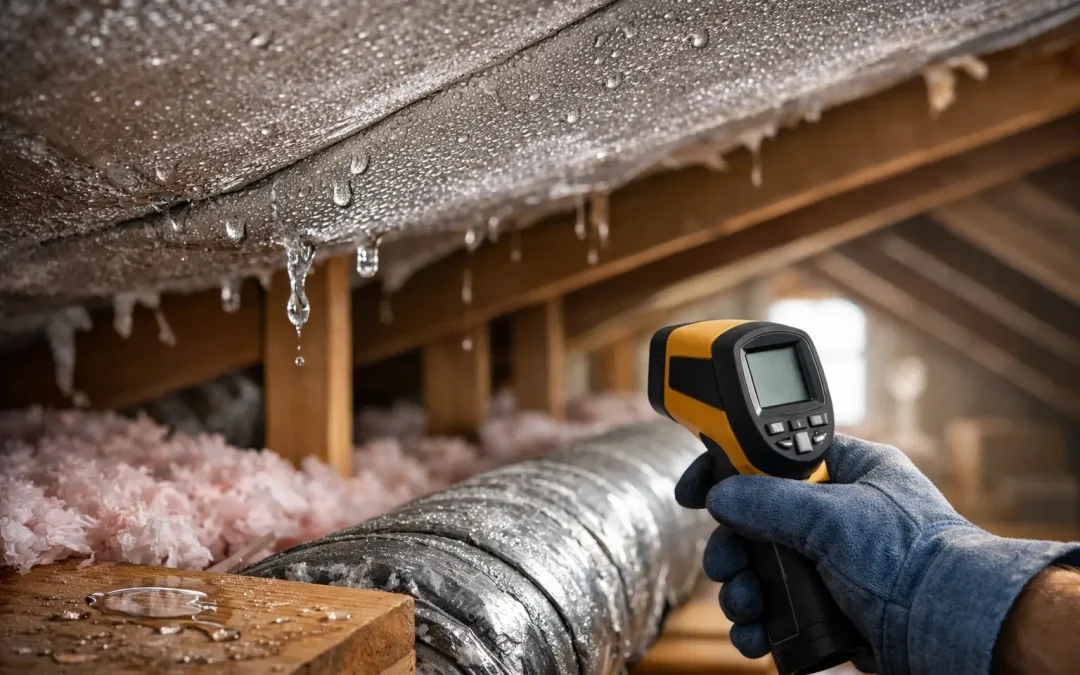
A damp patch in the loft, droplets on the underside of the roof felt or a musty smell upstairs can be worrying signs. Knowing how to stop roof condensation starts with finding out whether moisture is forming inside the roof space or water is getting in from outside. They can look similar at first, but the right repair is very different.
Condensation is common in Midlands homes, particularly during colder months when warm, moisture-laden air from the house meets a cold roof surface. Left alone, it can dampen insulation, encourage mould, stain timbers and, over time, contribute to decay. The good news is that most cases can be resolved by improving the balance between ventilation, insulation and moisture control.
Why roof condensation happens
Everyday living creates moisture. Cooking, showering, drying washing indoors and even breathing all add water vapour to the air. Warm air rises, and if it reaches a cold loft or roof void, the vapour can turn into water droplets on the felt, tiles, rafters or roof deck.
A roof space should not be sealed up completely. It needs a clear route for fresh air to enter and moist air to leave. Problems often arise after home improvements, when insulation has been pushed tightly into the eaves, vents have been blocked, or an older roof has been upgraded without considering ventilation.
Condensation is more likely when a property has high indoor humidity, poor extraction in kitchens or bathrooms, insufficient loft ventilation, gaps around loft hatches, or insulation that is thin, uneven or incorrectly fitted. A combination of small issues is often the cause rather than one dramatic fault.
First, make sure it is condensation rather than a leak
Before changing vents or insulation, look for clues that point to rainwater ingress. Condensation commonly appears as widespread beads of moisture or a light dampness across roof felt and timbers, particularly after cold nights. It may be worse in the morning and lessen as the weather warms or the loft is aired.
A leak is more likely to leave a localised wet patch, a distinct water trail, damaged tile underlay in one area, or staining that gets worse after wind-driven rain. Broken or slipped tiles, failed flashing, cracked mortar, damaged valleys and worn flat roofing can all allow water into the roof structure.
Do not assume a wet loft is simply condensation. A professional inspection can identify whether the issue is internal moisture, a roofing defect, or both. Repairing a leak is the priority, as added ventilation alone will not stop rainwater entering the property.
How to stop roof condensation: practical checks
Keep eaves ventilation clear
Many pitched roofs rely on ventilation at the eaves, where air can pass beneath the tiles and through the loft space. Check from inside the loft that insulation has not been packed into the edges of the roof and blocked this airflow.
Loft insulation should reach the required depth across the ceiling joists, but it must not be forced into the eaves. Ventilation trays or baffles can maintain a clear gap between the insulation and roof covering. This is a simple detail, but it is often missed when insulation is added or topped up.
Avoid blocking existing soffit vents, over-fascia vents or tile vents. If soffits, fascias or roof coverings are being replaced, suitable ventilation should be considered as part of the job rather than treated as an afterthought.
Improve ventilation at the right level
Air needs to move through the roof void, not just enter at one point. Depending on the roof design, this may mean eaves ventilation combined with high-level ventilation near the ridge, or carefully positioned tile vents. The correct arrangement depends on the roof pitch, construction and whether there is a breathable membrane beneath the tiles.
More ventilation is not always a case of cutting holes wherever there is space. Poorly fitted vents can create a route for wind-driven rain, pests or draughts. A roofer can assess the roof build-up and fit purpose-made ventilation components that work with the existing roof covering.
For a converted loft, the approach is different again. The insulation and ventilation arrangement must suit the room-in-roof construction, with an adequate air gap where required. This is one reason why it is worth seeking advice before altering any part of a loft conversion roof.
Reduce moisture travelling up from the house
Roof ventilation deals with moisture once it reaches the loft, but reducing the amount generated indoors is just as useful. Use extractor fans when cooking and showering, and allow them to run for a while after finishing. If possible, dry clothes outside or use a vented or properly maintained condenser dryer rather than regularly drying washing on radiators.
Keep internal doors closed while kitchens and bathrooms are producing steam, then ventilate those rooms directly. Trickle vents, opening windows for short periods and effective extraction can make a noticeable difference without leaving the whole house cold all day.
Also check the loft hatch. A hatch that is poorly fitted or uninsulated allows warm air to rise straight into the roof space. Fitting draught seals around the frame and insulation to the top of the hatch is a modest improvement that can reduce heat loss and moisture movement.
Check loft insulation without restricting airflow
Insulation helps keep heat in the rooms below, which also reduces the temperature difference driving condensation in the loft. However, it needs to be installed properly. Uneven coverage, gaps around pipework or a bare loft hatch can allow warm air into the roof space.
Equally, do not push quilt insulation hard against the underside of the roof covering in a conventional cold loft. The aim is normally to insulate the ceiling level while keeping the loft above cold but ventilated. The details are different for warm roofs and loft conversions, so avoid copying a solution designed for another type of roof.
If the insulation is damp, do not cover the problem with more material. It may need to dry out or be replaced after the cause has been addressed. Wet insulation loses performance and can hold moisture against the structure.
Look for gaps, pipes and bathroom ducting
Small openings around light fittings, pipes, cables and the loft hatch can allow warm, humid air into the loft. Seal obvious gaps at ceiling level using suitable materials, taking care not to interfere with electrical fittings or ventilation routes.
Bathroom and kitchen extractor ducts should discharge outside, not into the loft. A loose, split or disconnected duct can release a surprising amount of steam into the roof space. Insulated ducting can also help prevent moisture forming within the duct itself during cold weather.
Flat roof condensation needs a different approach
Condensation beneath a flat roof can be more complex because the roof construction may be a cold roof or a warm roof. A modern warm roof places insulation above the roof deck, helping keep the deck warmer and reducing the risk of interstitial condensation. A cold flat roof has ventilation requirements within the void and can be more vulnerable if airflow is restricted.
Do not add insulation, board over a ceiling or apply a new flat roof covering without considering the full build-up. Trapped moisture within a flat roof can cause damage that is not visible from indoors. A proper survey will establish whether repair, additional ventilation or a warm-roof replacement is the sensible long-term option.
When to call a roofer
Call for an inspection if you can see mould on roof timbers, persistent dripping, damp insulation, staining on ceilings, sagging felt, or signs of a leak after rainfall. It is also wise to get advice before altering roof vents, replacing soffits, insulating a loft heavily or carrying out a flat roof upgrade.
A good inspection should look at the roof covering, flashings, felt or membrane, ventilation points, insulation layout and the condition of the roof structure. It should not jump straight to an expensive replacement if a clear ventilation or repair solution will resolve the cause.
Roof condensation is rarely something to ignore until spring. Acting early protects the timber, keeps insulation effective and gives you a clearer view of any underlying roofing faults. For homeowners across Nottingham and the wider Midlands, MTF Roofing Ltd can assess the roof properly and explain the practical options before work begins.