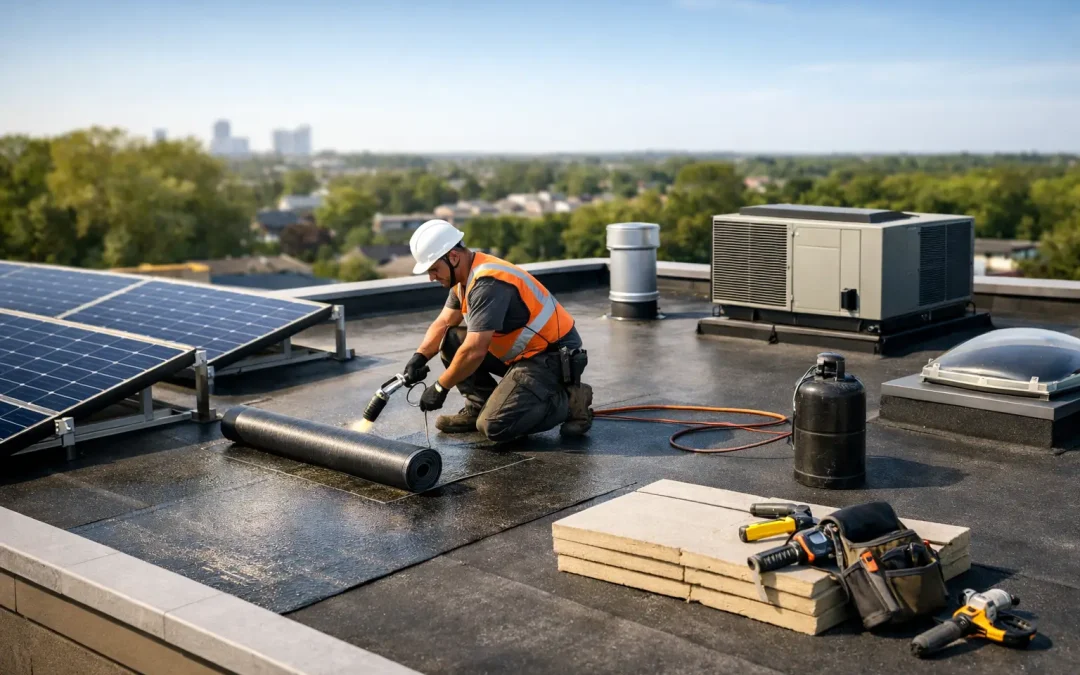
A flat roof rarely fails without giving some warning. Water that sits for longer after rain, cracking around an edge, a damp patch on the ceiling or a surface that has started to blister are all signs that the roof needs attention. This guide to flat roof upgrades helps homeowners understand the sensible options before a small issue turns into water damage inside the property.
Whether the roof covers a garage, extension, porch, bay window or dormer, the right upgrade should provide dependable protection, improve the finish of the home and offer good value over its working life. The best choice depends on the roof’s condition, its construction and how it is used.
Start with the condition of the existing flat roof
The first question is not always which material to choose. It is whether the current roof can be repaired properly or whether replacement is the more reliable option. A local repair can make good sense when damage is limited to one area, such as a split in the covering, loose flashing or a failed joint. It can extend the roof’s life without the cost of a full replacement.
However, repeated leaks, widespread cracking, soft areas in the deck or standing water usually point to a larger problem. Covering over a tired roof without addressing the cause can hide defects for a short time, but it does not create a sound roof. A proper survey should identify the condition of the deck below the covering, the edges, upstands, drainage and the connection between the flat roof and the main house.
A good contractor will explain what has been found in plain terms. Homeowners should be wary of anyone who recommends a full replacement without inspecting the roof closely, but equally wary of a cheap patch that will not deal with a failing surface.
The main options for flat roof upgrades
Modern flat roofing materials are a considerable improvement on many older felt systems. They are designed to form a watertight surface, cope with changing weather and provide a cleaner, longer-lasting finish when fitted correctly.
Rubber flat roofing
Rubber flat roofs are a popular choice for residential garages, extensions and smaller roof areas. The material is typically installed in large sheets, which reduces the number of seams where water could find a way through. It is durable, flexible and well suited to the changing temperatures seen across the Midlands.
A rubber roof can be an excellent long-term upgrade where the deck is sound or can be renewed as part of the work. It is not simply a case of laying a sheet over the existing roof. The preparation, adhesive, edge trims and detailing around walls, pipes and rooflights all matter. Poorly finished edges can undermine an otherwise good installation.
High-performance felt systems
Modern felt roofing is different from the thin, short-lived coverings many homeowners remember. Quality multi-layer felt systems can give reliable protection and are often a practical option for certain roof shapes and budgets. They can also work well where detailed areas need careful sealing.
The quality of the system and the workmanship are more important than the name alone. A well-installed felt roof with proper drainage and neat detailing can perform very well. A rushed installation, with weak joints or poorly formed edges, will not.
Insulated flat roof upgrades
If an extension feels cold in winter or overheats in summer, upgrading the insulation may be just as valuable as replacing the waterproof covering. A warm roof construction places insulation above the roof deck, helping to improve thermal performance and reduce condensation risk when designed correctly.
This is particularly worth considering when a flat roof is being renewed anyway. There may be added height to account for, which can affect door thresholds, flashings and edge details. It can also cost more than a like-for-like covering replacement, but the improvement in comfort and energy efficiency may justify it for a lived-in extension.
Drainage is not an optional extra
A flat roof is not normally completely flat. It needs a slight fall so rainwater can travel towards an outlet, gutter or downpipe. If water remains on the roof for days after rainfall, it puts extra pressure on the covering and can highlight poor falls or blocked drainage.
An upgrade is the right time to deal with this properly. In some cases, tapered insulation or adjustments to the roof structure can help direct water away. In others, clearing and improving gutters, outlets and downpipes may be enough. The solution depends on the roof’s design, but ignoring ponding water is rarely wise.
Roofline work is closely connected to this. Worn guttering, damaged fascias or poorly positioned outlets can allow water to overflow against brickwork and timber. Looking at the whole area rather than the roof covering alone gives a more dependable result.
Details that separate a quality installation from a quick fix
The visible surface is only one part of a flat roof. Leaks often start at the perimeter, around a pipe, beside a wall or where the roof meets a window or door. These details need to be properly prepared and finished, not covered with excess sealant.
When arranging a flat roof upgrade, ask how the contractor will deal with the existing deck, wall flashings, edge trims, outlets and any rooflights. It is also sensible to ask what will happen if hidden timber damage is found once the old covering is removed. A clear quotation should set out the proposed materials and scope of work, rather than relying on vague descriptions.
Tidiness matters too. Roofing work can create old felt, timber and packaging waste, particularly during a full strip-back. A professional team should protect the surrounding area, remove waste and leave the property clean once the work is complete.
When is the best time to upgrade a flat roof?
Homeowners often wait until a leak appears indoors, but that is not always the best point to act. By then, water may have already affected insulation, plasterboard or the timber deck. Early attention to cracks, lifted edges and deteriorating joints can prevent a more extensive repair.
That said, roofing work can be completed throughout much of the year when weather conditions allow. Dry conditions are preferable for stripping and installing a new flat roof, and a responsible contractor will plan around the forecast rather than taking risks with an exposed property. If a roof is actively leaking, temporary protection may be needed while a permanent repair or replacement is arranged.
Choosing a contractor for your flat roof upgrade
Price matters, but the lowest quotation is not always the best value. A roof is only as reliable as the preparation and fitting behind it. Materials can look similar at first glance, yet the difference in deck preparation, drainage, trims, sealants and workmanship will become clear over time.
Choose a contractor that is insured, experienced with the type of roof you have and willing to survey it before quoting. Look for clear communication, realistic timescales and evidence that the team takes care around occupied homes. For homeowners in Nottingham and the wider Midlands, MTF Roofing Ltd provides straightforward surveys and quotations, with work planned around the condition of the roof rather than a one-size-fits-all solution.
It is worth discussing the finish as well as the practical work. A neat edge, well-fitted guttering and properly finished flashings can make a garage, extension or porch look cared for, while also protecting the property from the weather.
Plan the work before the next heavy downpour
A flat roof upgrade should leave you with more than a fresh-looking surface. It should give you confidence that rainwater is being managed, weak details have been addressed and the work has been completed properly. If your roof is showing early signs of wear, arranging a professional inspection now can give you clear options and the time to choose the right solution for your home.