A fascia board may sit just below the edge of your roof, but it does a demanding job. It supports the guttering, helps protect the roof structure from rain and gives the whole property a clean, finished appearance. When it starts to rot, crack, sag or pull away from the roofline, choosing a replacement is not simply a question of colour. Knowing how to choose fascia materials means considering the condition of the existing roofline, the weight of the guttering, the look of your home and the amount of maintenance you are prepared to take on.
For most homeowners across Nottingham and the Midlands, a well-fitted uPVC fascia system is the practical long-term choice. That said, timber still has its place on certain properties, and the quality of installation matters just as much as the board itself.
Start with the job your fascia needs to do
Fascias are the long boards fixed along the lower edge of a pitched roof. They provide a secure fixing point for gutter brackets and cover the ends of the rafters. Alongside soffits and guttering, they form the roofline system that helps keep water, birds and insects away from vulnerable areas of the roof.
This is why a fascia board must be more than decorative. It needs to be strong enough to carry gutters full of rainwater, remain stable through changing temperatures and resist regular exposure to wind and moisture. A material that looks smart on the day of fitting but cannot cope with the conditions around it is rarely good value.
Before selecting a material, look at the wider roofline. Overflowing gutters, damaged tiles, poor drainage or blocked downpipes can all put extra strain on new fascias. Replacing the boards without addressing the cause of the problem may leave the same issues to develop again.
How to choose fascia materials for your property
The right option depends on the property, its age and its existing roofline. It also depends on whether you are carrying out a full replacement or trying to cover boards that are already in poor condition.
uPVC fascia boards
uPVC is the most common choice for replacement fascias on modern homes and for good reason. Quality uPVC boards do not rot, need no painting and are straightforward to keep clean. A wash with warm soapy water from time to time is normally enough to keep them looking tidy.
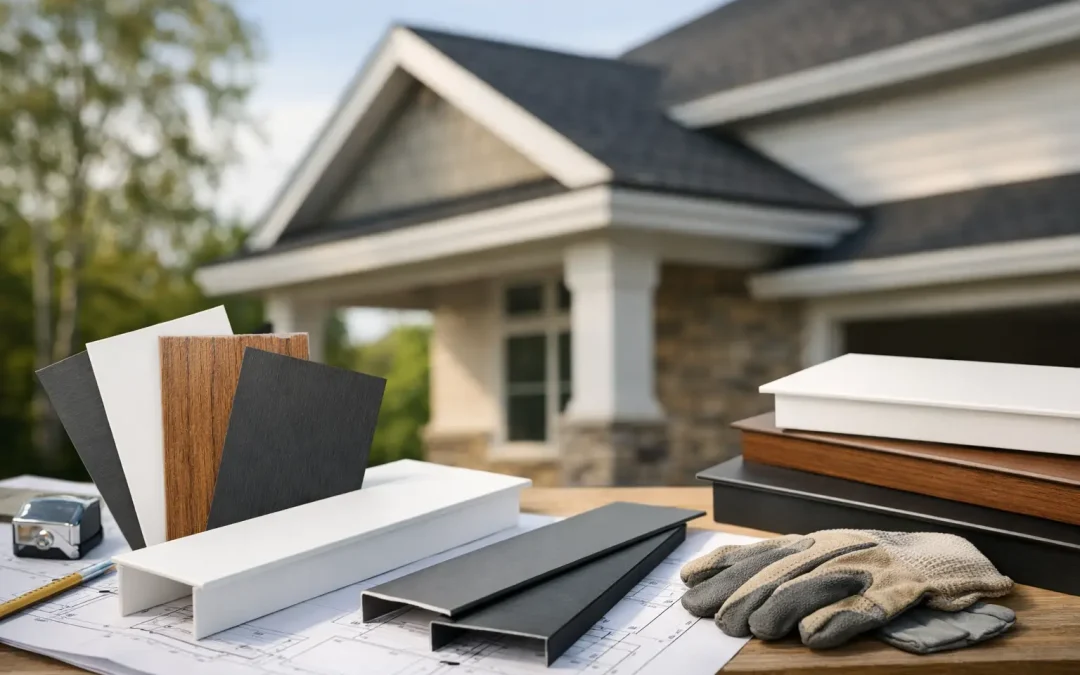
They are available in white, black, grey, woodgrain finishes and other colours, so the roofline can complement the windows, brickwork and guttering. White remains a popular choice for a crisp, traditional finish, while anthracite grey and black can suit more contemporary homes. Woodgrain-effect boards can provide a softer appearance where homeowners like the look of timber without the regular upkeep.
Not all uPVC products are equal, however. A fascia that supports guttering should be a suitable full replacement board, fitted correctly to sound rafters. Thin capping boards are designed to cover an existing fascia and should not be used to hide rotten timber or serious structural damage. If the original wood is soft, split or failing, it needs to be removed and the roofline inspected before the new system goes on.
Timber fascia boards
Timber fascias can be a good fit for period properties, cottages and homes where preserving a traditional finish is a priority. Properly prepared and painted timber can look excellent and is easy to repair in small sections. It can also be shaped and detailed to match original features more closely than standard plastic boards.
The trade-off is maintenance. Timber needs regular inspection, repainting and prompt attention where paint has peeled or joints have opened. In the Midlands, repeated wet weather and cold winters can quickly expose neglected areas. Once water gets behind a failing paint finish, rot can spread into the board and potentially affect the rafter ends behind it.
Timber can be the right choice where appearance and character are the main concern, but it is best chosen with a realistic plan for ongoing care. It is not a fit-and-forget material.
Aluminium and specialist systems
Aluminium fascia systems are used less often on standard domestic rooflines but can suit some contemporary designs. They offer a neat finish, good resistance to corrosion and a long service life when professionally installed. Their higher cost and more specialist fitting requirements mean they are usually considered for particular design needs rather than as a like-for-like replacement on an average home.
Composite and other specialist boards may also be available, but the key question remains the same: can the system support the guttering, manage moisture properly and work with the existing roof construction? A survey should establish this before material is ordered.
Do not choose on colour alone
Colour matters because fascias are highly visible from the ground, particularly on detached and semi-detached homes. But choosing a colour should come after deciding on the right board type and installation method.
Consider the existing exterior features. Matching white fascias with white windows and soffits gives a classic, low-risk finish. Darker fascias can frame the roof neatly and work well with dark guttering, but may look heavy on a small property if every roofline component is dark. Woodgrain finishes can suit older brick homes, although a close look at samples is worthwhile as colours can appear different in natural light.
It is also sensible to choose soffits, fascias and guttering as a complete system. Mismatched profiles or shades can make a newly updated roofline look pieced together. A good installer will discuss the overall appearance, not just the individual board.
Check ventilation before replacing the roofline
A neat fascia installation should not compromise loft ventilation. Air movement in the roof space helps control condensation, which can otherwise lead to damp insulation, mould and timber decay. This is especially relevant where a loft has been insulated or converted, as the roof space may behave differently from when the home was built.
Ventilated soffits or purpose-made ventilation products may be needed, depending on the roof design. The correct approach is not to add ventilation blindly, but to assess what is already present and what the roof requires. This is one reason an on-site inspection is more useful than a quote based only on photographs.
Think about guttering weight and drainage
Your fascia carries more than its own weight. It carries the gutter brackets and, during heavy rain, a gutter full of water, leaves and debris. If the guttering is undersized, poorly aligned or regularly blocked, even a new fascia can be placed under unnecessary stress.
During a roofline replacement, it makes sense to inspect the gutters and downpipes at the same time. A properly sized, securely fixed gutter system should fall towards the outlet, hold its shape and direct water away from the walls and foundations. This is particularly worthwhile if you have noticed overflowing gutters, damp patches on external walls or water pooling around the property after rain.
Look beyond the visible board
The biggest mistake in fascia work is treating it as a simple cover-up job. Rotten timber behind a plastic capping board, loose rafter ends or damaged felt edges are not solved by placing a new surface over the top. They are simply hidden until the problem becomes more expensive.
A proper replacement should allow the installer to check the condition of the old boards, rafters and roof edge. Any damaged timber should be dealt with before the new fascia is fixed. The eaves felt or felt support tray should also be considered so water runs into the gutter rather than tracking back towards the roof structure.
This preparation is not always visible once the job is complete, but it is where the long-term value lies. A clean finish is important. A sound fixing beneath it is essential.
Balance upfront cost with future maintenance
The cheapest quote is not always the lowest-cost option over time. Timber may cost less in certain situations but needs periodic decorating and maintenance. Quality uPVC often costs more initially than a basic cover-up solution, yet avoids repainting and can provide many years of dependable service when fitted to a properly prepared roofline.
Ask what is included in any quotation. It should be clear whether the price covers removal and disposal of old materials, replacement boards rather than capping, soffits, guttering, downpipes, ventilation provisions and repair of any visible underlying damage. If a quote is vague, it can be difficult to compare fairly with another contractor’s proposal.
Choose the fitting standard as carefully as the material
Even the best fascia material can fail early if it is poorly fitted. Boards need secure fixings, correctly spaced gutter brackets, clean joints and a sensible connection to the soffit and roof edge. The work should also be carried out safely, with care taken to protect the property and leave the site tidy afterwards.
At MTF Roofing Ltd, roofline work is approached as part of the home’s weather protection, not as a cosmetic quick fix. A clear survey helps identify whether a straightforward replacement is suitable or whether there are underlying issues that should be put right first. That gives homeowners a clearer picture of the work, the cost and the finish they can expect.
If your fascias are showing signs of rot, staining, movement or repeated gutter problems, it is worth arranging an inspection before the next spell of heavy rain. The right material, properly fitted to a sound roof edge, can protect your home and keep it looking cared for year after year.