
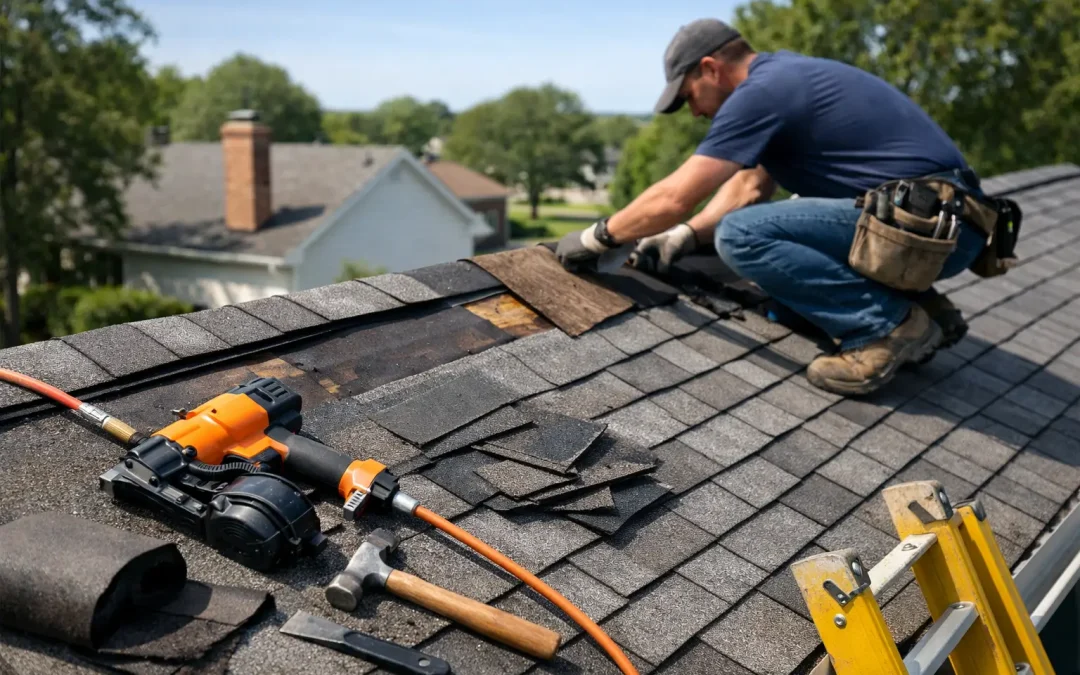
A loose tile after a spell of wind, a brown mark forming on the bedroom ceiling, or water spilling over the gutter during rain can all be early warnings of a bigger problem. This residential roof repair guide explains what homeowners should look for, what can safely wait, and when it is sensible to arrange a professional inspection before a small defect becomes expensive damage.
A roof does more than keep the rain out. It protects the timbers, insulation, plasterwork and possessions beneath it, while fascias, soffits and guttering move water safely away from the building. When one part fails, the effects can spread quickly, particularly through a wet Midlands winter.
Start with a safe visual check
You do not need to climb onto the roof to spot many common issues. In fact, walking on pitched tiles or older flat roofs can cause damage and creates an unnecessary safety risk. Start from ground level, using binoculars if needed, and look at the roof after dry weather as well as after rainfall.
Check for slipped, cracked or missing tiles and slates. Look along the ridge line for uneven or loose ridge tiles, and pay attention to flashing around chimneys, roof windows, valleys and adjoining walls. Flashing is often a source of leaks because it seals areas where different parts of the roof meet.
From inside the loft, use a torch to look for damp patches, staining, drips, mould, wet insulation or daylight showing through where it should not. Condensation can also create moisture in a loft, so a damp area does not always mean the roof covering has failed. The pattern matters: moisture that worsens after rain is more likely to point to a roof leak, while widespread condensation may indicate poor ventilation or insulation issues.
Signs that roof repair should not wait
Some roofing faults can be booked in around a suitable weather window. Others need quick action to limit internal damage and prevent the roof from becoming unsafe. Arrange a professional assessment promptly if you notice water entering the home, a section of roof visibly sagging, several tiles missing after high winds, or loose materials that could fall onto a driveway, path or neighbouring property.
A leak should never be judged solely by the size of the ceiling stain. Water can travel along timbers, felt or pipework before appearing indoors, so the visible mark may be some distance from the entry point. Catching it early can mean replacing a damaged tile or repairing flashing rather than dealing with rotten battens, damaged plaster and affected insulation.
Gutters also deserve attention. Overflowing guttering may be caused by leaves and moss, but it can also result from incorrect falls, leaking joints, damaged brackets or an outlet that cannot cope with the water flow. Persistent overflow can soak brickwork, stain render and contribute to damp around windows and walls.
Common residential roof repairs
The right repair depends on the roof’s age, construction and condition. A reliable roofer should inspect the affected area and explain whether a local repair is likely to provide a lasting result, rather than recommending more work than is necessary.
Replacing broken or slipped tiles
Individual tiles can crack through impact, frost damage or age. Strong winds may also lift or dislodge tiles, especially where fixings have deteriorated. Replacing a small number of matching tiles is often straightforward, provided the surrounding roof is sound. If tiles are repeatedly slipping, there may be an underlying issue with the battens, fixings or roof structure that needs investigating.
Repairing leadwork and flashing
Lead flashing around chimneys, walls and roof openings expands and contracts with changing temperatures. Over time, mortar can fail, joints can lift, and splits can develop. Proper flashing repairs require care because simply applying sealant over a failed detail may only offer a short-term fix. The aim should be to restore a secure, weatherproof junction that can cope with movement and rainfall.
Flat roof repairs
Flat roofs on garages, extensions, porches and dormers can develop splits, punctures, lifted edges or pooling water. A small repair may be appropriate where the covering is otherwise in good condition. However, if the roof has widespread cracking, recurring leaks or standing water, a replacement covering such as a quality rubber flat roof may be better value over time.
The trade-off is straightforward: patching costs less initially, but repeated repairs can soon add up if the material has reached the end of its working life. A clear survey should help you decide whether repair or replacement is the more sensible option.
Ridge, verge and chimney repairs
Ridge and verge mortar can loosen with age and weather exposure. Modern dry-fix systems are often used during larger repair or replacement work because they avoid relying solely on mortar. Chimneys may also need attention to cracked pointing, damaged leadwork or loose pots and cowls. These areas are exposed and high up, so they are not suitable for DIY work.
What homeowners can do before the roofer arrives
If rainwater is entering the property, protect the inside first. Move furniture and valuables away from the affected area, place a bucket beneath drips and take photographs of the damage for your records. If water is close to light fittings or electrical wiring, switch off the relevant circuit only if it is safe to do so and seek urgent professional advice.
Avoid pushing roofing materials back into place from a ladder or attempting to seal a leak with expanding foam, tape or large amounts of mastic. These temporary efforts can make a proper repair harder and may hide the true source of the problem. Never go onto the roof in wet, windy or icy conditions.
It is useful to make a note of when the issue appears. Does it leak only during heavy rain? Is it worse when wind drives rain from a particular direction? Did the problem begin after a storm? This information can help a roofer identify the cause more efficiently.
Choosing the right approach to roof repairs
A good repair starts with an honest assessment. Not every ageing roof needs a full replacement, and not every visible crack is the reason water is getting in. Equally, a cheap patch is not always a saving if the surrounding materials are worn out or the same fault returns each winter.
Ask for the proposed work to be explained in plain language. You should understand what has failed, which materials will be used, whether surrounding areas will be checked, and what preparation and clean-up are included. For larger work, it is reasonable to ask whether the repair addresses the cause of the fault, not just the visible symptom.
Insurance and experience matter too. Roofing involves working at height and protecting the property below. A fully insured contractor with established local references provides greater reassurance than someone offering a rushed cash-only repair after knocking at the door.
Preventing avoidable roof damage
Regular maintenance cannot stop every storm-related problem, but it can reduce the chance of water finding its way into the home. Clear gutters and downpipes at least twice a year, particularly after autumn leaf fall. Trim back overhanging branches where possible, as rubbing branches and falling debris can damage tiles, gutters and flat roof coverings.
Keep an eye on moss growth. Moss does not automatically mean a roof is failing, but heavy growth can hold moisture and block gutters as it sheds. It should be dealt with carefully, without aggressive pressure washing that could damage tiles or force water beneath them.
After severe weather, carry out another ground-level check. A single displaced tile, loose section of fascia or overflowing gutter is easier and less costly to put right before further rain arrives.
A residential roof repair guide for Midlands homes
Homes across Nottingham and the wider Midlands face plenty of rain, changing temperatures and strong winds, all of which put roofing materials under pressure. Period properties may have older slate, mortar bedding and chimney details, while newer homes can still suffer from poor drainage, wind damage or failed fixings. The best solution depends on the particular roof, not a one-size-fits-all answer.
MTF Roofing Ltd takes a practical approach: inspect the problem properly, explain the options clearly and carry out work to a high standard using suitable materials. Whether the issue is a slipped tile, damaged flashing, worn guttering or a leaking flat roof, timely professional attention helps protect the home and avoids unnecessary disruption.
If something about your roof does not look right, do not wait for a larger leak to provide proof. A straightforward inspection and clear quotation can give you confidence about the condition of your roof and the right next step.