
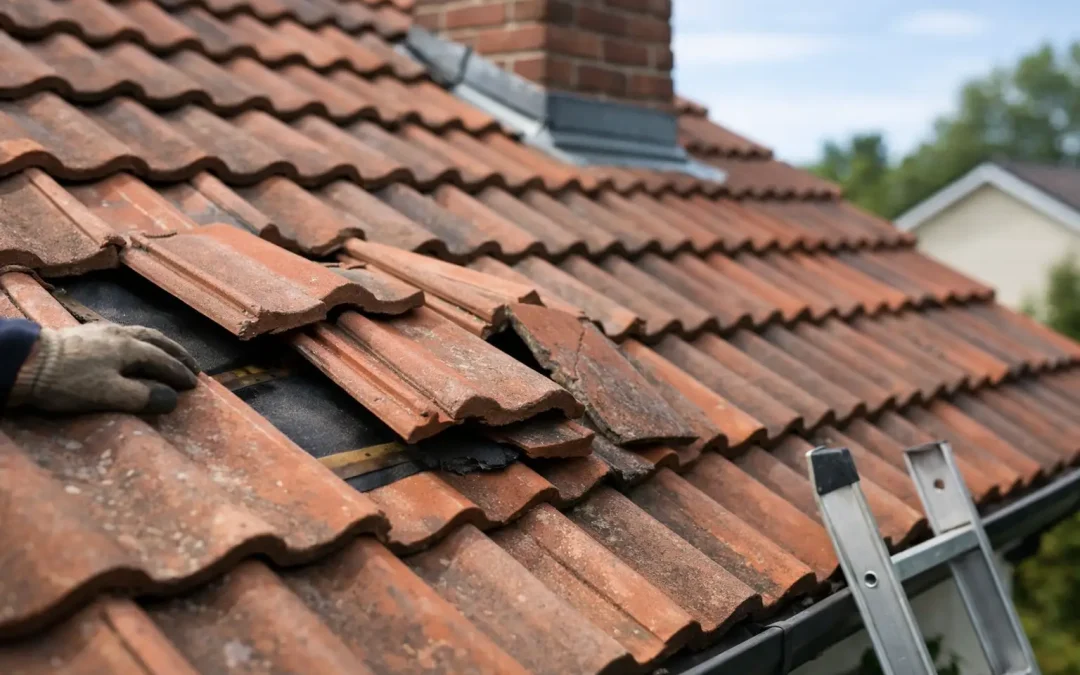
A tile sitting lower than the row around it may look like a small cosmetic issue, but it can be an early warning that part of the roof is no longer secure. Homeowners often ask what causes roof tiles to slip after spotting a gap from the ground, finding a broken tile below the roofline, or noticing a damp patch in the loft. The cause is not always obvious, and a prompt inspection can prevent a straightforward repair becoming water damage inside the property.
What causes roof tiles to slip?
Most pitched roof tiles are held in place by a combination of their shape, the battens beneath them, fixings such as nails or clips, and the weight of the tiles above. When one part of that system starts to fail, a tile can move out of position. Age is often a factor, but roof tiles can also slip because of storm damage, poor installation, decayed timber or movement in the roof structure.
The important point is that a slipped tile is usually a symptom rather than the whole problem. Simply pushing it back into place may not provide a lasting repair if the batten, nail, clip or surrounding tiles have deteriorated.
Nail fatigue and failed fixings
On many older roofs, tiles were fixed with nails that can corrode over time. As the nail head weakens or the fixing works loose, the tile is no longer properly held at the top. Gravity then does the rest, and the tile gradually drops from its original position.
This is especially common on roofs that are several decades old, although the condition depends on the original materials, exposure to weather and previous repair work. One slipped tile may indicate a localised failed fixing. Several tiles slipping in the same area can point to wider nail fatigue, where a more thorough repair or re-roof assessment is sensible.
Worn or rotten roof battens
Battens are the horizontal timber lengths fixed across the roof structure that support the tiles. If water has entered beneath the covering over a long period, timber battens can become soft, split or rot. A sound tile cannot remain secure if the timber it is fixed to has failed.
Batten problems are not normally visible from outside, which is why lifting a small section of tiles may be necessary during a proper inspection. Replacing a loose tile without addressing damaged battens can mean the same issue returns after the next period of bad weather.
Storms, wind and repeated weather exposure
The Midlands sees its share of strong winds, driving rain, frost and changing temperatures. Wind can lift the lower edge of a tile, particularly where a fixing is already weak. Once a tile has been lifted and dropped back down, it may no longer sit correctly on the batten or interlock securely with the tiles beside it.
Frost can also contribute. Water enters tiny cracks in old tiles or mortar, freezes and expands, then leaves the material weaker after repeated cycles. Heavy rain does not usually make secure tiles slip on its own, but it exposes gaps and weaknesses that have been developing over time.
Poor installation or unsuitable previous repairs
A roof covering is only as reliable as the work beneath it. Incorrect batten spacing, insufficient fixings, poorly fitted clips or tiles that have not been properly interlocked can all lead to movement. In some cases, a previous repair has used a quick fix where a proper replacement of the damaged area was needed.
Mortar is sometimes used around verges, ridges and other details, but it should not be relied on to compensate for insecure tiles in the main roof area. Modern dry-fix systems and correctly specified mechanical fixings can provide a more dependable solution where suitable. The right approach depends on the age, design and condition of the roof.
Broken, cracked or damaged tiles
A cracked tile may still appear to be in place, yet it has lost much of its strength. Wind, foot traffic, falling branches and repeated freezing can all cause damage. Once cracked, a tile can shift, break further or allow water beneath the roof covering.
Concrete tiles can become more porous as they age, while clay tiles may crack or lose their secure fit. Matching replacement tiles is often possible, but availability, colour variation and the profile of the existing roof all need consideration. A close match that fits and performs properly matters more than a superficial colour match alone.
Movement in the roof structure
Less commonly, slipped tiles are linked to movement in the roof itself. Settlement, sagging rafters, damaged felt, or issues following alterations can affect the line of the roof and the way tiles are supported. This does not automatically mean major structural work is required, but it does call for a careful inspection rather than a guess from ground level.
If the roofline looks uneven, there is a noticeable dip, or several tile courses are no longer straight, it is best to arrange an assessment promptly. Water entering through displaced tiles can worsen timber problems and increase the scale of the work needed.
Signs that slipped tiles need attention
A single displaced tile should not be ignored, especially if it is near a valley, chimney, roof edge or flashing. These areas direct large amounts of rainwater and are less forgiving of small gaps. From the ground, look for obvious changes in the pattern of the tiles, but do not climb onto the roof or attempt to walk across it.
Other warning signs include:
- tiles that look uneven, lower than neighbouring rows or visibly lifted at the edge;
- broken pieces of tile or mortar found in the garden, driveway or guttering;
- damp patches, staining or drips in the loft after rain;
- daylight visible through the roof covering from inside the loft; and
- gutters filling with unusual debris, which can indicate worn tile surfaces or mortar deterioration.
Not every damp patch is caused by a slipped tile. Faulty flashing, blocked guttering, damaged underfelt and leaking roof valleys can produce similar symptoms. That is why a professional diagnosis is more useful than treating the first visible issue as the only issue.
Can a slipped roof tile cause a leak?
Yes. Tiles are designed to overlap so rain runs down and away from the roof. When a tile slips, it can expose the underfelt, batten and roof space below to wind-driven rain. Underfelt offers a secondary layer of protection, but it is not intended to deal with ongoing water entry through missing or displaced tiles.
A leak may not show up directly beneath the slipped tile. Water can run along a rafter or under the felt before appearing elsewhere in the loft or on a ceiling. This can make a small defect difficult to trace without checking the roof covering properly.
The risk depends on the location and size of the gap. A slightly moved tile in a sheltered area may not cause immediate internal damage, while a missing tile beside a valley or chimney can allow water in quickly. It is better to deal with either situation before the next heavy spell of rain.
Is repair enough, or is a re-roof needed?
There is no one answer. If the roof is generally sound and the issue is limited to a few damaged tiles or failed fixings, a targeted repair can be the most sensible and cost-effective option. This may involve replacing broken tiles, renewing fixings, repairing a small area of batten and checking the surrounding courses for security.
A larger repair or re-roof becomes more likely when tiles are slipping across several elevations, battens have deteriorated widely, the underfelt is failing, or the roof is near the end of its serviceable life. Repeated call-outs for isolated tile repairs can sometimes cost more in the long run than addressing the underlying condition properly.
A good roofing contractor should explain what has been found, show where practical, and set out whether a local repair is likely to last. Homeowners should be cautious of anyone recommending a full replacement without inspecting the roof, just as they should be wary of a cheap repair that does not deal with the cause.
What to do if you spot a slipped tile
Keep clear of any tiles or debris that may fall, particularly around entrances, paths and parked vehicles. If safe to do so, take a clear photograph from the ground and note whether you have seen dampness indoors. Avoid using ladders or trying to push the tile back yourself, as this can damage surrounding tiles and create a serious safety risk.
Arrange an inspection as soon as possible, particularly after strong winds or if rain is forecast. A reliable roofer can assess the tiles, fixings, battens and nearby roof details, then recommend work based on the actual condition rather than assumptions.
For homeowners across Nottingham and the wider Midlands, MTF Roofing Ltd provides clear, professional roof repair advice and workmanship designed to protect the home properly. Acting early gives you the best chance of keeping a minor slipped-tile repair just that – minor.