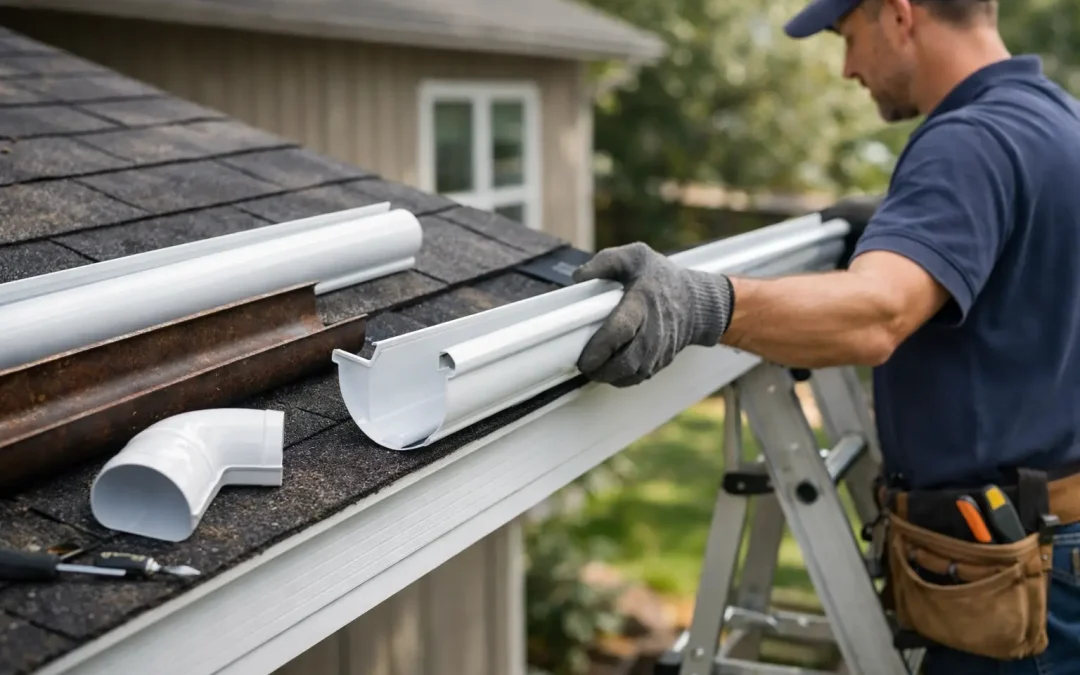
A leaking gutter can cause far more trouble than a wet path below the roofline. Water that repeatedly runs down brickwork can stain walls, soak fascias and soffits, affect pointing, and eventually find its way into areas of the home that should stay dry. This guide to guttering replacement explains when replacement is the sensible option, what the work involves, and how to make a sound choice for your property.
For homeowners across Nottingham and the wider Midlands, the aim is straightforward: a guttering system that carries rainwater away reliably, looks right on the house, and is fitted properly from the start.
When guttering needs replacing
Gutters do not always need to be replaced at the first sign of a drip. A loose union, blocked outlet or slipped bracket can often be repaired. However, repeated faults usually point to a system that has reached the end of its useful life.
Look out for gutters that sag between brackets, crack at joints, overflow during normal rainfall, or pull away from the fascia board. Water marks beneath the gutter line, peeling paint on timber, damp patches inside an upstairs room, and vegetation growing from the channels are all signs that deserve attention.
Age matters too. Older plastic guttering can become brittle after years of sun, frost and movement. Cast iron systems can last a long time, but corrosion and failing joints may make ongoing repairs less practical. If several sections have issues, replacing the full run is often better value than paying for separate call-outs and short-term fixes.
Why proper guttering replacement matters
A gutter is only one part of the roofline, but it has a demanding job. It must catch water from the roof, maintain the correct fall towards the downpipe, cope with heavy rainfall, and stay securely fixed through changing weather.
Poorly fitted guttering can look acceptable on the day of installation but still cause problems later. Brackets set too far apart can allow the gutter to sag. Incorrect falls can leave standing water in the channel. Badly sealed joints can drip onto fascias and masonry. A downpipe positioned without considering the drain can leave water pooling close to the property.
This is why replacement should not be treated as simply swapping old plastic for new. The roof edge, fascia condition, existing drainage and shape of the house all need to be assessed before work begins.
Replacement may reveal roofline issues
When old guttering is removed, the fascia boards behind it become visible. If timber fascias are rotten, soft, split or badly painted, fitting new gutters directly onto them may not provide a lasting result. In some cases, replacing or capping the fascia and renewing the soffits at the same time is the more sensible route.
It depends on the condition of the existing roofline. Sound boards may only need guttering work, while worn or damaged boards need attention before a new system is secured. A clear survey and quotation should explain what has been found and why each part of the work is recommended.
Choosing the right guttering material and profile
Most modern homes use uPVC guttering because it is durable, low-maintenance and available in colours that suit a wide range of properties. Black, white, brown and grey are common choices, with the right option usually depending on the windows, soffits, fascias and overall appearance of the home.
The profile also matters. Half-round guttering suits many standard homes and offers a traditional appearance. Square-line and deep-flow options have a more angular finish and can carry greater volumes of water. Deep-flow guttering can be particularly useful on larger roofs, steep roof pitches, or properties exposed to heavy rainfall.
Appearance should be considered, but capacity is just as important. A large roof area feeding into undersized gutters may overflow even if every section is new. Equally, a larger profile is not always necessary for a smaller property. A competent installer will match the system to the roof and drainage requirements rather than offering a one-size-fits-all answer.
Cast iron-effect uPVC can be a practical choice for homeowners who want a more traditional look without the regular maintenance associated with genuine cast iron. On period properties, though, the best option depends on the character of the building and any local requirements.
What happens during a guttering replacement?
A professional replacement starts with a close look at the existing guttering, downpipes, roofline and drainage points. The installer should identify whether the problem is localised or whether the complete system needs renewing. Measurements are taken, suitable materials are discussed, and the quotation should set out the work clearly.
On installation day, the old gutters, brackets and downpipes are removed carefully. The fascia line is checked before new brackets are fitted at the correct spacing and level. The guttering is then installed with a controlled fall towards each outlet, with joints and stop ends properly sealed.
New downpipes should discharge into suitable drains or gullies. Where practical, the installer will check that outlets are clear and that water is not being directed against the wall or onto a path. Once fitted, the system should be inspected, tested where appropriate, and the working area left tidy.
For a standard house, the work can often be completed efficiently. Larger properties, difficult access, extensive roofline replacement or drainage alterations may take longer. The key point is not speed for its own sake, but a neat installation that is secure and properly finished.
Questions to ask before accepting a quote
Price matters, but it should not be the only deciding factor. An unusually low quote can sometimes mean poor-quality materials, limited preparation, inadequate bracket spacing or no allowance for disposal and cleanup.
Ask whether the quote includes removal of old materials, new brackets, joints, downpipes and waste disposal. Confirm the profile and colour of the guttering, and ask whether the fascias will be inspected before the new system is fixed. It is also sensible to check that the contractor is fully insured and willing to explain the work in plain terms.
A reliable roofing and roofline contractor should not pressure you into unnecessary extras. Equally, they should be honest if a gutter-only replacement will not solve the underlying issue because the fascia, roof edge or drainage is in poor condition.
Keeping new gutters in good condition
New guttering is low-maintenance, not maintenance-free. Leaves, moss from the roof, twigs and windblown debris can collect in channels and outlets. A blocked gutter may overflow even when the system itself is in excellent condition.
Checking the gutters after autumn and after particularly stormy weather is a sensible habit. Keep an eye on joints, brackets and downpipe outlets, and deal with small issues before they lead to staining or damp. If access is awkward or unsafe, arrange for a professional rather than climbing ladders without the right equipment.
Trees close to the property may mean more frequent clearing is needed. On the other hand, a house with little nearby foliage may need only occasional checks. The right maintenance schedule depends on the surroundings as much as the guttering itself.
A guide to guttering replacement that starts with the right survey
The best guttering replacement is not necessarily the cheapest or the most elaborate. It is the one that suits the roof, handles the expected rainfall, is fixed to sound roofline boards and sends water safely away from the property.
At MTF Roofing Ltd, we believe homeowners deserve clear advice, quality materials and workmanship that holds up when the weather turns. If your gutters are leaking, sagging or regularly overflowing, arranging a proper assessment now can protect your home before a small roofline problem becomes a larger repair.