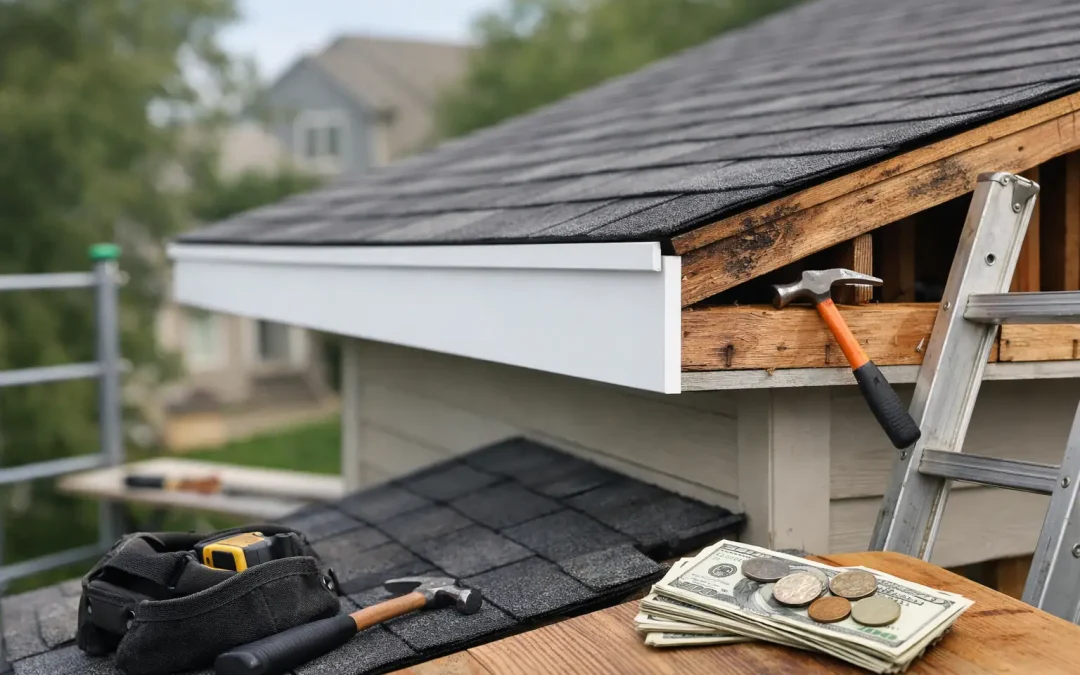
A fascia board may look like a simple strip along the edge of your roof, but it has an important job. It supports the guttering, protects the rafter ends and helps keep rainwater out of the roofline. When it starts to rot, split or pull away, the fascia replacement cost is usually far less than the cost of leaving water damage to spread into the roof structure.
For homeowners across Nottingham and the Midlands, the sensible question is not only, “How much will it cost?” It is also, “What is included, what condition is behind the old boards, and will the work be done properly?” A clear survey and written quotation should answer all three.
Typical fascia replacement cost in the UK
As a broad guide, replacing fascias on a typical semi-detached home can cost from around £1,200 to £2,500. A larger detached property, a home with several roof levels, or a full roofline replacement including soffits, guttering and downpipes can be £2,500 to £5,000 or more.
These are useful starting points, not fixed prices. Every property is different. A straightforward replacement at a low, accessible eaves line will be priced very differently from work on a three-storey house with difficult access, old timber damage and several sections of guttering to renew.
Be cautious with unusually low figures. A quote may exclude scaffolding, guttering, waste removal, repairs to rotten timber or VAT. It may also be based on capping over damaged timber rather than removing it. That approach can look cheaper at first, but it does not always solve the problem underneath.
What affects fascia replacement cost?
The length of the roofline is the starting point. More metres of fascia means more materials, labour and guttering to remove and refit. However, the size of the house is only one part of the picture.
Access and working height
Safe access has a major effect on price. Some bungalows can be worked on using suitable access equipment, while taller homes, conservatories, extensions or awkward ground conditions may require scaffolding. Scaffolding adds cost, but it gives installers a stable working platform and allows the job to be completed safely and to a better standard.
A reputable contractor should explain the access required rather than treating it as an unexpected extra after work has started.
The condition behind the fascia
Old timber fascias are often affected by years of overflowing gutters, failed paintwork or poor ventilation. Once the boards are removed, damaged rafter ends, rotten timber backing boards or loose gutter brackets can become visible.
Minor repairs are common and are best dealt with while the roofline is open. More extensive timber repairs will add to the price, but leaving weak or rotten material in place can compromise a new installation. This is one reason a proper site survey matters more than a quick estimate given from a photograph.
Full replacement or fascia capping
Fascia capping involves fitting a uPVC board over an existing timber fascia. It can be an option where the timber is sound, straight and dry. It uses less material and can reduce labour time.
Full replacement means removing the old fascia and fitting new boards to a sound fixing point. It is generally the better long-term option where timber has deteriorated, gutters have leaked repeatedly or the roofline needs correcting. It costs more initially, but it allows the installer to inspect the condition of the structure rather than hiding problems behind a new surface.
The right choice depends on what is already there. No contractor should recommend capping without checking whether the existing timber is suitable.
Materials and finish
Most modern fascia replacements use high-quality uPVC. It is low maintenance, does not rot and is available in white, black, anthracite grey, woodgrain finishes and other colours to suit the property.
The cheapest board is not always the best value. Thin, poor-quality materials can flex, discolour or hold fixings less securely over time. A good installation also needs the correct trims, ventilation where required, fixings and gutter brackets. These smaller details make a real difference to how the roofline performs and looks once the work is complete.
Soffits, guttering and downpipes
Fascias, soffits and guttering work together. The fascia carries the guttering, while soffits close off the underside of the roof edge and can provide ventilation to the roof space. Replacing only the fascia can be sensible if the rest of the roofline is in good order. Often, though, renewing the full system at the same time gives a neater finish and avoids paying for access twice.
A full roofline quote may include removal of old boards, new fascias and soffits, new guttering, downpipes, outlet connections and disposal of waste. Check this carefully, as two quotes with a similar headline figure may cover very different amounts of work.
What should a fair fascia quote include?
A detailed quote is more useful than a single price at the bottom of a page. It should set out the sections of roofline being replaced, the chosen material and colour, and whether soffits, guttering and downpipes are included.
It should also make clear how access will be handled, whether old materials will be removed from site, and what happens if concealed timber repairs are found. If potential additional work cannot be priced until the old fascia is removed, the contractor should explain this in advance and discuss it with you before proceeding.
Ask whether the existing gutters will be refitted or replaced. Old gutters can be brittle, warped or poorly aligned, and a new fascia will not stop problems caused by failing guttering. It is also worth checking that the quotation includes secure gutter falls, properly connected downpipes and a tidy clean-up at the end of the job.
Insurance and workmanship standards matter too. Roofline work is carried out at height and directly affects your home’s protection from the weather. Choosing an insured contractor with proven local work can provide far better reassurance than accepting the lowest figure from an unknown firm.
Signs you may need fascia replacement
Not every marked fascia needs replacing immediately. Surface dirt on uPVC can often be cleaned, and a single loose gutter bracket may be a small repair. Timber boards that are soft, flaking, cracked or visibly sagging are a different matter.
Look out for gutters pulling away from the roofline, water running down external walls, peeling paint around the eaves, damp patches in the loft, nesting gaps, or sections of fascia that have started to bow. These signs do not always mean the roof itself is failing, but they do warrant a professional inspection before the next period of heavy rain.
If water has been overflowing for some time, it is sensible to have the guttering checked as well. Blockages, incorrect falls and undersized outlets can all send water back towards the fascia and brickwork.
How to keep the cost under control
The best way to avoid unnecessary expense is to deal with roofline issues before the timber behind them is badly affected. Keep gutters clear, especially after autumn leaf fall, and arrange repairs when you notice repeated overflows or loose sections.
When requesting quotes, compare the scope of work rather than simply comparing totals. One contractor may be allowing for full removal, new ventilated soffits and replacement guttering, while another may only be fitting a cover board to the visible front edge. Neither approach is automatically wrong, but they are not like-for-like prices.
It can also make sense to group related work together. If a roof repair, flat roof renewal or gutter replacement is already planned, completing roofline work at the same time may reduce repeated access and disruption. The right decision depends on the condition of each part of the property, not on selling more work than is needed.
For a dependable answer on your own fascia replacement cost, arrange a proper survey rather than relying on a generic online figure. An experienced roofline contractor can assess the access, inspect the existing boards and gutters, explain the options plainly, and provide a no-obligation quote for work that protects your home for years to come.