A damp patch beside a chimney breast, a drip in the loft after heavy rain or staining on an upstairs ceiling can all point to one small but vital part of the roof: the flashing. This guide to chimney flashing repairs explains what homeowners should look for, why the problem should not be left, and when it is sensible to bring in an experienced roofer.
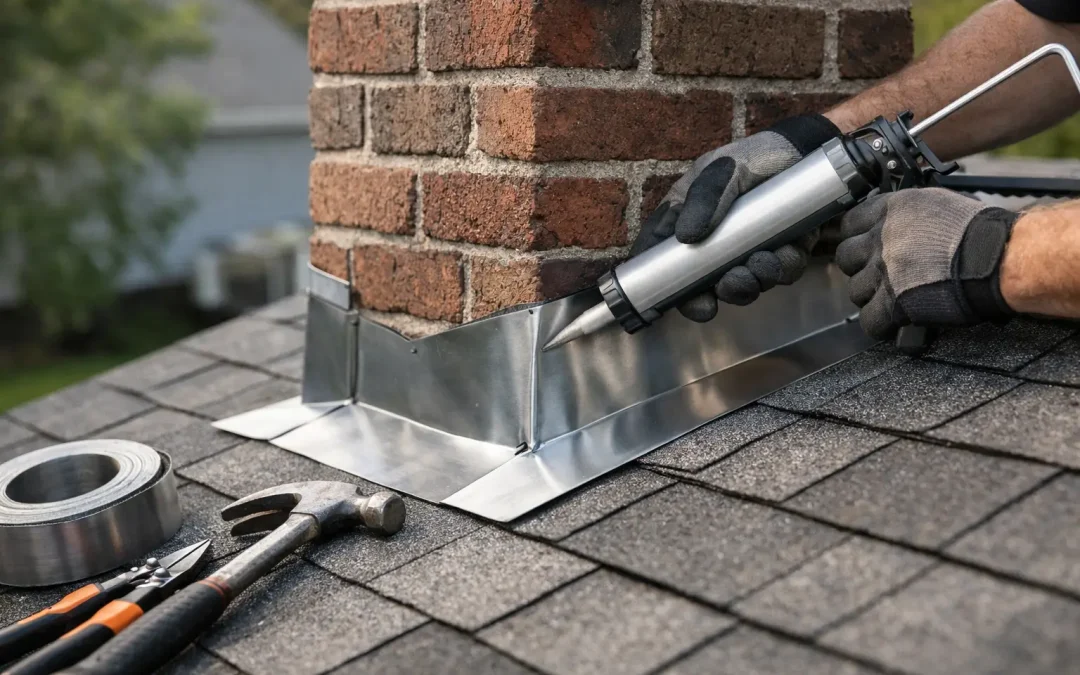
Chimneys create a break in the roof covering, which means rainwater has to be directed carefully around them. Flashing is the waterproof material fitted where the chimney stack meets the roof tiles or slates. When it is correctly installed and maintained, water runs safely back onto the roof and into the guttering. When it fails, water can find its way beneath the roof covering and into the property.
What chimney flashing does
Most traditional chimney flashing is made from lead. It is durable, flexible and well suited to the changing temperatures and movement found on a roof. A properly detailed system usually includes pieces at the front, sides and back of the chimney, with stepped sections worked into the brickwork and roof covering.
The front flashing carries water away from the uphill side of the stack, while side flashings guide water down each edge. At the back, a wider section prevents rainwater collecting behind the chimney. These pieces need to overlap and be secured correctly. A small gap, loose edge or split can allow water to travel much further than the visible defect suggests.
Some older properties have mortar pointing holding the flashing into the chimney joints. This can crack or fall away over time. On newer work, the issue may be poor fitting, inadequate overlap or unsuitable materials used in place of a proper lead detail. The repair needed depends on the condition of the roof, chimney brickwork and surrounding tiles.
Signs your chimney flashing may need repair
A leak around a chimney is not always obvious from outside. Water often runs along timbers or felt before appearing indoors, so the stain on a ceiling may be some distance from where it entered. Regularly checking after prolonged rain can help catch issues early.
Common signs include:
- Damp marks, peeling paint or mould on walls and ceilings close to the chimney breast
- A musty smell or visible moisture in the loft around the chimney area
- Cracked, missing or loose mortar where flashing meets the brickwork
- Lifted lead, torn sections or gaps between the flashing and tiles
- Broken, slipped or missing roof tiles around the base of the chimney
- Moss growth, staining or water marks on the outside brickwork below the flashing
None of these signs proves that flashing is the only cause. A damaged ridge, defective chimney pot, worn pointing or failed roof tile can produce similar symptoms. This is why a close roof inspection matters. The right repair begins with finding the actual route of the water, rather than sealing the first visible crack.
Why chimney flashing fails
Weather is usually the main cause. Chimney stacks are exposed on all sides, often at one of the highest points of the roof. Years of wind, frost, rain and temperature changes can loosen fixings, crack mortar and wear through older lead.
Movement also plays a part. Roof timbers, chimney brickwork and lead expand and contract at different rates. Flashing needs enough flexibility and correctly formed laps to cope with this movement. If it has been fixed too tightly, laid too flat or covered with excessive cement, it may eventually split or pull away.
Previous repairs can create problems as well. Applying roof sealant over cracked mortar or damaged lead may stop a drip for a short time, but it rarely deals with the underlying issue. Sealants can become brittle, trap water or make a future proper repair more difficult. Cement fillets are another common short-term fix on older roofs, but they can crack as the roof moves and are generally less dependable than properly installed lead flashing.
A guide to chimney flashing repairs: what the work involves
The scale of repair can range from resecuring a small lifted section to replacing all flashing around the stack. A reputable roofer should first assess the leadwork, brickwork, roof covering and chimney condition together.
Localised flashing repairs
If the lead is still in good condition but has come loose, the repair may involve lifting nearby tiles, refitting the flashing and securing it properly into the mortar joint. Damaged pointing can be carefully removed and replaced, then the joint sealed with an appropriate lead-compatible material.
Where a small split is found, a lead patch may be suitable if the surrounding material remains sound. This can be a cost-effective repair, but only where the lead has enough life left. Patching heavily worn flashing repeatedly can become false economy.
Replacing lead flashing
When lead is cracked, thin, badly distorted or incorrectly fitted, replacement is normally the more reliable option. The roofer removes the affected roof tiles or slates with care, takes out the old flashing and prepares the area for new leadwork.
New flashing should be dressed to the shape of the roof and chimney, with correct overlaps to direct water away. It is then fitted into the brickwork joints and secured before the roof covering is reinstated. The work should leave the chimney area weatherproof without relying on thick layers of mortar or surface sealant.
On some homes, the repair may also require replacement tiles, renewal of damaged underlay or work to the chimney pointing. If the stack itself is unstable or badly weathered, this should be addressed before new flashing is fitted. Good leadwork cannot compensate for failing brickwork.
Can chimney flashing be repaired as a DIY job?
Homeowners can safely carry out basic checks from ground level and from inside the loft, but chimney flashing repair is rarely a suitable DIY task. Working at roof level carries obvious fall risks, particularly around a chimney where footing can be awkward. It is also easy to crack tiles, damage lead or create a new route for water if the detail is not fitted correctly.
A tube of sealant may appear to offer a quick answer, especially if water is entering during a spell of bad weather. In an emergency, a temporary repair can have a place, but it should not be treated as a long-term solution. Water can get behind a surface repair and continue damaging battens, timbers and plaster unseen.
Professional roofers have the access equipment, materials and experience to inspect the full area safely. They can also identify whether the leak is coming from flashing, chimney pointing, a cracked pot, failed flaunching or the surrounding roof covering. That distinction can save money and prevent repeated call-outs.
Choosing the right time for repairs
Chimney flashing can be repaired at most times of year when conditions are safe and dry enough for the work. A small leak should not be ignored until summer, as repeated water ingress can lead to wet insulation, timber decay and damage inside the home.
That said, weather affects how roofing work is planned. Heavy rain, high winds, frost and icy roofs can delay permanent repairs for safety and quality reasons. If a problem is urgent, a roofer may first make the area secure or provide a temporary weatherproofing measure, then return to complete the full repair in suitable conditions.
It is also worth arranging an inspection if you are having other roof work completed. Re-roofing, replacing slipped tiles or repointing a chimney can provide a sensible opportunity to check the flashing while access is already in place.
What to expect from a professional inspection
A proper inspection should be clear and straightforward. The roofer should explain what has failed, show you the affected area where possible and outline whether a local repair or replacement is recommended. You should receive a written quotation that sets out the planned work and any related items, such as replacement tiles or chimney pointing.
Be cautious of anyone who recommends major work without inspecting the roof closely, pressures you to decide immediately or cannot explain how they have identified the source of the leak. Roofing repairs should be based on condition, not guesswork.
For homeowners across Nottingham and the wider Midlands, MTF Roofing Ltd provides practical roof inspections and chimney-related repairs carried out with care for the surrounding roof. The aim is simple: identify the cause, complete the work properly and leave the property tidy and protected.
If you have noticed a ceiling stain, loose flashing or damp around a chimney breast, arranging an inspection now can be far less disruptive than dealing with the damage a small roof leak can cause over another winter.