
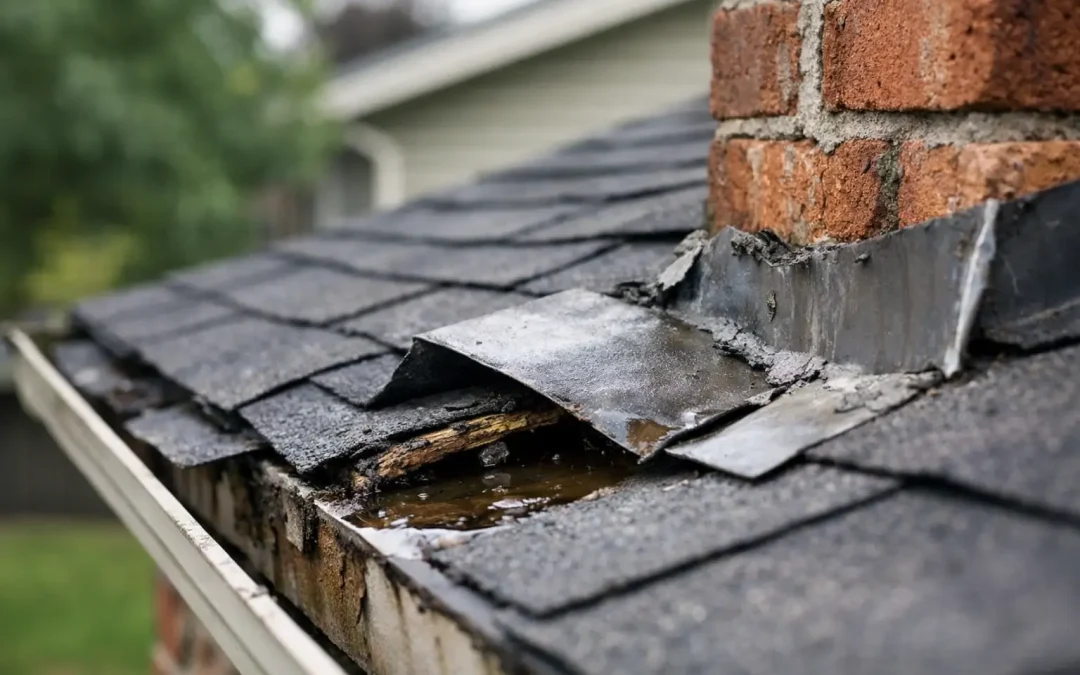
A roof can look perfectly sound from the ground while a small failure around a chimney, valley or roof junction lets water in. Knowing the top signs roof flashing fails can help you deal with a local repair before it becomes damaged plaster, rotten roof timbers or a larger re-roofing job.
Flashing is the material fitted where roof coverings meet an obstacle or change direction. It directs rainwater safely away from vulnerable gaps. On most homes, it is found around chimneys, dormer windows, roof valleys, abutments where the roof meets a wall, and sometimes around rooflights or vents. Lead is traditional and long-lasting when fitted properly, although modern alternatives may be suitable in certain locations.
Why roof flashing matters
Tiles and slates are designed to shed water down the roof. The difficult areas are the joins. Water can be driven sideways or upwards by strong wind, collect in a valley, or sit against a wall after prolonged rain. Flashing provides the weatherproof barrier that stops this water reaching the roof structure below.
Because it is exposed to changing temperatures, wind and rain, flashing naturally moves over time. Mortar can crack, old lead can split, and poorly fitted materials can lift away from the roof. A problem may only show itself during heavy weather, which is why it is worth paying attention to early changes rather than waiting for a visible ceiling leak.
Top signs roof flashing fails
Damp patches near a chimney or external wall
A brown stain on an upstairs ceiling or a damp patch high on a wall is one of the clearest warning signs. If it appears close to a chimney breast, dormer, roof valley or the wall where your roof joins a neighbouring property, failed flashing may be allowing rainwater through.
The stain may look worse after rainfall and fade slightly during dry spells. Do not assume the source is directly above the mark. Water can travel along felt, battens and timbers before it becomes visible indoors, so a proper roof inspection is needed to trace it accurately.
Cracked, missing or loose mortar around leadwork
Many older properties have lead flashing dressed into brickwork and secured with mortar. When this mortar cracks, crumbles or falls out, the top edge of the flashing can become loose. Rain can then pass behind it and into the roof space.
From ground level, you may notice gaps in the chimney pointing, uneven leadwork or a strip that appears to have lifted away from the brickwork. Avoid climbing ladders or walking on the roof to investigate. Apart from the safety risk, standing in the wrong place can crack tiles and make a minor repair more costly.
Water marks in the loft
Your loft can often provide the first useful clue. On a dry day, use a torch to look for damp roof timbers, dark staining, drips on roofing felt, wet insulation or a musty smell. Check particularly around chimney stacks, valleys and the points where the roof meets a wall.
Not every mark means there is an active leak. Condensation can also affect loft spaces with poor ventilation, especially in colder months. The difference is usually location and pattern: a flashing leak is more likely to be concentrated around a roof junction and worsen after rain, while condensation tends to be more widespread.
Drips or staining after wind-driven rain
A roof may cope with ordinary showers but leak when rain is driven by a strong Midlands wind. This often points to a weakness in flashing, particularly along side walls, around chimneys or at the edge of a dormer.
Make a note of when the problem occurs. Does it happen only in heavy rain? Is the wind coming from one direction? These details can help a roofing contractor identify the likely entry point and recommend the right repair rather than carrying out unnecessary work.
Lifted lead, split joints or visible gaps
Lead expands in warm weather and contracts as temperatures fall. If it has not been fitted with enough allowance for movement, it can crack or pull at fixing points over the years. Old repairs using unsuitable sealant can also fail, leaving exposed gaps.
You may see lifted edges, open joints, tears in the lead or sealant that is cracked and peeling away. A small split can let in a surprising amount of water during persistent rain. Leaving it in place risks moisture reaching the battens and timbers beneath the tiles.
Loose or slipped tiles near the flashing
Flashing and surrounding tiles work together. If tiles around a chimney, valley or abutment have slipped, cracked or been poorly cut, water can be directed behind the flashing instead of over it. This is particularly common after stormy weather or where an older roof has had piecemeal repairs.
A slipped tile does not automatically mean the entire roof needs replacing. In many cases, a targeted repair, correctly fitted tiles and renewed flashing will restore the weatherproofing. The condition of the wider roof should still be assessed, particularly if several tiles are loose or the roof is nearing the end of its serviceable life.
Moss, debris and overflowing valleys
Moss is not always the cause of a flashing failure, but heavy growth and trapped debris can hold moisture against vulnerable areas. Valleys are especially prone to collecting leaves, twigs and moss. If water cannot run freely down the valley, it may back up beneath tiles or against the flashing.
Overflowing gutters can create similar confusion. Water running down an external wall may look like a roof leak, while a blocked valley may genuinely be allowing water inside. A good inspection considers the full route rainwater takes, including the roof covering, valleys, gutters and downpipes.
Daylight showing through a roof junction
If you can see daylight in the loft around a chimney, roof valley or wall abutment, arrange an inspection promptly. Some light around ventilation details may be normal, but visible gaps at a weathered roof junction are not something to ignore.
This does not always mean rain is already entering, but the barrier protecting the roof is compromised. Early attention can prevent damage spreading through the roof structure.
What causes flashing to fail?
Age is a common factor, but it is not the only one. Leadwork can last for many years when it is correctly detailed and maintained. Failures are often linked to poor original installation, inadequate overlap, unsuitable sealants, cracked mortar, movement in the chimney stack, storm damage or rushed repairs that treat the symptom rather than the cause.
Chimneys deserve particular attention. They are exposed on all sides and can move slightly as a property settles or mortar weathers. If the stack needs repointing, the flashing may need to be carefully renewed at the same time. Replacing only one element can be a false economy if the surrounding materials are already failing.
It also depends on the type and age of the roof. A modern roof with isolated storm damage may need a straightforward repair. On an older roof with brittle tiles, worn underfelt and repeated leaks around several details, a wider programme of work may offer better long-term value.
When to arrange a professional roof repair
A visible indoor leak, wet insulation, loose leadwork or missing tiles should be checked as soon as possible. Even if the water has stopped, do not assume the issue has resolved itself. Materials may dry out temporarily while the fault remains ready to leak again in the next spell of bad weather.
A professional roofer should assess the condition of the flashing, nearby tiles or slates, mortar joints, valleys and the roof structure where accessible. The right solution may involve re-dressing or replacing lead, renewing mortar pointing, repairing the surrounding roof covering, or clearing and repairing a valley. The scope should be based on what is actually found, with clear explanation of the work required.
Temporary sealant can sometimes provide short-term protection in an emergency, but it is rarely a durable answer for failed leadwork or a damaged roof junction. Properly fitted materials and sound detailing are what keep water out over the long term.
For homeowners across Nottingham and the wider Midlands, MTF Roofing Ltd provides clear surveys and practical advice on roof repairs, flashing, valleys and related roofline issues. The aim should always be a tidy, reliable repair that protects the home without recommending more work than is needed.
If you have noticed a new ceiling stain or water in the loft after rain, take a few photographs from a safe position and arrange an inspection before the next prolonged spell of wet weather. Acting early gives you more choice, less disruption and a better chance of keeping a small flashing fault exactly that.