
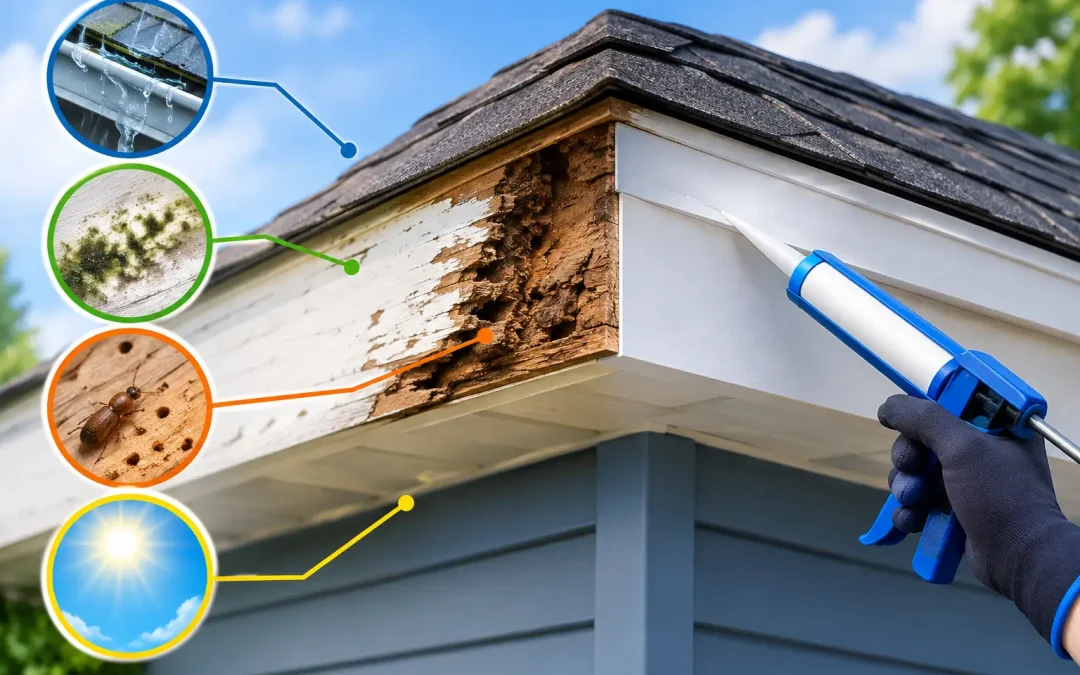
A fascia board can look sound from ground level while moisture is steadily breaking it down behind the guttering. Homeowners often ask, “why do fascias rot?” when they notice peeling paint, a sagging gutter or dark, soft patches in the timber. The short answer is repeated water exposure, but finding where that water is coming from is what prevents the problem returning.
Traditional timber fascias form the straight board along the lower edge of the roof. They support the guttering and help give the roofline a neat finish. When they begin to fail, water can reach the rafters, soffits and brickwork too, so it is worth dealing with early rather than waiting for a section to fall away.
Why do fascias rot around gutters?
The most common cause is overflowing or leaking guttering. Gutters are meant to carry rainwater safely to the downpipes. If they are blocked with leaves, moss, silt or debris, water spills over the front and back of the gutter. The overflow may run directly onto the fascia board every time it rains.
A loose gutter bracket, split joint or poorly aligned gutter can create the same issue. Instead of draining towards the downpipe, water pools in one section or escapes through a joint. Timber can cope with occasional rain once it has time to dry, but it will rot when it is repeatedly soaked and remains damp.
On older properties, gutters may also have been fixed into fascia boards that were already weakened. As the timber softens, brackets pull loose and the gutter sags. This creates a cycle: poor falls cause standing water, standing water worsens the rot, and the timber becomes less able to support the gutter.
Failed paint and ageing timber
Paint is the first line of defence for a timber roofline. Over time, sunlight, frost and rain cause painted surfaces to crack, flake and lose their protective finish. Bare timber then absorbs moisture, usually around joints, nail holes and the top edge behind the gutter where damage is harder to see.
Poorly maintained timber fascias are especially vulnerable on exposed elevations. A house that faces prevailing wind and rain may deteriorate faster than a more sheltered property. That does not mean every faded board needs replacing immediately, but soft timber, deep splitting and persistent damp staining are signs that repainting alone is unlikely to be enough.
Previous repairs can also affect how long fascias last. Filling over rotten timber, painting wet boards or fitting a cover board over decayed wood may improve the appearance for a short time, but it does not remove the moisture or restore structural strength. The condition of the timber behind the visible surface needs checking before a repair is chosen.
Roof leaks can rot fascias from above
Not all fascia rot starts with the gutter. A slipped tile, damaged flashing, worn underfelt or leak at the roof edge can allow water into the eaves. It may then run down the back of the fascia board, out of sight, before becoming visible as staining or peeling paint.
This is why a proper inspection should consider the roof edge as well as the roofline itself. If a contractor simply replaces the board without addressing a leak above it, the new fascia could be exposed to the same problem. In some cases, the timber ends of the rafters or the soffit boards may also need attention.
Condensation can be a contributing factor too. Roof spaces need suitable ventilation so that moist air can escape. When ventilation is restricted, condensation can build up inside the eaves, particularly during colder months. It is less commonly the sole cause of fascia rot than a gutter or roof leak, but it can make existing moisture issues worse.
Common signs that fascia boards are failing
A close look from ground level can reveal early warning signs, although safe access is often needed to confirm the extent of damage. Look out for paint that is blistering or flaking in one area, dark water marks beneath the gutter, visible cracks in timber, gaps at joints, or gutters that appear to dip or pull away from the house.
You may also spot staining on the soffits, damp patches on internal walls near the roofline, or signs of pests using gaps in the eaves. Birds, insects and squirrels can take advantage of decayed or loose boards, adding another reason not to leave the issue unattended.
Pressing a fascia board with a screwdriver is sometimes used to test for softness, but this should only be done safely and without damaging sound material. From a ladder, it is easy to miss the wider issue or put yourself at risk. A roofline survey can establish whether the damage is limited to one section or has spread along the eaves.
Can rotten fascias be repaired?
It depends on how far the decay has progressed and what has caused it. If a small area of otherwise sound timber has been affected by a recent gutter leak, it may be possible to remove the decayed section, repair the source of water and protect the remaining timber. This is usually only suitable where the board is still structurally sound and the gutter can be securely fixed.
Where rot has spread along the board, behind the gutter, or into the rafter ends, replacement is generally the more dependable option. Replacing damaged fascias gives the roofline a fresh, solid base for new guttering and allows hidden issues to be dealt with properly. It also avoids the repeated cost and disruption of patching timber that is nearing the end of its life.
Modern uPVC fascias, soffits and guttering are a popular choice for homeowners who want a low-maintenance finish. They do not rot, and they do not need regular painting. However, the fitting standard still matters. Old decayed timber should not simply be concealed if it is affecting the strength of the roof edge, and ventilation must be retained or improved where required.
How to prevent fascia rot
Keeping gutters clear is the simplest practical step. Gutters should be checked after autumn leaf fall and after periods of heavy weather, particularly if there are trees close to the property. Clear any visible debris and make sure water is reaching the downpipe rather than overflowing at a joint.
It is also sensible to look up after heavy rain. A steady drip from a gutter joint, water cascading over one section, or a gutter holding water are all signs that attention is needed. Small adjustments to brackets, outlets and joints can prevent much larger repairs later.
For painted timber rooflines, regular maintenance is part of protecting the property. Clean the boards, inspect the paint finish and deal with cracks or bare areas before water gets into the wood. If access is difficult, or the boards are already showing signs of decay, a professional assessment is the safer approach.
Choosing the right repair for your home
The best solution should deal with the cause, not just the appearance. A reliable roofline contractor will inspect the guttering, fascia boards, soffits, roof edge and visible timber before recommending work. You should receive a clear explanation of what has failed, whether there is evidence of roof leakage, and whether a local repair or full replacement represents better value.
At MTF Roofing Ltd, we take a straightforward approach: assess the condition properly, explain the options clearly and fit roofline materials to a high standard. Whether the job involves a leaking gutter, worn timber fascias or a full fascia, soffit and guttering upgrade, tidy workmanship and correct water drainage make the difference.
If you can see peeling paint, sagging gutters or damp marks at the eaves, it is worth arranging an inspection before the next spell of persistent rain. Acting while the problem is confined to the fascia can help protect the wider roof structure and keep your home looking cared for.