
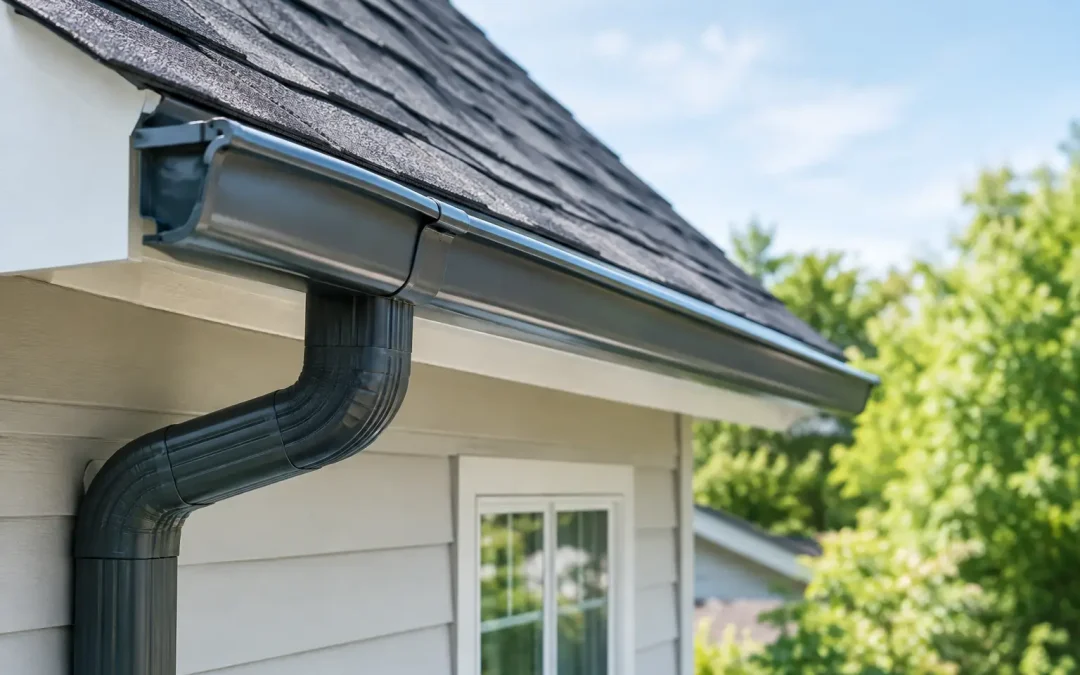
Water running over the edge of a blocked or damaged gutter may look like a minor nuisance, but it can cause expensive problems over time. The best benefits of new guttering are not just about making a home look tidier. A properly fitted system directs rainwater safely away from the roofline, walls and foundations, helping to protect the parts of your property that are difficult and costly to repair.
For homeowners across Nottingham and the Midlands, gutter replacement is often needed after years of weather exposure, leaks, sagging sections or repeated blockages. New guttering is a practical upgrade that can improve the appearance of your home while giving it better protection through every season.
The best benefits of new guttering for your property
It helps prevent damp walls and internal damage
Your gutters have one clear job: to collect rainwater from the roof and carry it to the downpipes. When they crack, overflow, pull away from the fascia or become blocked, water can run down external walls instead.
Over time, this constant wetting can lead to staining, damaged brickwork, failing render and damp patches indoors. It may also affect paintwork, plaster and timber around windows. Replacing worn guttering helps keep rainwater moving where it should, rather than allowing it to soak into your home.
Of course, new gutters cannot solve every damp issue. Problems such as damaged roof tiles, faulty flashing, rising damp or poor ventilation need their own investigation. However, making sure the guttering is sound is one of the first and most sensible steps when water is appearing on an outside wall.
It protects fascias, soffits and roofline timber
Leaking joints and overflowing gutters put constant moisture against the fascia boards behind them. Older timber fascias are particularly vulnerable, as trapped water can cause rot and peeling paint. Once this starts, the damage may spread further along the roofline.
A new guttering system fitted correctly alongside well-maintained fascias and soffits gives the roof edge the protection it needs. Water is captured and carried away, reducing the chance of moisture sitting where it should not. This is especially worthwhile when replacing timber roofline boards with modern, low-maintenance uPVC.
Good guttering also needs the right fall towards the downpipe. If it is installed level, too shallow or with poor support, water can sit in the channel and create fresh problems. The quality of the fitting matters as much as the material itself.
It reduces the risk of water collecting near foundations
Rainwater needs to finish its journey away from the house. A damaged downpipe, missing connection or overflowing gutter can leave large amounts of water pooling close to external walls and foundations.
In heavy rain, this can saturate the ground around the property. While the effect depends on the age, construction and drainage of the home, it is never sensible to let roof water discharge right against the building. Properly positioned downpipes and suitable drainage help manage water more effectively and keep paths, entrances and patios less prone to puddling.
This benefit is often overlooked because the issue is at ground level. Yet the source can be several metres above, at the roofline.
It gives the home a cleaner, smarter finish
Guttering is highly visible, particularly on the front elevation of a house. Faded plastic, cracked joints, rusted brackets and uneven runs can make an otherwise well-kept property look tired. Overflowing gutters can also leave dirty streaks on brickwork, cladding and render.
New uPVC guttering provides a clean, even finish that complements the roofline. Black, white and other suitable colour options can be chosen to suit the style of the property and existing fascias, soffits or windows. It is a straightforward improvement, but one that can make a noticeable difference from the kerb.
For anyone preparing a property for sale, roofline condition can influence a buyer’s first impression. New guttering will not replace the need to address bigger roofing issues, but it shows that the home has been looked after rather than left to deteriorate.
It can mean fewer ongoing repairs
Older gutter systems often reach a point where small repairs become a regular job. One joint is resealed, then another begins to drip. A bracket is replaced, but the gutter remains warped or poorly supported. Clearing debris may help for a while, only for water to overflow again because the falls are incorrect.
Replacement can be better value than repeatedly patching a system that has reached the end of its useful life. Modern uPVC guttering does not rot or rust, and quality fittings are designed to cope with normal movement caused by changing temperatures. It still needs occasional cleaning, particularly near trees, but it should provide dependable performance with far less upkeep than a failing system.
That said, replacement is not always necessary. If the gutter run is generally sound and the problem is limited to one damaged joint or blocked downpipe, a targeted repair may be the sensible option. An honest survey should identify whether repair or replacement is the right course of action.
Signs your guttering may need replacing
Gutters are easy to ignore because they are above eye level. It is worth checking them after prolonged rain and looking for clear warning signs. You may need professional attention if you notice:
- water overflowing from the gutter or running down walls;
- visible cracks, splits, holes or leaking joints;
- gutters that sag, bow or pull away from the fascia;
- staining or green growth on brickwork below the roofline;
- downpipes that are loose, damaged or regularly blocked.
A ladder inspection should be approached with care. Working at height brings real risks, and it can be difficult to assess the condition of brackets, joints and fascias safely from the ground. A professional roofline survey provides a clearer view of the system and any related issues around the eaves.
Choosing the right guttering system
There is no single gutter profile that suits every property. The size of the roof, the number of roof slopes, the local exposure to wind and rain, and the available drainage points all affect what is required. Larger roofs or sections that receive a heavy flow of water may need greater capacity than a small standard run.
The gutter should also work with the property’s existing roofline. Well-fitted brackets, secure downpipes and neatly finished joints all contribute to a result that performs properly and looks right. Cutting corners on spacing, falls or fixings may save time on the day, but it can lead to overflowing water and movement later.
At MTF Roofing Ltd, roofline work is assessed with the wider condition of the fascias, soffits and roof edge in mind. This helps homeowners avoid replacing one part while leaving an adjoining issue that could cause trouble soon afterwards.
Keep new gutters working as they should
Even the best installation needs basic care. Leaves, moss from roof tiles and wind-blown debris can collect in gutters and downpipes, particularly in autumn or where there are overhanging trees. A regular visual check from the ground, followed by safe cleaning when required, will help maintain a clear flow of water.
After heavy rainfall, look out for drips from joints, unusual overflow or water escaping from the top of a downpipe. Acting early can prevent a small issue from becoming damage to the roofline or walls. If you are unsure whether your gutters are coping properly, a straightforward inspection and clear advice can give you confidence before the next spell of bad weather.